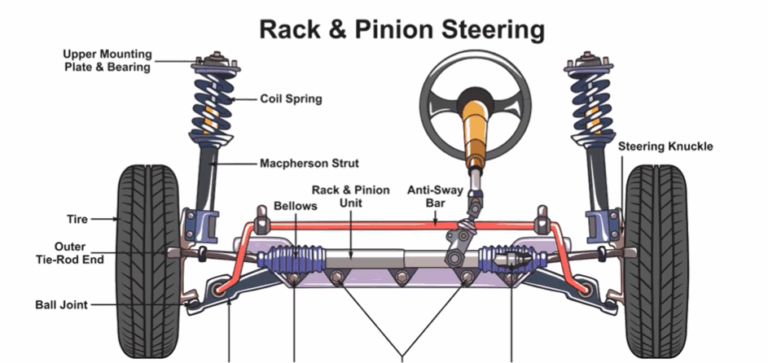
The rack and pinion steering system is the most common steering setup found in modern passenger vehicles. It transforms the steering wheel’s rotational movement into the side-to-side motion required to turn the front wheels. It can be simpler to diagnose steering issues, spot worn parts, and decide whether repairs or replacements are required if you know how the system operates.
We’ve worked with steering, suspension, and wheel-end components for years, and we’ve seen how a minor problem with a rack and pinion assembly may cause symptoms that drivers frequently confuse for suspension, wheel bearing, or alignment issues. One of the greatest methods to effectively diagnose steering issues and prevent changing the incorrect parts is to understand the different pieces and how they interact.
Key Points to Review
This guide covers:
- What a rack and pinion steering system is
- A rack and pinion steering diagram explained
- The major rack and pinion components
- How rack and pinion steering works
- Common symptoms of rack and pinion problems
- Different types of rack and pinion systems
What Is a Rack and Pinion Steering System?
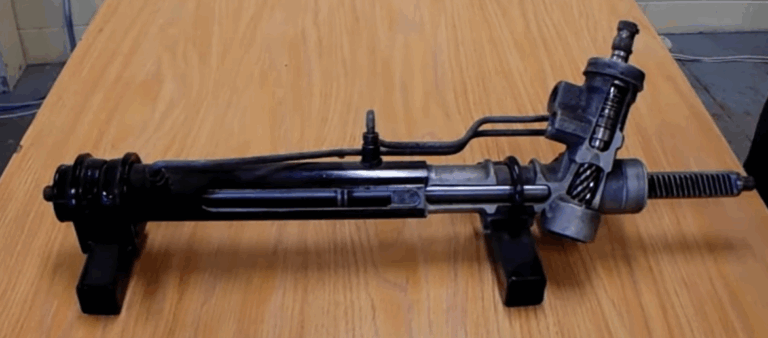
A rack and pinion steering system converts steering wheel input into wheel movement using a simple gear mechanism.
A tiny circular gear known as the pinion rotates when the driver cranks the steering wheel. The rack is a straight gear that moves left or right when the pinion gear engages with it. The steering knuckles, which turn the wheels, receive that action via tie rods.
Because rack and pinion systems are small, light, and offer a more accurate steering feel than previous steering designs, they are frequently seen in modern cars. Understanding the distinctions between rack and pinion and ball screw systems, as well as between rack and pinion and power steering, can be useful when evaluating steering technologies.
Rack and Pinion Steering Diagram Explained
A rack and pinion steering diagram helps visualize how steering input travels from the steering wheel to the tires.
Main Components in a Rack and Pinion Diagram
A typical rack and pinion assembly contains:
- Steering wheel
- Steering column
- Pinion gear
- Rack gear
- Inner tie rods
- Outer tie rods
- Steering knuckles
- Power steering assist components (if equipped)
The pinion gear is turned by the steering wheel’s connection to the steering column. The rack gear is driven sideways by the pinion gear. The steering knuckles and wheels turn as a result of the rack pushing or pulling the tie rods.
Simplified Steering Flow
The steering process follows this sequence:
Steering Wheel → Steering Column → Pinion Gear → Rack Gear → Tie Rods → Steering Knuckles → Front Wheels
For proper operation, each component depends on the others. Steering play, vibration, uneven tire wear, or a car pulling to the left or right are all possible outcomes of a chain failure.
Parts of a Rack and Pinion System
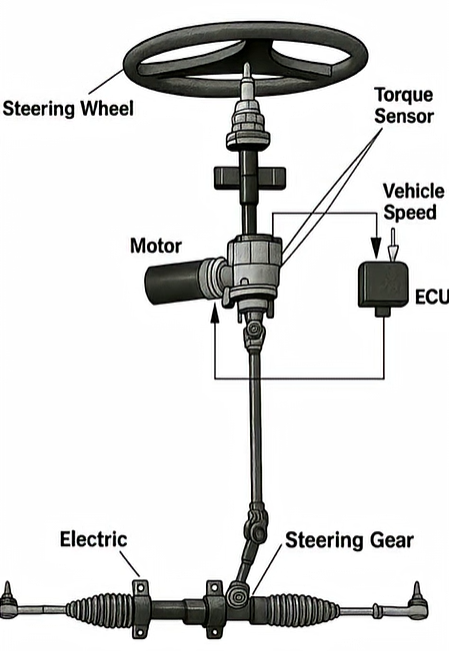
Each rack and pinion component performs a specific function within the steering system.
Pinion Gear
The pinion gear is the round gear attached to the steering shaft.
The pinion engages the rack’s teeth when the steering wheel rotates. Steering effort and responsiveness are influenced by the gear ratio between the pinion and rack.
Rack Gear
The rack is a straight gear that moves horizontally inside the steering housing.
It directly translates rotational input into linear motion and controls how far the wheels turn.
Inner and Outer Tie Rods
Tie rods transfer movement from the rack to the steering knuckles.
While exterior tie rods attach to the steering knuckles, inner tie rods are directly attached to the rack assembly. Uneven tire wear and steering looseness might result from excessive wear in these parts.
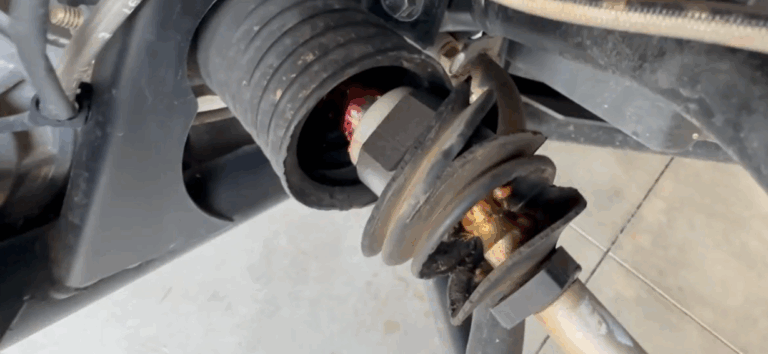
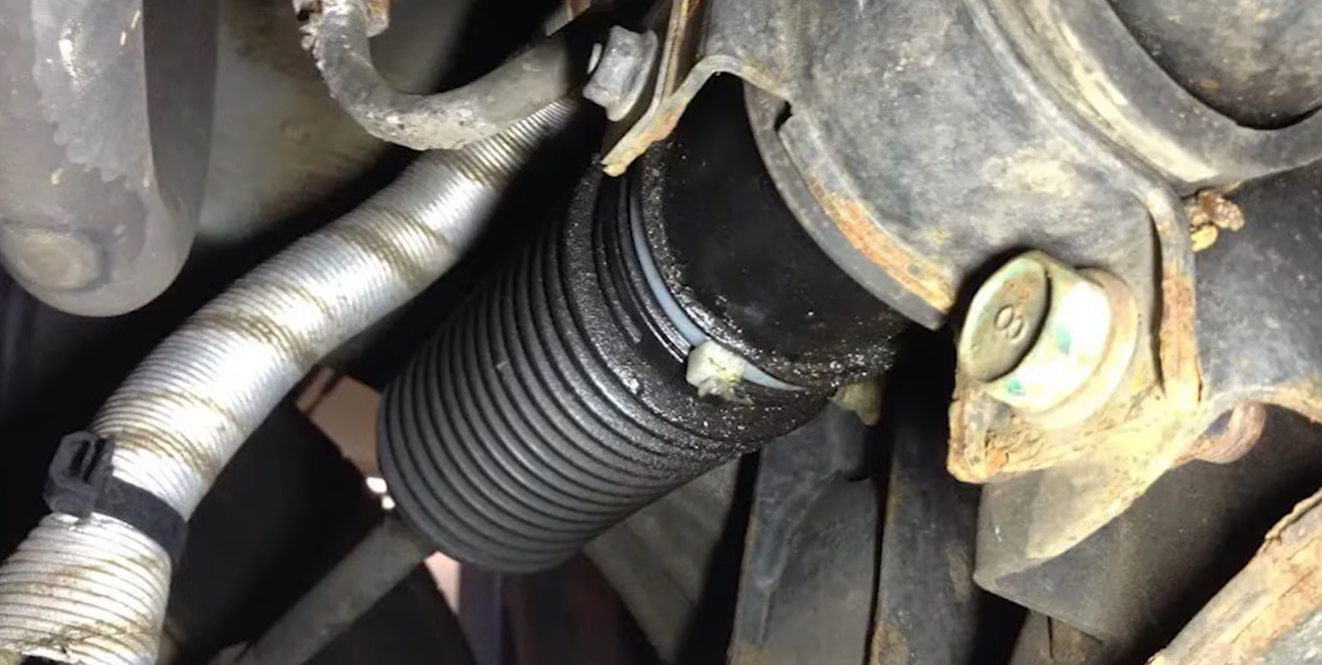
Steering Boots
Steering boots protect the rack and inner tie rods from contamination.
These rubber bellows protect vital steering parts from dirt, moisture, and road debris. Wear is accelerated by impurities entering the assembly through torn boots.
Power Steering Components
Many rack and pinion systems include hydraulic or electric steering assist.
Electric systems employ an electric motor to lessen steering effort, whereas hydraulic systems use fluid pressure produced by a pump. Knowing what power steering is and how to flush the system will help prolong component life if your car has hydraulic aid.
How Rack and Pinion Steering Works
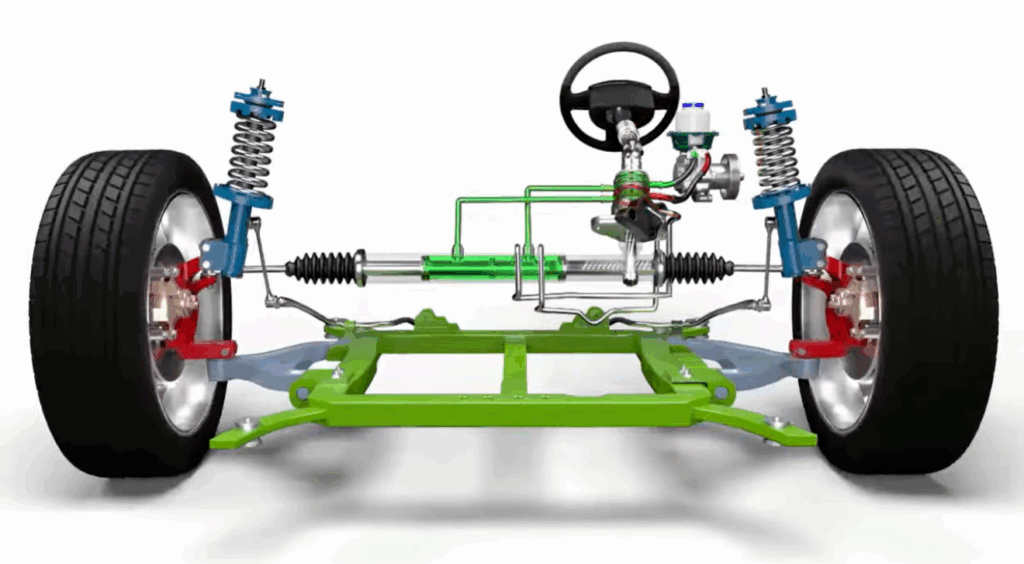
Rack and pinion steering works by transforming rotational motion into linear motion.
When you turn the steering wheel:
- The steering column rotates.
- The pinion gear turns.
- The pinion moves the rack sideways.
- The rack pushes or pulls the tie rods.
- The steering knuckles pivot.
- The wheels change direction.
Rack and pinion systems offer accurate steering feedback in part because of this direct mechanical relationship.
When a motorist has steering issues, they often first suspect wheel-end problems. The issues such as the sound a bad wheel bearing makes, the signs of a wheel bearing going bad, and clicking noise from the front wheel while driving can occasionally coexist with symptoms like vibration, clunking, or wandering.
Types of Rack and Pinion Steering Systems
Different types of rack and pinion systems use different methods to reduce steering effort.
Manual Rack and Pinion
Manual rack and pinion systems use no power assist.
Through the steering wheel, the driver provides all of the steering force. These systems need more work, particularly at low speeds, but they are straightforward and dependable.
Hydraulic Power Rack and Pinion
Hydraulic systems use pressurized fluid to assist steering.
Hydraulic pressure produced by a power steering pump aids in moving the rack. Steering performance might be impacted by issues including leaks and pump failures. Rack and pinion leak, power steering pump whines, and power steering cutting out are common problems.
Electric Power Steering Rack
Electric power steering uses an electric motor instead of hydraulic fluid.
These methods avoid numerous fluid-related faults present in conventional hydraulic systems, increase efficiency, and need less maintenance.
Variable Ratio Rack and Pinion
Variable ratio systems change steering responsiveness depending on steering angle.
These designs provide greater stability at highway speeds while allowing quicker steering response during parking and low-speed maneuvering.
Common Rack and Pinion Problems
Rack and pinion systems can develop wear over time due to age, mileage, and road conditions.
Fluid Leaks
Hydraulic rack seals eventually wear out.
If left unchecked, leaking fluid can cause internal rack damage and lessen steering assistance.
Steering Play
Worn tie rods, rack bushings, or internal rack components can create excessive steering play.
Drivers may notice a loose steering wheel or delayed response when turning.
Noise While Turning
Grinding, clunking, or whining noises may indicate steering system issues.
Noise in hydraulic systems frequently indicates pump deterioration or fluid-related issues. Finding the source of power steering pump noise might be aided by understanding its symptoms.
Uneven Tire Wear
A worn rack and pinion assembly can affect wheel alignment.
Excessive movement or looseness of steering components often results in uneven tire wear patterns.
Repairing and Replacing a Rack and Pinion
Rack and pinion replacement can range from straightforward to labor-intensive depending on the vehicle.
While some cars offer very simple access, others necessitate the removal of exhaust sections, subframes, or suspension parts. It is beneficial to know how long it takes to replace a rack and pinion, how much it costs, and whether repairing a rack and pinion is worthwhile before starting any repairs.
Many steering issues are misdiagnosed, according to our experience with wheel-end and steering repairs. Worn tie rods have been mistaken for defective racks, and defective racks have been confused for wheel bearings. Assessing the complete steering and suspension system, including associated car suspension parts, frequently avoids needless repairs and saves a substantial amount of labor.
FAQs
What is a rack and pinion?
A rack and pinion is a steering mechanism that converts the rotational movement of the steering wheel into the side-to-side movement needed to turn a vehicle’s wheels. It provides steering control by use of a straight gear called a rack and a tiny circular gear called a pinion.
How does a rack and pinion steering system work?
A rack and pinion steering system works by using a pinion gear to move a rack gear left and right as the steering wheel turns. The front wheels then shift direction as a result of the rack transferring that movement to the steering knuckles via the tie rods.