Clicking Noise from Front Wheel When Driving (Causes, Diagnosis, and Fixes)
·By Lawrence Ma
A clicking noise from the front wheel when driving usually indicates a worn or damaged component in the suspension, steering, or wheel assembly. Turning, accelerating, or going over bumps frequently make the sound more audible.
Because the front wheel area is home to a number of interconnected components, such as pieces from the steering and suspension systems, this kind of noise is significant. Many times, determining the precise cause necessitates examining several parts at once.
Key Points to Review
This guide covers:
Common causes of clicking noise from the front wheel
How to diagnose the source of the noise
Components most likely to fail
How steering and suspension systems are involved
When to repair or replace parts
What Causes a Clicking Noise from the Front Wheel?
A clicking noise from the front wheel is usually caused by worn or loose components that move under load.
The most common causes include:
Without a thorough examination, the noise can easily be misdiagnosed due to the near proximity of these components.
1. Worn CV Joints (Most Common Cause)
Worn CV joints are the most common cause of clicking noises, especially when turning.
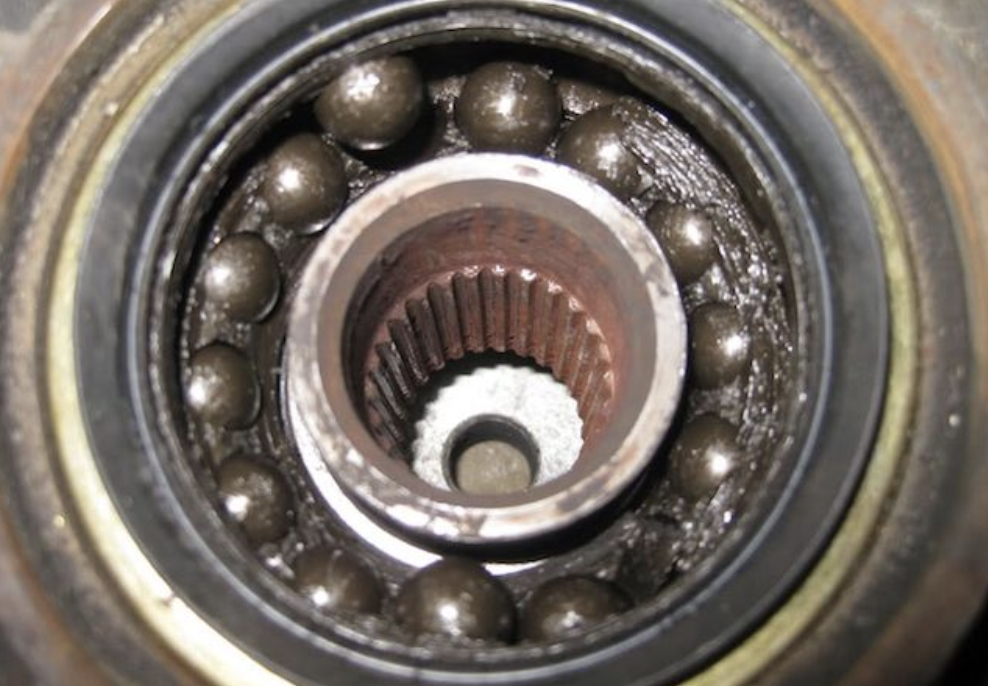
The axle can transfer power while the wheels rotate thanks to CV (constant velocity) joints. They make a repetitive clicking sound that gets louder throughout turns as they wear out.
Common signs:
Clicking when turning (especially sharp turns)
Grease leaking from torn CV boots
Noise increases with acceleration
After hearing it a few times, I’ve found that this is one of the easiest sounds to recognize. In certain scenarios, the clicking only occurred during sharp turns in parking lots, and the worn outer CV joint was invariably the cause. In one instance, the boot had torn weeks prior, and the joint had already lost most of its lubrication when the noise began.
2. Worn Wheel Bearings
Worn wheel bearings can sometimes produce a clicking or light knocking noise, although they more commonly create a humming or grinding sound.
The wheel can revolve smoothly and with little friction thanks to wheel bearings. Depending on wear patterns, they may make erratic noises when they start to fail.
Common signs:
Clicking or humming noise from the wheel
Noise changes with speed
Vibration through the steering wheel
We have observed that bearings initially create erratic clicking before developing into a steady hum. This is why it’s critical to recognize the common indicators of a failing bearing, particularly since replacing it requires work comparable to that of other suspension parts.
3. Loose or Worn Tie Rods
Tie rods connect the steering system to the wheels and control direction.
During steering input, they may make clicking or knocking sounds if they get worn out or loose.
Common signs:
Clicking when turning the wheel
Loose or vague steering feel
Uneven tire wear
Tie rods are closely connected to the rack and pinion steering system, therefore problems with them might occasionally seem more like steering than suspension. This is particularly crucial when contrasting the operation of steering systems.
4. Worn Ball Joints
Ball joints act as pivot points between the suspension and steering components.
They may make clunking or clicking sounds as they deteriorate, particularly over bumps or during turns.
Common signs:
Clicking or popping over bumps
Uneven tire wear
Loose steering feel
We’ve seen sometimes where a worn ball joint made a faint clicking sound that was first thought to be a wheel bearing problem. Inspection revealed that the joint had visible play, which produced the noise and caused a small amount of movement under load.
5. Brake Components (Loose or Worn)
Loose brake components can also create clicking noises that occur while driving.
This may include:
Loose brake pads
Worn caliper hardware
Debris stuck between rotor and shield
Common signs:
Clicking at low speeds
Noise changes when braking
Intermittent sound
In one case, a tiny stone stuck between the dust shield and brake rotor produced a steady clicking sound that resembled a mechanical breakdown. The noise was fully removed after the debris was removed, demonstrating how minor problems can occasionally sound more significant than they actually are.
How to Diagnose a Clicking Noise from the Front Wheel
Diagnosing a clicking noise from the front wheel requires checking multiple components in sequence.
Start with:
Inspecting CV boots for damage
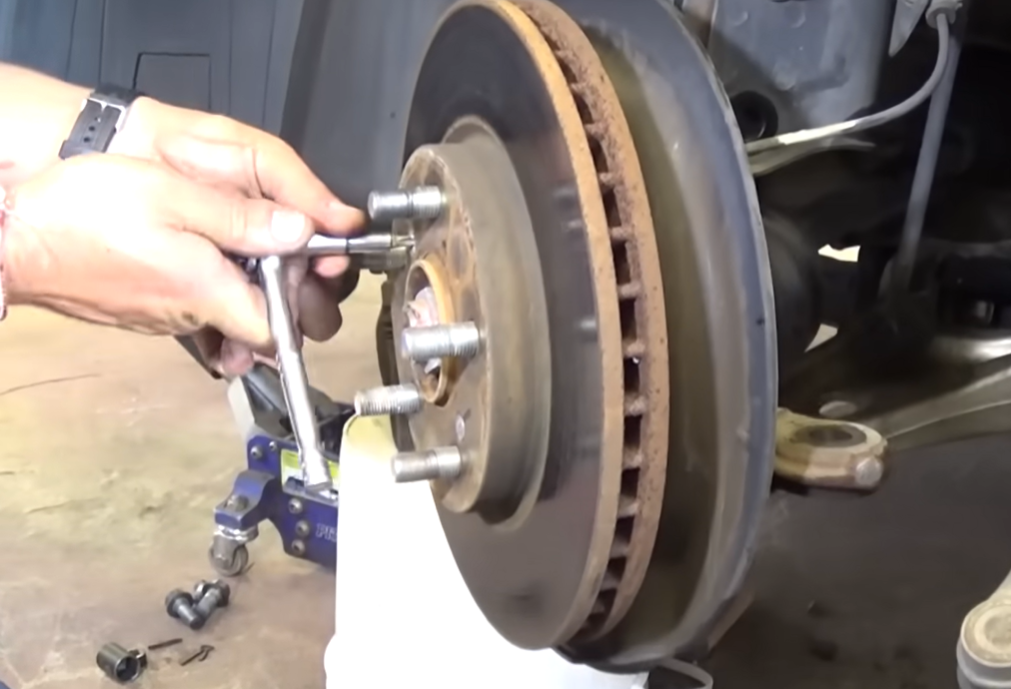
Checking wheel bearing play
Inspecting tie rods and ball joints
Looking at brake components
A thorough investigation is frequently required due to the interconnectedness of various systems. Noise diagnosis frequently intersects with suspension and steering systems, for instance, because parts like the steering knuckle, wheel hub, and bearings all operate together.
When the Noise Happens Matters
The timing of the clicking noise can help identify the cause.
When turning → Likely CV joint or tie rod
At constant speed → Possible wheel bearing
Over bumps → Ball joints or suspension components
When braking → Brake components
We’ve found that isolating when the noise happens frequently results in a diagnosis time reduction of half. In one instance, the noise was limited to gradual turns into parking spaces, which instantly indicated that a CV joint rather than a bearing or suspension problem was the cause.
When to Repair the Problem
A clicking noise from the front wheel should be inspected as soon as possible.
Delaying repairs can lead to:
Complete CV joint failure
Wheel bearing damage
Loss of steering control
Increased repair costs
Sometimes a minor clicking sound might develop into a more serious problem that impacts the operation of the suspension and steering.
How This Connects to Other Systems
Front wheel noise is often related to multiple systems working together.
These include:
Suspension components
Steering system
Wheel hub and bearings
For example, suspension symptoms might occasionally overlap with steering system problems, making diagnosis more difficult.
FAQs
What causes a clicking noise when driving straight?
A clicking noise when driving straight is often caused by a worn wheel bearing, loose brake components, or minor suspension play. Even without turning, early-stage CV joint degradation can occasionally make noise, particularly if the damage is severe. In some cases, small stones caught near the brake shield or hardware can also create a rhythmic clicking sound that changes with wheel speed.
Is a clicking wheel bearing dangerous?
A clicking or failing wheel bearing can become dangerous over time. As the bearing wears, it can overheat, seize, or develop excessive play, which may impact wheel stability. For this reason, it’s critical to diagnose the condition as soon as possible before it becomes a louder grinding sound. Continued driving can also damage the wheel hub or surrounding suspension components.
Can a bad CV joint cause clicking noise?
A bad CV joint is one of the most common causes of clicking noise, especially during turns. As the joint deteriorates, the noise normally gets louder and, if left untreated, may eventually result in total axle failure. Torn CV boots often allow grease to escape and dirt to enter, which speeds up wear significantly.
Can I drive with a clicking noise from the wheel?
But it depends on the cause. Worn CV joints, bearings, or suspension parts can deteriorate rapidly, yet minor problems like debris in the brakes might not be dangerous. Long-term driving without inspection may result in more costly repairs or safety hazards. If the clicking gets louder, changes during turns, or is paired with vibration, the vehicle should be inspected promptly.