
Car Suspension Components (Complete Guide to Suspension System Parts)
·By Lawrence Ma

The suspension system is designed to improve ride comfort, stability, and vehicle control. It absorbs road impacts while keeping the tires in contact with the road surface.
Steering and wheel assemblies are closely related to suspension components. Since some components, such wheel hubs and bearings, are directly connected to the steering system, it is frequently necessary to inspect several elements in order to diagnose handling or noise problems.
We’ve seen instances where a loose control arm bushing was the source of a humming sound that was initially believed to be a worn wheel bearing. Due to the interdependence of suspension, steering, and wheel components, a single component inspection may result in an incorrect diagnosis.
Key Points to Review
- A car’s suspension system uses springs to absorb road impact and dampers (shocks or struts) to control how fast the spring rebounds. Both have to work together. A good spring with a worn damper still gives a harsh, bouncy ride.
- Control arms locate the wheel relative to the chassis. Worn bushings or ball joints in the control arm cause clunking, alignment drift, and inner-edge tire wear.
- The most commonly replaced suspension components are struts, shocks, control arm bushings, and sway bar links. Ball joints and wheel bearings follow closely on higher-mileage vehicles.
- Suspension wear is cumulative. A sagging spring, a worn strut, and a loose ball joint individually feel like minor complaints. Together, they create dangerous handling.
Main Suspension Components
1. Control Arms
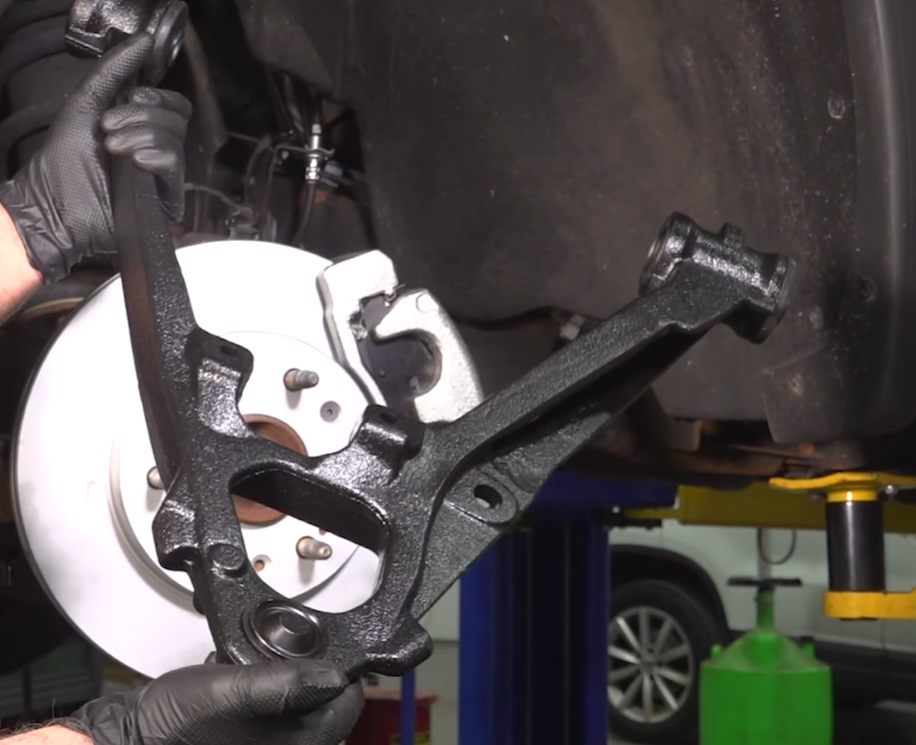
Control arms connect the wheel assembly to the vehicle frame and allow controlled up-and-down suspension movement. For an annotated lower control arm diagram showing the arm body, bushings, and ball joint, see the parts breakdown.
They usually consist of ball joints and bushings that provide flexibility without sacrificing alignment. Correct diagnosis is crucial because worn control arm bushings can occasionally imitate wheel bearing sounds.
When braking or accelerating, worn control arm bushings can produce a dull clunk. When this noise is accompanied by a minor steering disturbance, it can be readily confused with a wheel bearing failure.
2. Ball Joints
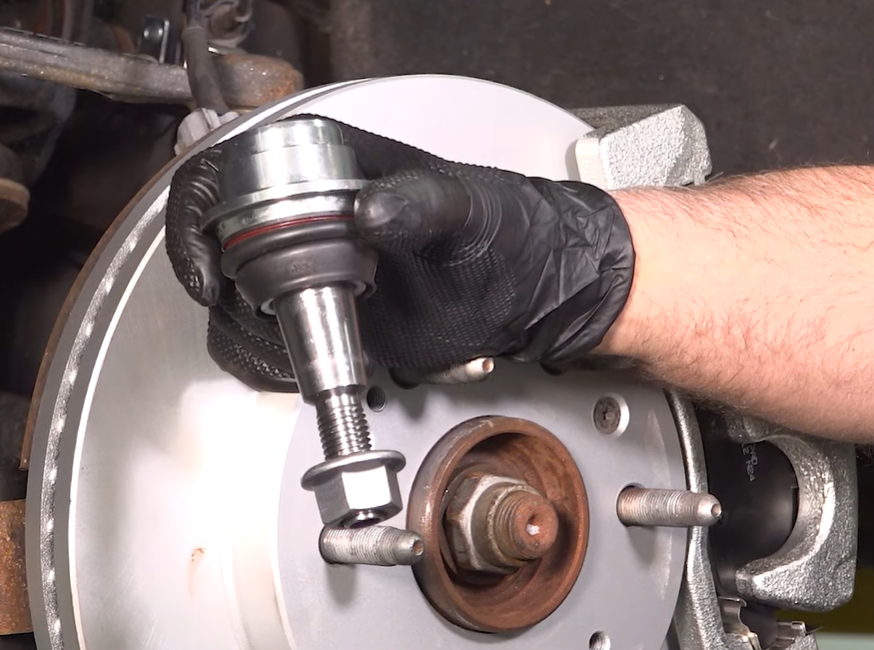
Ball joints act as pivot points that allow the suspension and steering components to move together.
Depending on the suspension design, cars may use both upper and lower ball joints. Wheel alignment may be impacted by excessive ball joint play, which can also hasten the deterioration of wheel hubs and bearings.
Uneven tire wear might result from camber variations brought on by excessive play in a lower ball joint during alignment tests. AAA’s tire safety and maintenance guide points to alignment drift and suspension play as two of the main causes of uneven tread wear, and a worn lower ball joint is one of the parts that causes it. The wheel hub assembly may eventually experience more strain as a result of this increased stress.
3. Shock Absorbers
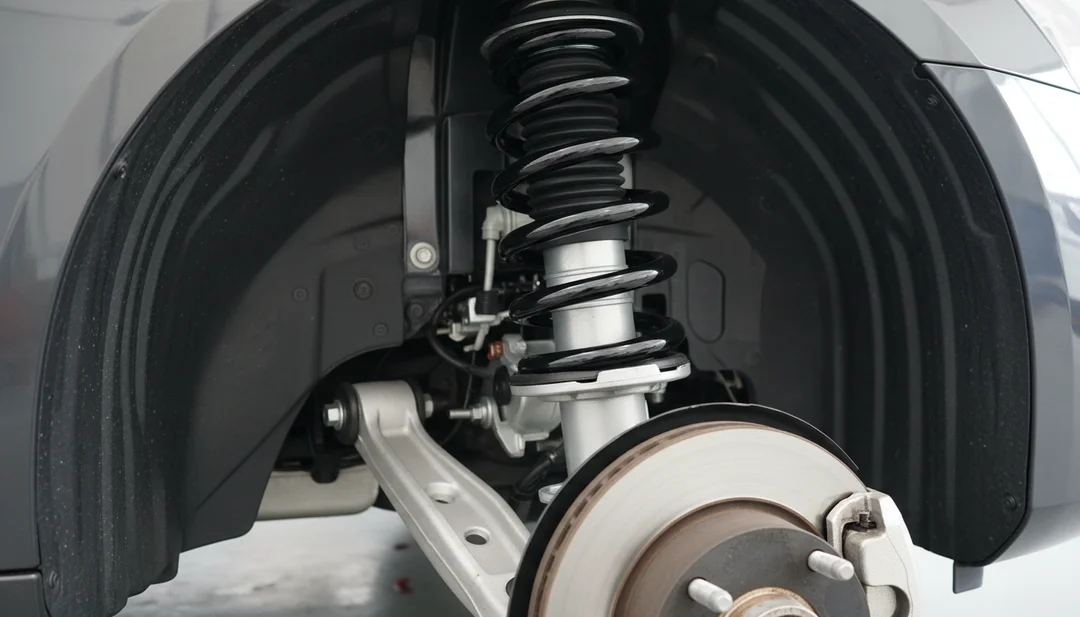
Shock absorbers control suspension bounce by dampening spring movement.
They help keep tires in contact with the road and enhance ride comfort. Uneven tire wear, which resembles the signs of worn steering components, might also be caused by failing shocks.
Additionally, we’ve observed that after striking bumps, cars with worn shocks frequently bounce excessively. This frequent bouncing puts more strain on suspension joints and could hasten the deterioration of bushings and tie rods.
4. Struts
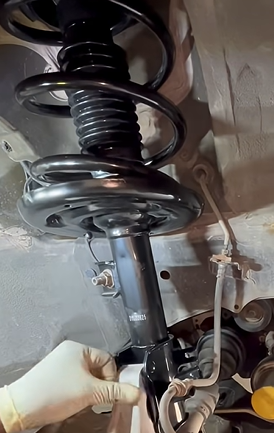
Struts combine a shock absorber and coil spring into a single structural suspension assembly.
Additionally, they give the suspension structural support. Strut assemblies are frequently installed close to the steering knuckle, which also contains the wheel hub and bearing.
Struts also affect steering geometry in many cars with front-wheel drive. Turning noise from a worn strut mount can occasionally be mistaken for problems with the rack and pinion.
5. Coil Springs
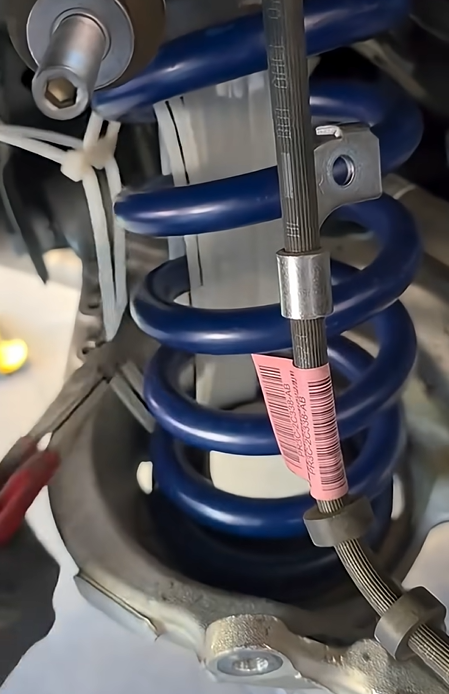
Coil springs support vehicle weight and maintain ride height.
To absorb impacts from the road, they expand and compress. Weak springs may put more strain on wheel bearings, which could reduce their lifespan.
One side of the car may sit lower due to drooping coil springs. One wheel bearing may experience increased pressure as a result of this unequal ride height, which could cause an early failure.
6. Sway Bar
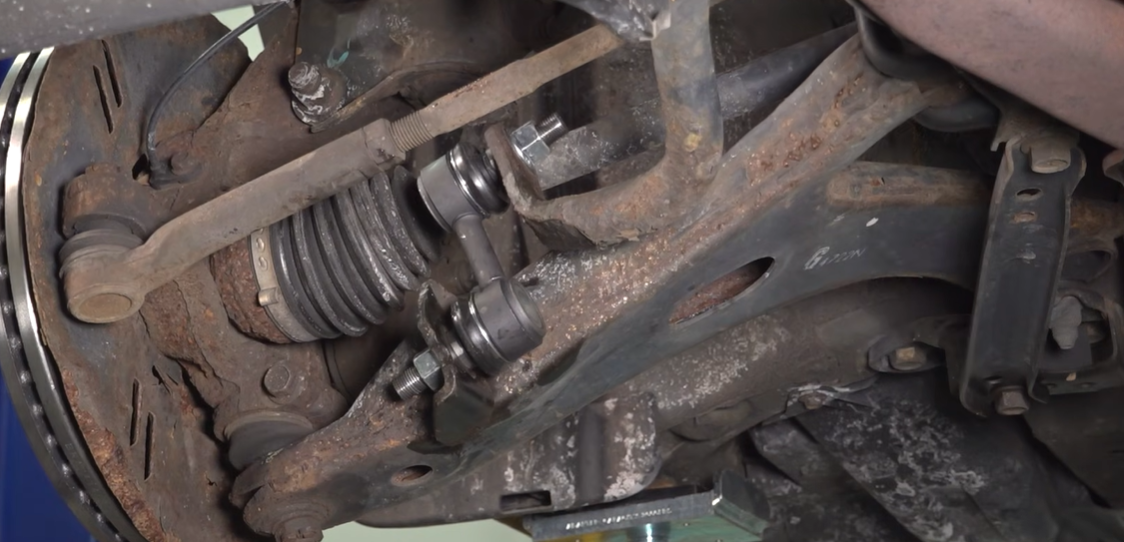
A sway bar reduces body roll during cornering by linking suspension components on both sides of the vehicle.
It enhances handling and stability. Although worn links can produce clunking sounds akin to rack and pinion problems, sway bars have no direct effect on steering.
Worn sway bar links frequently make a knocking sound over little bumps. Sometimes drivers believe the steering rack is failing since the sound is coming from close to the front suspension.
7. Steering Knuckle
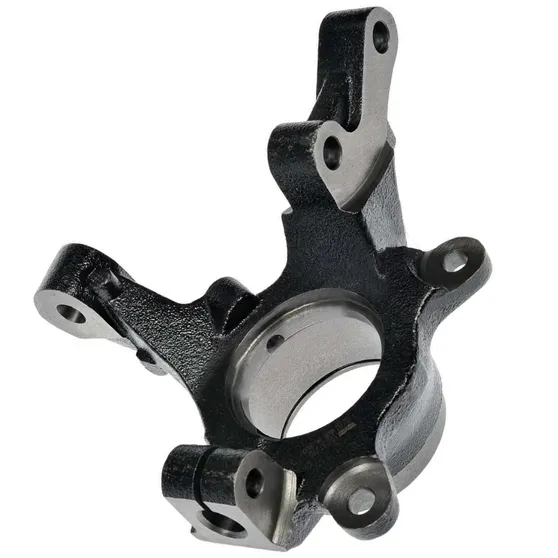
The steering knuckle connects suspension components, steering components, and the wheel hub assembly.
In addition, it supports the wheel bearing and offers mounting locations for tie rods and control arms. A key component of both the suspension and steering systems, the steering knuckle contains the wheel hub assembly and bearing.
Damage or corrosion in this location can impact both steering accuracy and suspension movement because the steering knuckle is the mounting point for numerous components.
8. Wheel Hub Assembly
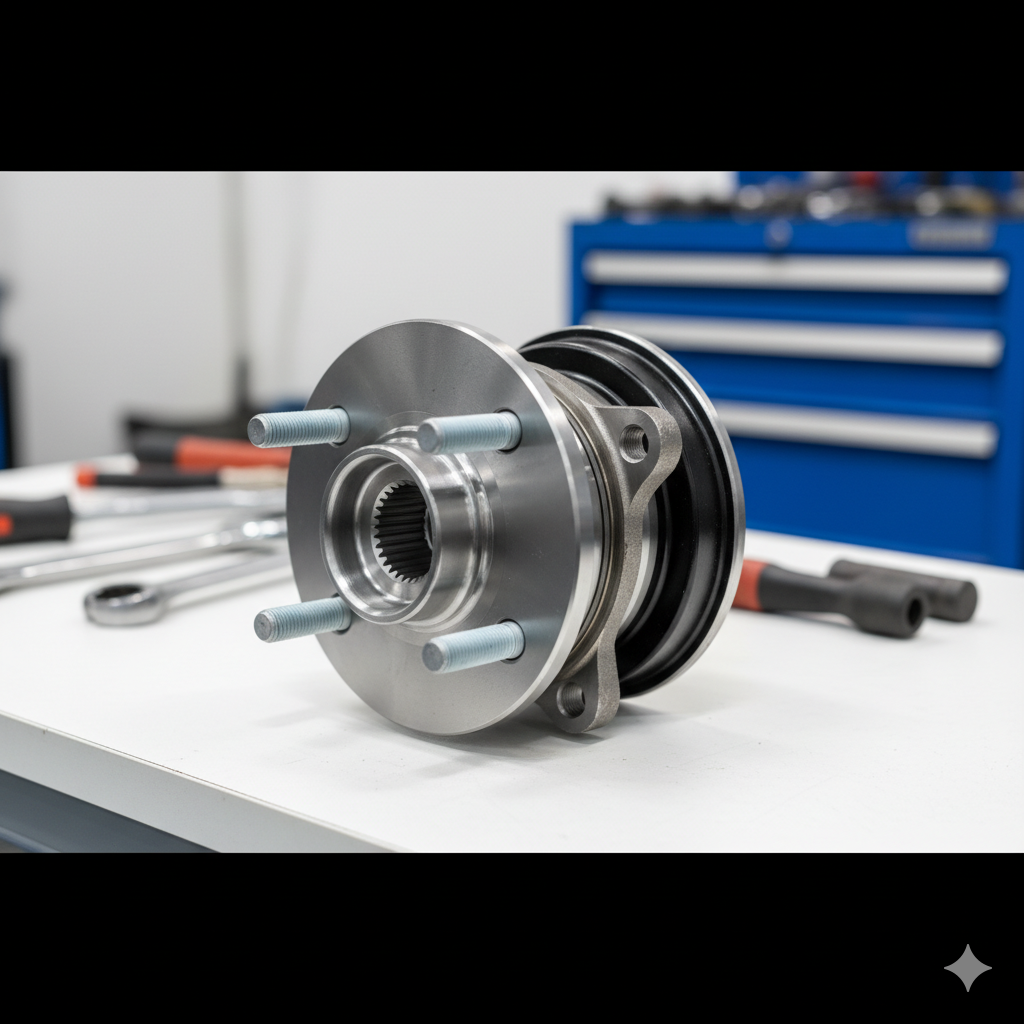
The wheel hub assembly mounts the wheel to the suspension and allows it to rotate.
It also includes the wheel bearing in a lot of cars. Due to its direct connection to the steering knuckle, problems with this part can impact both steering and suspension.
At highway speeds, a loose hub assembly could cause vibration. Inspection is crucial since this vibration can be mistaken for suspension damage or tire imbalance.
9. Wheel Bearings
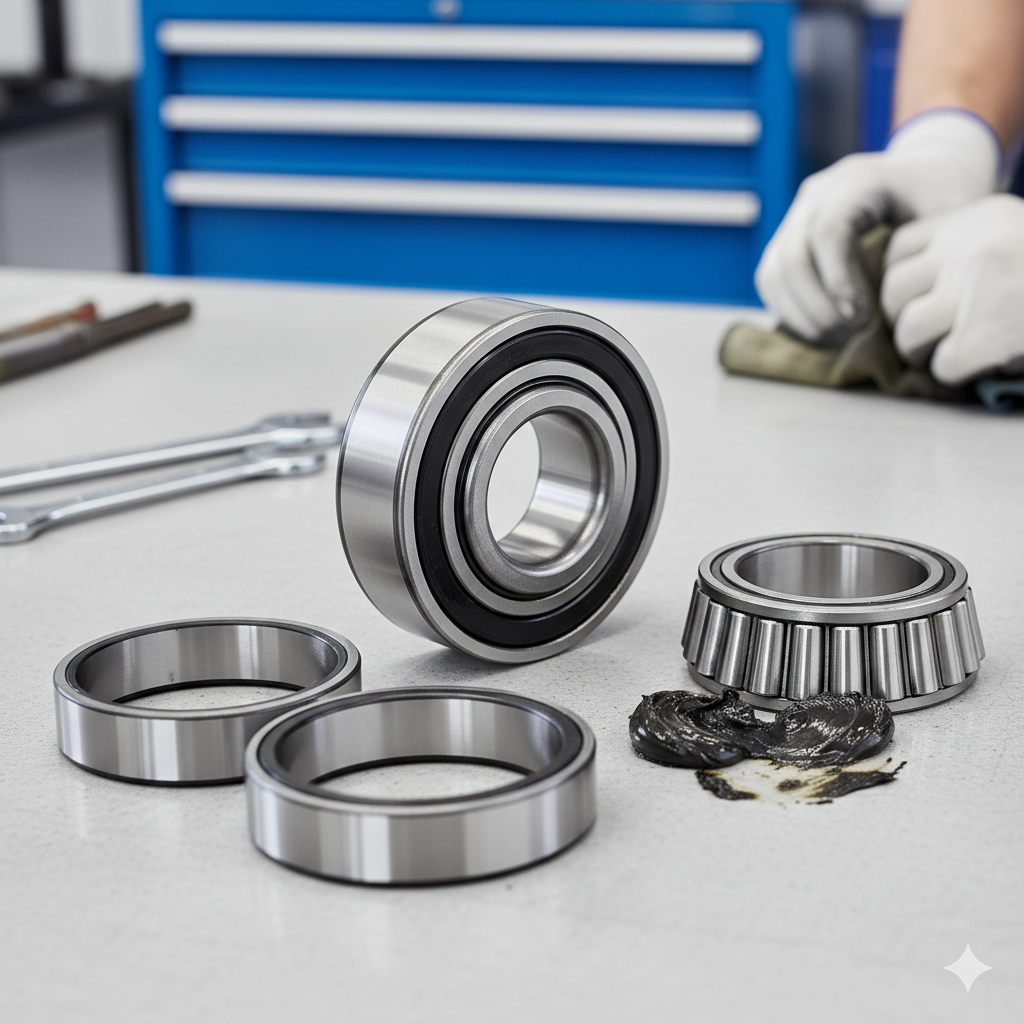
Wheel bearings reduce friction and allow smooth wheel rotation.
They allow for mobility while supporting the weight of the vehicle. Noise and vibration from worn bearings can be mistaken for suspension or steering issues. Bearing failures have also triggered manufacturer recalls tracked by NHTSA’s recalls database, which is why a proper diagnosis matters before swapping other suspension parts.
When turning, wheel bearing noise frequently gets louder. This shift in sound aids in differentiating suspension component noise from bearing problems.
10. Tie Rods
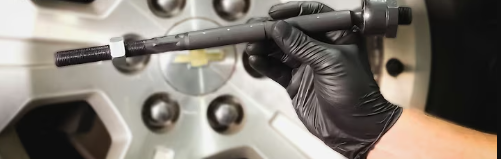
Tie rods connect the steering rack to the wheels and control wheel direction.
They convey motion to the steering knuckle from the rack and pinion steering system. Uneven tire wear and poor steering might be caused by worn tie rods.
We’ve noticed that when rotating the steering wheel at moderate speeds, worn outer tie rods frequently produce a knocking sound. Worn ball joints may coexist with this symptom.
11. Rack and Pinion
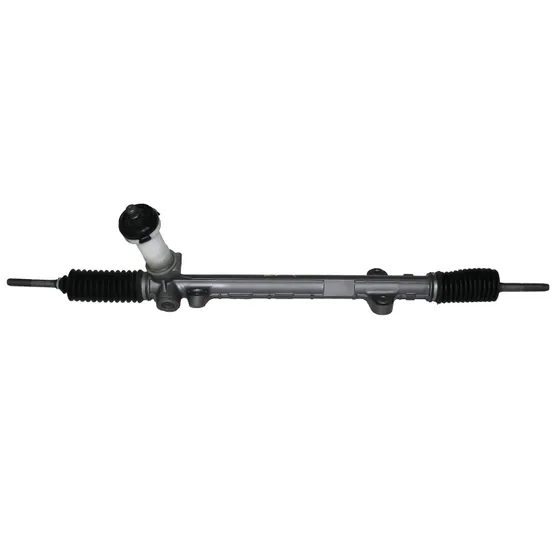
The rack and pinion steering system controls wheel direction and connects directly to suspension components.
The steering knuckle and tie rods are used to turn the wheels. Steering problems are sometimes confused with suspension issues because of how it interacts with suspension components.
The steering feel may be hazy due to rack and pinion looseness. If not thoroughly examined, this condition could be confused with worn suspension bushings.
12. Bushings
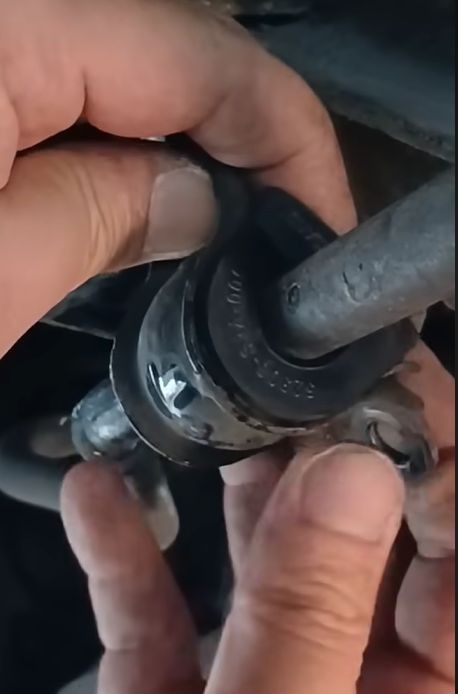
Bushings reduce vibration and cushion movement between suspension components.
Control arms, sway bars, and other mounting points contain them. Looseness that could be confused with steering rack wear can be caused by worn bushings.
Rubber bushings may dry out or break over time. When this occurs, clunking sounds may be produced when the suspension shifts slightly during braking.
How Suspension Components Work Together
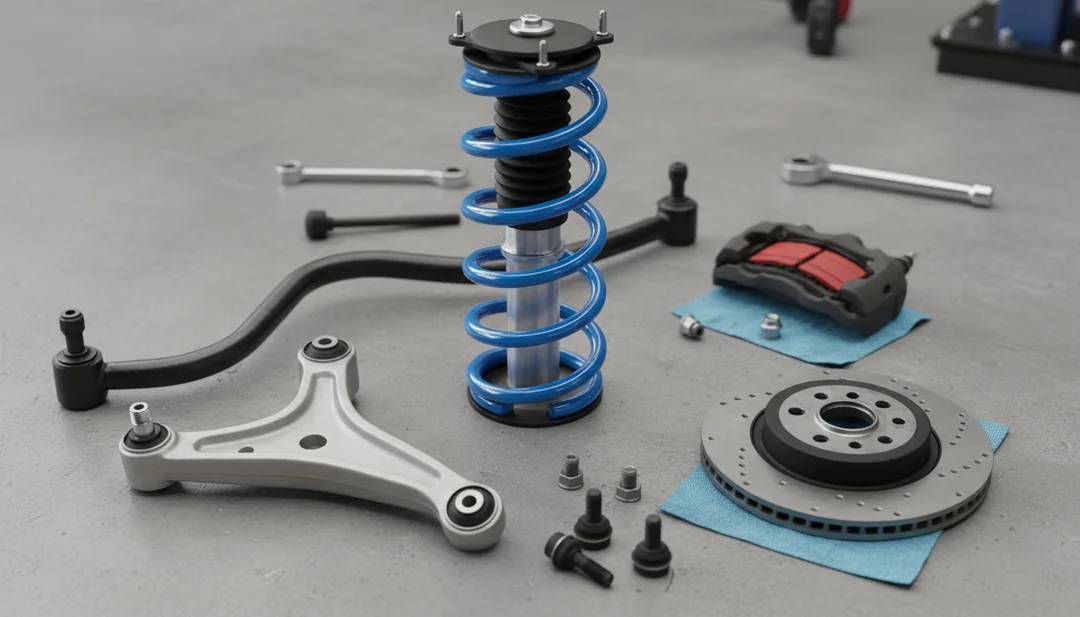
Suspension components work together with steering and wheel assemblies to maintain stability and control.
While tie rods and the rack and pinion regulate wheel direction, control arms, ball joints, and struts govern movement. These systems are connected by the wheel hub, bearings, and steering knuckle. Due to their interdependence, troubleshooting suspension noise frequently necessitates examining the wheel bearings, steering rack, and hub assembly as a whole.
Both noise and steering play might be produced by a worn wheel bearing and loose tie rods. Examining only one element could not reveal the entire issue.
Most Common Suspension Components That Wear Out
The most common suspension components that wear out are ball joints, bushings, shocks, wheel bearings, and tie rods.
These components are constantly under load and in motion. For instance, ball joints acquire play, shocks lose their ability to dampen, and bushings deteriorate over time. Several components should be examined since these failures have similar symptoms.
Bushings and ball joints usually exhibit wear first in cars with high mileage. However, stress and strut damage can be accelerated by uneven road conditions.
Signs of Suspension Problems
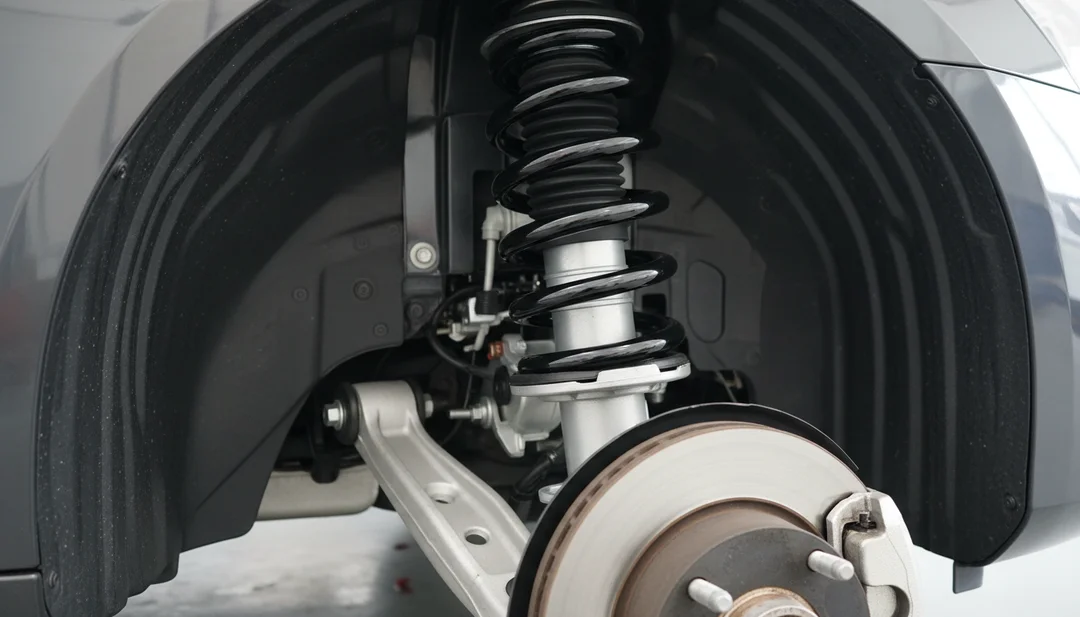
Common signs of suspension problems include clunking noises, uneven tire wear, loose steering, and vibration.
These symptoms frequently coexist with worn-out steering parts and failed wheel bearings. It is advised to examine the complete suspension system because many of these symptoms are similar to steering problems.
While vibration at speed may indicate wheel bearings or hub assemblies, clunking over bumps frequently indicates old bushings or sway bar links.
FAQs
What are the main suspension components?
The main suspension components include control arms, ball joints, shocks, struts, coil springs, sway bars, steering knuckles, wheel hubs, wheel bearings, tie rods, rack and pinion, and bushings. Every component has a distinct function in preserving wheel alignment, stability, and ride comfort. For instance, sway bars lessen body roll during turns, shocks and struts absorb hits from the road, and control arms and bushings enable controlled movement. Because these parts are interdependent, wear on one component can frequently have an impact on the suspension system’s overall performance.
Which suspension parts wear out first?
Bushings, ball joints, shocks, and tie rods typically wear out first because they experience constant movement and load. Ball joints and tie rods deteriorate when their internal joints loosen, while rubber bushings deteriorate with time as a result of heat and road pollutants. Additionally, when their damping capacity diminishes, shocks and struts steadily deteriorate. In reality, these parts frequently exhibit symptoms like clunking sounds, uneven tire wear, or poor steering prior to the failure of heavier parts like knuckles or control arms.
Are wheel bearings part of the suspension?
Wheel bearings are part of the wheel assembly but connect directly to suspension components through the steering knuckle. They absorb road forces, support vehicle weight, and enable smooth wheel rotation. Worn wheel bearings can occasionally be confused with suspension problems because they are located between the hub and suspension, particularly when drivers hear vibrations or humming sounds. Because of their close integration, bearing issues may have an impact on steering stability and suspension performance as a whole.
What connects suspension to steering?
Tie rods and the steering knuckle connect the suspension system to the steering rack and pinion. The tie rods, which push or pull the steering knuckle to turn the wheels, are moved by the steering rack. Wear in tie rods or knuckle joints might result in uneven tire wear, poor alignment, or loose steering since these parts connect steering input to suspension movement. Because of this relationship, steering and suspension issues frequently coexist when being diagnosed.
Is it safe to drive with worn suspension components?
Driving with worn suspension components is safe for short periods but compounds damage over time. A clunking sway bar link alone will not leave you stranded, but it accelerates uneven tire wear and adds stress to ball joints and control arm bushings. A separated ball joint or a broken control arm, by contrast, can cause a wheel to collapse under the car. Anything that clunks over bumps gets inspected before it fails catastrophically.
Can I replace suspension parts in pairs?
Suspension parts should be replaced in pairs on the same axle for predictable handling. Strut or shock replacement on one side only leaves the car rebounding unevenly over bumps, which can pull the steering and wear tires. Control arms, sway bar links, and tie rod ends follow the same rule: replace left and right together on the same axle, even if only one side is visibly worn.
For a full breakdown of what a replacement actually runs at an independent shop in 2026. Parts, labor, and alignment. See our lower control arm replacement cost guide.