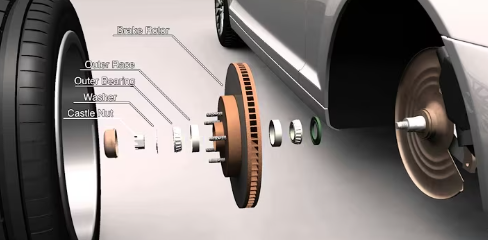
The wheel hub assembly plays a major role in how your vehicle handles, steers, and supports the wheel itself. The wheel hub, wheel bearing, mounting flange, and frequently the ABS sensor are all combined into one unit in modern hub assemblies. It might be a lot simpler to diagnose noises, vibrations, and steering problems if you understand how these components work together.
Ignoring a deteriorating hub assembly can result in wheel play, uneven tire wear, ABS warning lights, and even dangerous driving conditions. Confusion between the wheel hub and the wheel bearing itself is one of the most frequent problems we’ve seen while working with steering, suspension, and wheel-end components over the years. Despite their intimate relationship, they have different purposes and fail in different ways. Drivers can better comprehend installation processes, repair prices, and typical symptoms before they get worse by being aware of the differences.
Key Points to Review
This guide covers:
- What a wheel hub assembly is
- Main wheel hub assembly components
- How the parts fit together
- Common hub assembly failure symptoms
- Differences between a wheel hub and wheel bearing
- How hub assemblies affect ABS and steering systems
What Is a Wheel Hub Assembly?
A wheel hub assembly is the central mounting unit that connects the wheel to the suspension and allows the wheel to rotate smoothly.
Modern vehicles typically use a sealed hub assembly that contains:
- The wheel hub
- Wheel bearing
- Mounting flange
- Wheel studs
- ABS sensor or tone ring
The hub assembly maintains the weight of the car while enabling smooth wheel rotation by mounting directly to the steering knuckle. In contrast to older serviceable bearing installations that needed routine maintenance and new wheel bearing grease, the bearing on many modern cars is permanently sealed inside the hub assembly.
Knowing what a wheel hub is can also assist explain why, in contrast to earlier press-in bearing systems, hub assemblies are now more prevalent on modern cars.
Main Function of the Hub Assembly
The hub assembly performs several critical tasks:
- Supports the vehicle load
- Allows wheel rotation
- Maintains wheel alignment
- Provides ABS sensor readings
- Connects suspension and steering components
Due to the hub assembly’s direct connection to important suspension components, malfunctions may occasionally generate symptoms that resemble worn-out automobile suspension parts or issues with the steering system.
Wheel Hub Assembly Diagram: Main Parts Breakdown
A wheel hub assembly diagram helps visualize how multiple rotating and stationary components work together inside one compact unit.
1. Wheel Hub
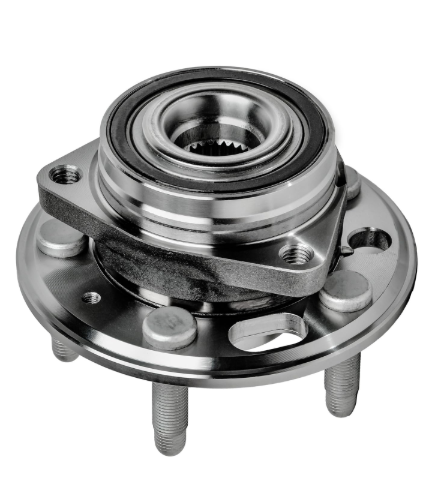
The wheel hub is the central metal body where the wheel mounts.
It contains:
- Wheel studs
- Bearing mounting surfaces
- Brake rotor mounting surface
The hub rotates together with the wheel and tire assembly.
2. Wheel Bearing
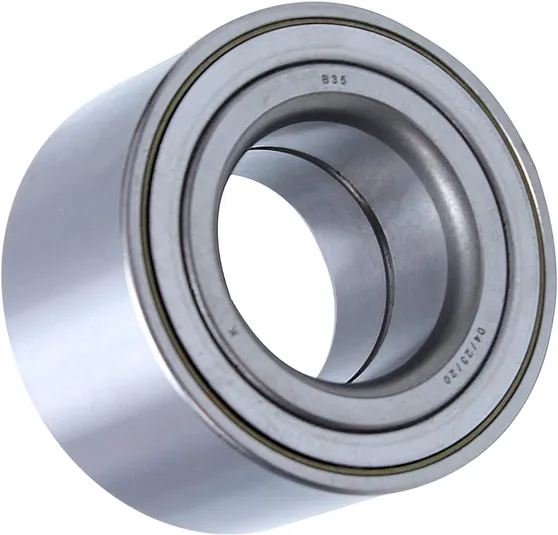
The wheel bearing allows the hub to rotate with minimal friction.
Most modern bearings use:
- Ball bearings
- Tapered roller bearings
- Sealed lubrication systems
Drivers frequently experience vibration, grinding, or buzzing when the bearing starts to deteriorate. Understanding the signs of a bad wheel bearing and early intervention can help avoid more serious hub damage.
3. Wheel Studs
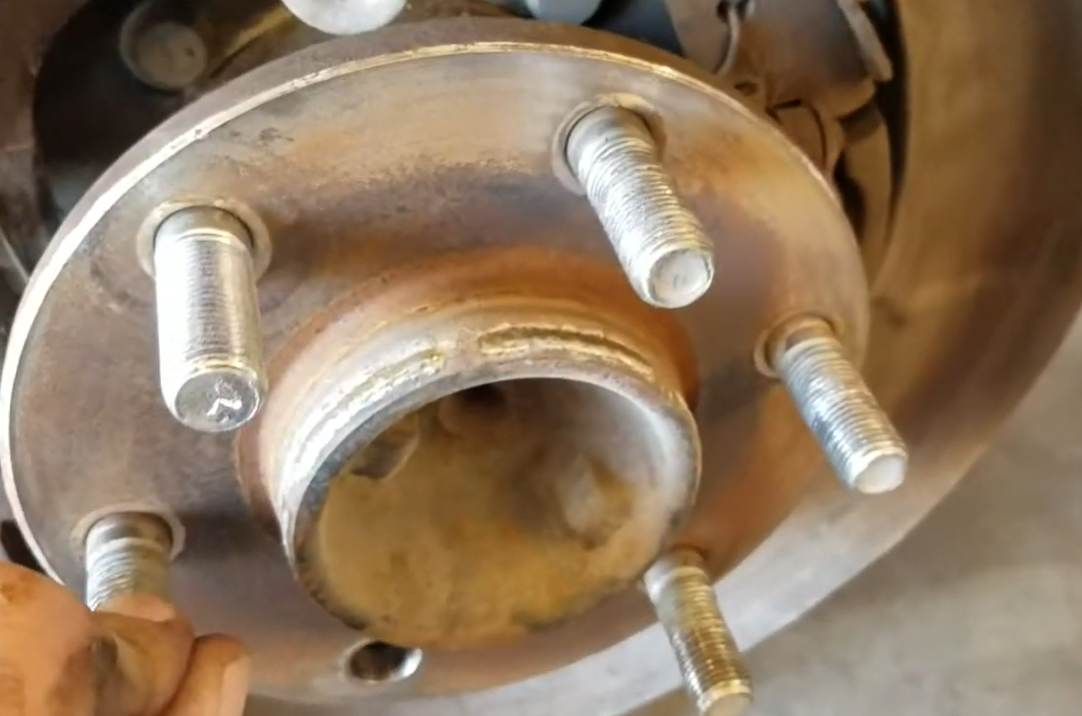
Wheel studs secure the wheel to the hub assembly using lug nuts.
Damaged studs can cause:
- Loose wheels
- Uneven clamping force
- Rotor warping risks
4. ABS Sensor or Tone Ring
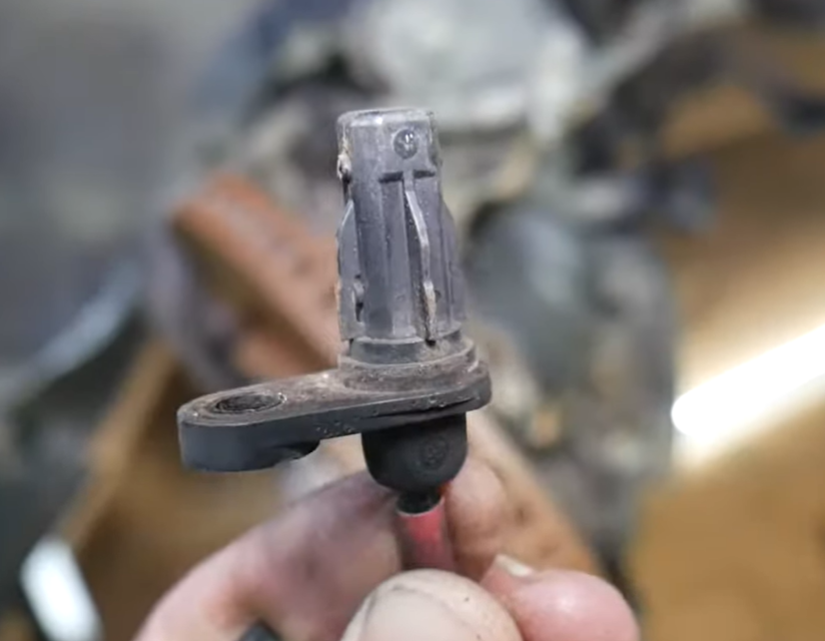
Many modern hub assemblies include integrated ABS components.
These sensors monitor wheel speed for:
- ABS operation
- Traction control
- Stability systems
Sometimes warning lights appear right away after installation due to improper installation or subpar aftermarket hubs. This is one of the reasons it’s crucial to know how to reset the ABS light following wheel bearing replacement.
5. Mounting Flange
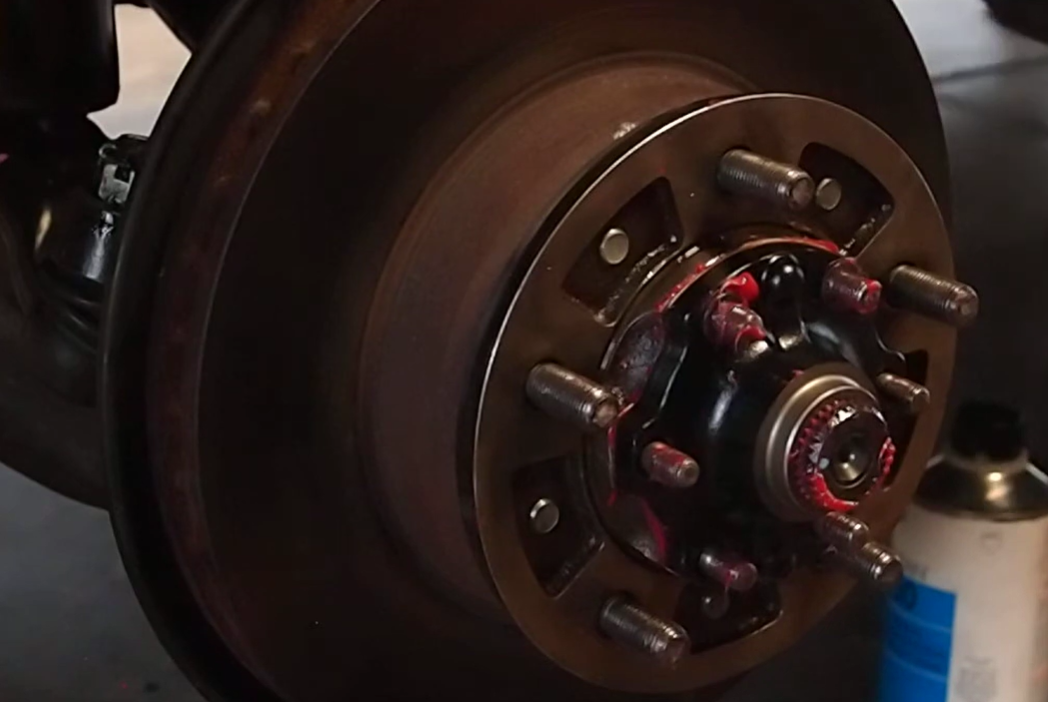
The mounting flange secures the entire hub assembly to the steering knuckle.
It must remain perfectly aligned to:
- Prevent vibration
- Maintain steering geometry
- Ensure proper wheel tracking
How the Wheel Hub Assembly Fits Together
The wheel hub assembly fits between the wheel, brake system, and suspension components to create a stable rotating connection.
The process works like this:
- The hub assembly bolts to the steering knuckle
- The axle shaft passes through the center (on driven wheels)
- The brake rotor mounts to the hub
- The wheel attaches to the wheel studs
- The bearing allows smooth rotation between stationary and rotating parts
This configuration maintains the stability of the suspension and steering system while enabling the wheel to revolve.
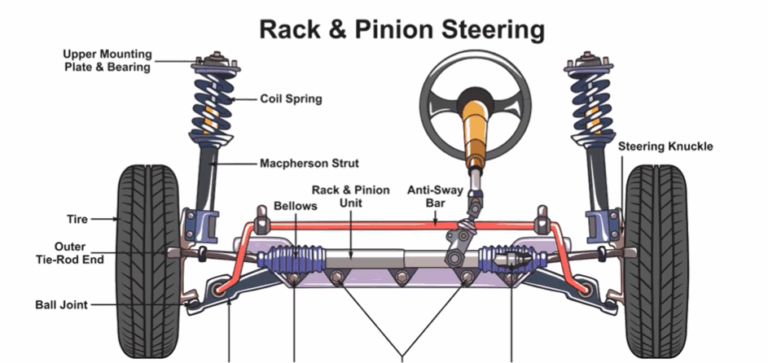
The hub assembly collaborates closely with the axle and steering system, particularly in cars with front-wheel drive. Problems might occasionally resemble the signs of rack and pinion steering versus power steering issues, or in some situations, they can even cause an automobile to pull to the left or right.
Common Wheel Hub Assembly Failure Symptoms
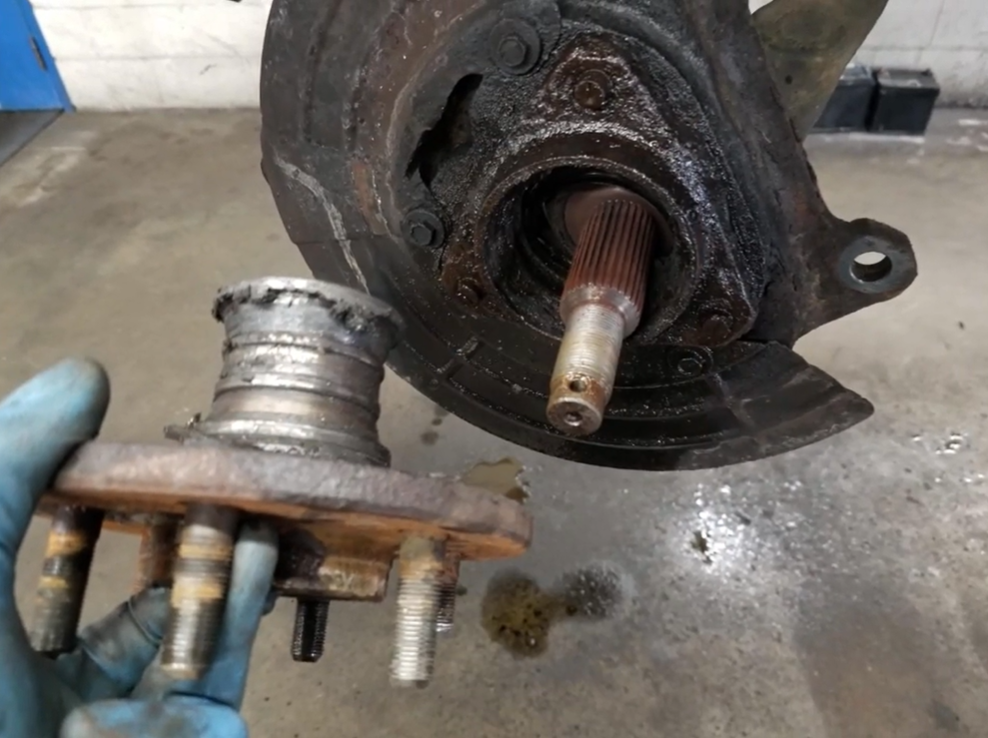
Wheel hub assembly failure often starts gradually before becoming more severe over time.
Common symptoms include:
- Humming or grinding noise
- Steering vibration
- Wheel looseness
- Uneven tire wear
- ABS warning lights
- Clicking noises during turns
Hub assemblies collapsing when water contamination affects the internal bearing seals is one common problem we’ve seen in high-mileage cars. Wear is quickly accelerated by heat and friction once moisture gets inside the bearing.
Sometimes, because the symptoms are similar, drivers confuse hub issues with suspension or steering issues. For instance, a worn hub bearing, CV axle, or suspension joint could be the source of a clicking sound coming from the front wheel while driving.
Why Noise Happens
Bearing noise occurs because worn rolling elements create uneven contact inside the bearing races.
This usually produces:
- Humming at highway speeds
- Grinding during turns
- Increased noise when vehicle weight shifts
Wheel Hub vs Wheel Bearing
The difference between a wheel hub vs wheel bearing is that the hub is the mounting structure while the bearing allows rotational movement.
The wheel hub:
- Holds the wheel studs
- Mounts the wheel and brake rotor
- Rotates with the wheel
The wheel bearing:
- Reduces friction
- Supports rotational load
- Sits inside or alongside the hub
Both components are included in a single sealed assembly on a lot of contemporary cars. For this reason, while evaluating repair costs, drivers frequently contrast hub assembly with wheel bearing replacements.
Serviceable bearings that could be cleaned, lubricated, and reused were frequently utilized in older cars. Instead, modern sealed hub assemblies are typically swapped out as a single item.
How Wheel Hub Assemblies Affect Steering and Suspension
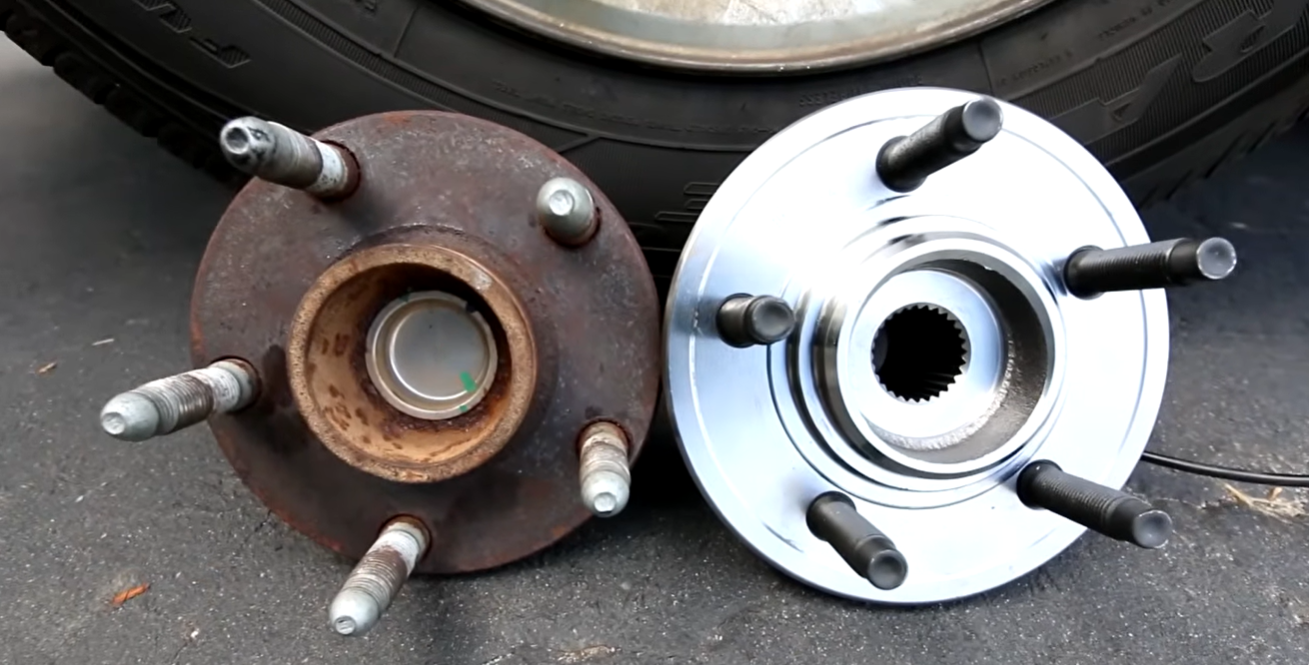
Wheel hub assemblies directly affect steering precision, ride quality, and suspension stability.
A worn hub assembly can cause:
- Steering looseness
- Wandering
- Brake pulsation
- Alignment instability
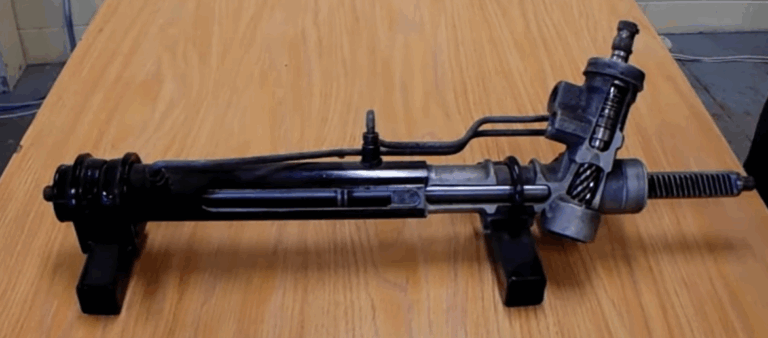
Excessive bearing play might cause symptoms that resemble failing steering components since the hub assembly is directly connected to the steering knuckle. We have witnessed instances where drivers initially feared issues with rack and pinion systems or their types, only to find that the instability was caused by excessive wheel bearing movement.
Because rotor alignment depends on a firm mounting surface, hub condition also has an impact on braking performance. Steering vibration and uneven brake wear can eventually be caused by even a little amount of hub wobble.
When Should a Wheel Hub Assembly Be Replaced?
A wheel hub assembly should be replaced when bearing noise, looseness, or ABS-related issues develop.
Replacement is usually necessary if:
- Bearing noise becomes noticeable
- Excessive wheel play exists
- ABS sensors fail
- The bearing overheats
- The hub becomes damaged
Ignoring hub failure can eventually harm surrounding steering and suspension parts. The bearing may entirely detach or seize in extreme circumstances.
Depending on the vehicle, repair difficulties vary significantly. While some kits are simple to screw on, others necessitate the removal of several suspension parts. This is comparable to labor-intensive steering repairs, such as rack and pinion replacement.
Knowing the cost of replacing a wheel hub assembly can also help drivers budget for labor and parts costs before symptoms get worse.
FAQs
What is included in a wheel hub assembly?
A wheel hub assembly usually includes the wheel hub, wheel bearing, wheel studs, mounting flange, and often the ABS sensor or tone ring. Sealed hub assemblies, which come preassembled as a single unit for simpler installation and increased dependability, are used in many current cars.
Can you replace a wheel bearing without replacing the hub assembly?
You can replace a wheel bearing without replacing the hub assembly on some vehicles that use press-in bearings. However, a lot of contemporary cars employ sealed hub assemblies, which require replacing the entire assembly because the hub and bearing are connected.
What causes a wheel hub assembly to fail?
Wheel hub assemblies fail mainly because of bearing wear, contamination, heat, and impact damage. Potholes, severe load stress, inadequate lubrication, and moisture ingress can all reduce the lifespan of bearings and ultimately harm the hub assembly as a whole.
How long does a wheel hub assembly last?
A wheel hub assembly typically lasts between 85,000 and 150,000 miles depending on driving conditions and vehicle load. Water exposure, rough roads, heavy towing, and subpar replacement parts can all drastically shorten lifespan.