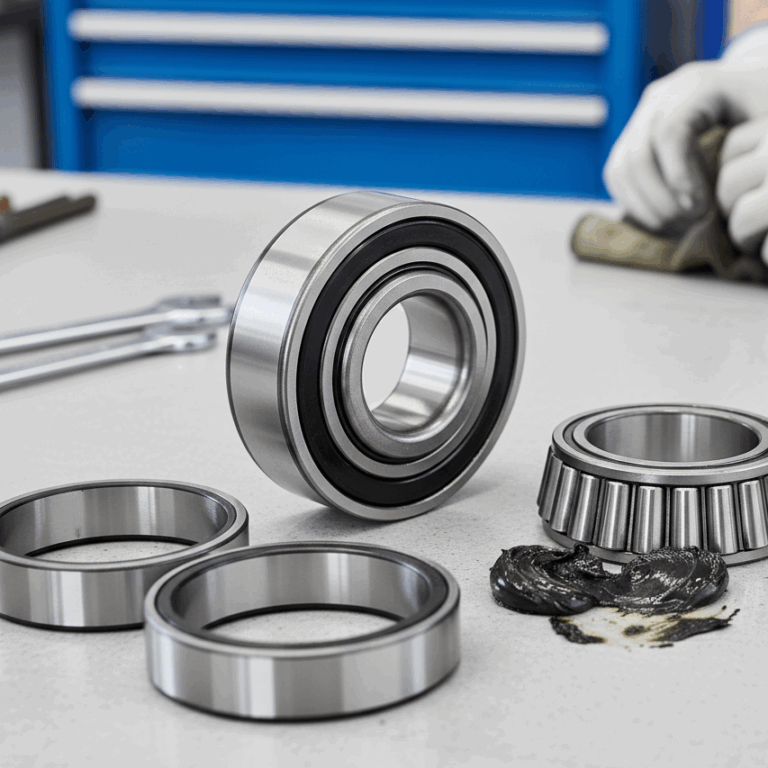
Wheel bearing grease plays a critical role in keeping your vehicle’s wheel bearings protected, cool, and operating smoothly. Inadequate oil can cause bearings to overheat, wear down too quickly, and eventually fail, resulting in vibration, noise, and costly repairs.
Knowing the right kind of grease and how to apply it may greatly increase bearing life, whether you’re maintaining heavy-duty applications, trailer hubs, or older serviceable wheel bearings. Using the incorrect lubricant or applying too little (or too much) grease is one of the most frequent errors we’ve seen in our years of working with steering, suspension, and wheel-end components.
Key Points to Review
- Wheel bearing grease reduces friction, heat, and metal-to-metal wear.
- Different grease types are designed for different temperatures, loads, and moisture conditions.
- High-temperature lithium complex grease is one of the most common automotive choices.
- Proper packing technique is just as important as choosing the right grease.
- Contaminated or mixed greases can shorten bearing life.
What Is Wheel Bearing Grease?
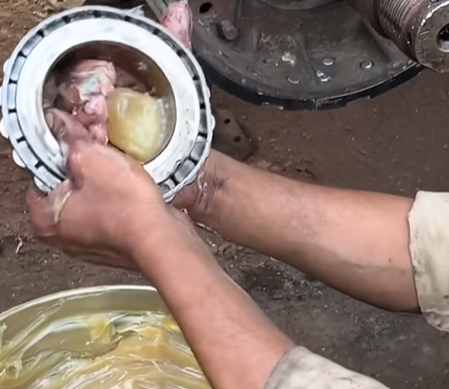
Wheel bearing grease is a specialized lubricant designed to protect wheel bearings from friction, heat, water intrusion, and corrosion. Grease, in contrast to ordinary oil, remains inside the bearing assembly and keeps lubricating under pressure.
Wheel bearings allow the wheels to freely rotate while supporting the vehicle’s weight. Ordinary grease frequently won’t work well enough because they are constantly under stress and heat. Wheel bearing grease is therefore made using base oils, thickeners, and additives to withstand harsh environments. If you’re comparing surrounding components, it also helps to understand wheel hub vs wheel bearing and what a wheel hub is since these parts often work together.
Types of Wheel Bearing Grease
Not all wheel bearing grease is the same, and choosing the right type matters for durability and safety.
Lithium Complex Grease
Lithium complex grease is one of the most common wheel bearing options due to its lengthy service life, exceptional heat resistance, and water resistance. Many SUVs, light trucks, and passenger automobiles may use it with success.
Synthetic Grease
Synthetic grease performs well in extreme temperatures and demanding driving conditions. It is frequently utilized in towing applications, performance cars, and extremely hot or cold conditions.
Marine Grease
Marine grease is designed for wet environments and is commonly used in boat trailers. It aids in preventing corrosion and water washout.
Moly Grease
Molybdenum disulfide (moly) grease is excellent for heavy loads, However, unless the manufacturer specifies otherwise, it is not generally the first suggestion for high-speed wheel bearings.
When replacing components, choosing quality parts matters, so many drivers research the best wheel bearing brand before starting repairs.
What Does Wheel Bearing Grease Do?
Wheel bearing grease creates a protective film between moving metal surfaces to reduce wear and heat. It also seals out moisture and contaminants that can damage the bearing.
Friction rapidly produces heat as bearings rotate thousands of times each mile. In addition to reducing scoring, pitting, and early failure, the right oil dissipates that heat. This is particularly crucial for cars with aged suspension systems, since numerous worn-out components may add to the stress, which is comparable to problems observed in other car suspension components.
A properly greased bearing usually runs quietly. If you hear humming, grinding, or a clicking noise from the front wheel when driving, inspection should happen soon.
How to Apply Wheel Bearing Grease Correctly
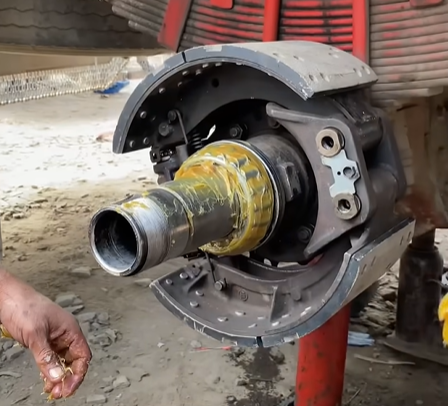
Applying wheel bearing grease correctly ensures complete lubrication across all rollers and races. Grease applied externally is insufficient.
Hand Packing Method
Place a portion of grease in your palm and press the wide side of the bearing into it repeatedly until grease pushes through the opposite side of the rollers. Rotate and repeat until fully packed.
Bearing Packer Tool
A bearing packer tool is quicker and cleaner than hand packing, and it evenly distributes grease throughout the bearing. It’s a fantastic choice for routine upkeep.
Don’t Overfill the Hub
Too much grease can create excess heat and pressure. Instead of cramming every vacant spot solid, follow the manufacturer’s suggestions.
In professional maintenance settings, we’ve seen bearings fail due to improper packing or contaminated grease after installation rather than low-quality parts. Grease itself is important, but so are cleanliness and technique.
Common Mistakes to Avoid
Avoiding common mistakes can dramatically improve wheel bearing lifespan.
Mixing Different Greases
Different grease formulas may be incompatible and break down when mixed. Clean the old grease completely before switching to a new type.
Using the Wrong Grease
Standard chassis grease may not handle wheel bearing temperatures or loads. Always select a wheel bearing-rated grease.
Ignoring Seal Condition
A damaged seal allows water and debris inside. Replace seals whenever servicing bearings.
When Should Wheel Bearing Grease Be Replaced?
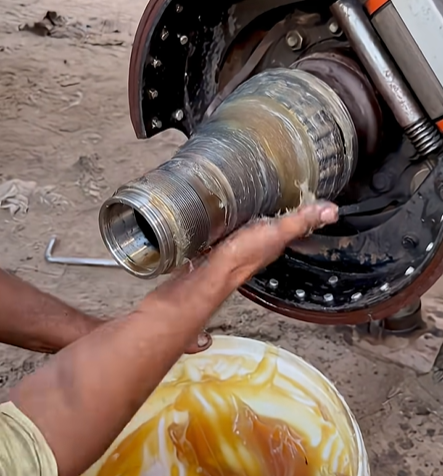
Every time serviceable bearings are removed, contaminated, overheated, or undergo planned maintenance, wheel bearing grease needs to be changed. Because the grease is factory sealed, many contemporary sealed hub assemblies don’t need to be repacked.
Cleaning and repackaging are frequently necessary for older cars, trailers, and other heavy-duty uses. Replace the grease right away if it looks dark, burned, runny, or grainy.
Depending on the arrangement, you might need to know how to replace a wheel bearing, how much a wheel bearing replacement costs, or how to remove a wheel bearing without a press if damage has already occurred.
FAQs
What type of grease is best for wheel bearings?
The best type of grease for wheel bearings is usually a high-temperature lithium complex grease rated for automotive wheel bearing use. It provides a good mix of water protection, durability, and heat resistance. Synthetic or marine-specific grease might be preferable for extreme-duty or marine applications.
Can I use regular grease for wheel bearings?
You should not use regular grease for wheel bearings unless it specifically meets wheel bearing specifications. Heat and pressure can cause standard-purpose grease to fail, causing premature wear or bearing damage.
How often should wheel bearing grease be replaced?
Wheel bearing grease should be replaced based on manufacturer intervals or whenever bearings are serviced. Compared to sealed modern hub assemblies, trailers and earlier serviceable hubs may require more frequent maintenance.
Can too much grease damage a wheel bearing?
Too much grease can damage a wheel bearing by creating excess heat and pressure. Appropriate fill levels are crucial since overpacking might result in churning, seal failure, or overheating.