
How Long Do Lower Control Arms Last? (Lifespan & When to Replace)
·By Lawrence Ma

Most lower control arms last 90,000 to 100,000 miles, and plenty go well past that. But here's the part that trips people up: the arm itself almost never wears out. What wears out is the rubber bushings pressed into it and the ball joint riveted to the end. When I tell someone their control arm is "bad," I usually mean one of those two parts has had enough. Six years at a Toyota and Lexus shop in Fullerton, and now doing mobile work in Orange, I've seen the same pattern over and over. On a smooth-road commuter I've watched one go 120,000 trouble-free miles. On a lifted truck that lives on gravel, or a car that spent its life in the salt belt, I've replaced one at 60,000.
A lower control arm is the A-shaped suspension link that connects the wheel's steering knuckle to the frame, pivoting on bushings at the chassis end and a ball joint at the wheel end. Lifespan is really the lifespan of those wear items. The stamped-steel or aluminum arm can outlive the car. The soft parts bolted to it are on a clock from the day it rolls off the line.
Key Points to Review
- Lower control arms typically last 90,000 to 100,000 miles, often longer on a garage-kept commuter.
- The arm rarely fails. The bushings and ball joint wear out first, and they set the real replacement clock.
- Potholes, road salt, off-roading, lifted suspension, and heavy towing all shorten the life, sometimes to 50,000 to 60,000 miles.
- You can wait on a slightly worn bushing. You cannot wait on a loose ball joint, which can separate and drop the wheel.
- If one side is worn from age or mileage, the other side usually isn't far behind. Plan for both.
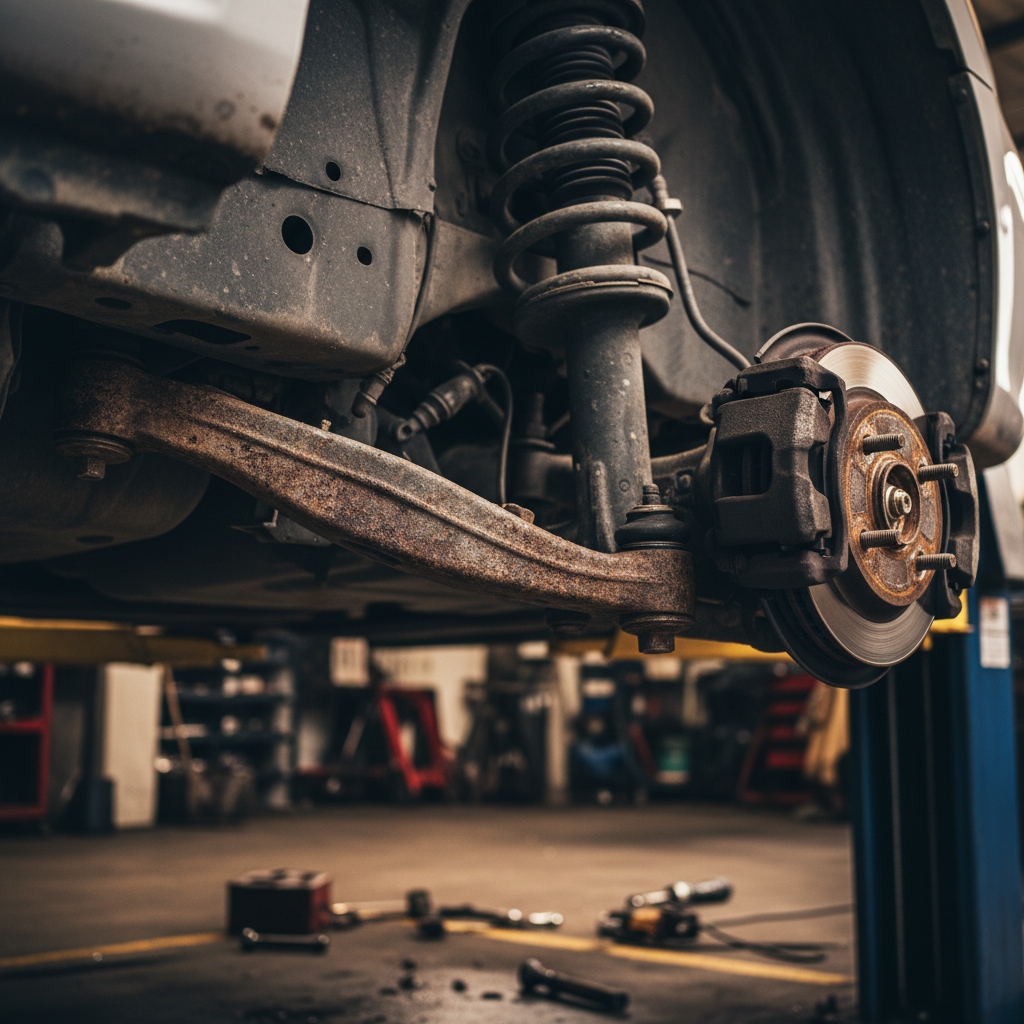
How Long Do Lower Control Arms Last?
Lower control arms last 90,000 to 100,000 miles on average, but that's a soft number because it depends entirely on what the suspension lives through. I pulled a control arm off a second-gen Camry once that ran past 150,000 without a complaint, garage-kept, highway commute, dry climate. Same part on a Tacoma that tows a trailer up a gravel road every weekend? Shot at 60,000. Mileage is a starting estimate, not a promise.
What matters more than the odometer is condition. Routine suspension and steering inspections catch a tired bushing or a loose ball joint long before they leave you stranded, which is exactly why the Car Care Council recommends checking these components on a regular maintenance schedule instead of waiting for a noise. The arm gives you warning. It's just quiet about it at first.
What Actually Wears Out First
When a lower control arm needs replacing, two parts are almost always the reason. Knowing which one tells you how urgent the job is.
The Bushings
The bushings go first, almost every time. These are the rubber-and-metal sleeves that let the arm pivot while soaking up road vibration. Rubber doesn't love decades of heat cycles, oil exposure, and pothole impacts, so it cracks, separates, or tears. A worn bushing gives you a clunk over bumps, a little steering wander, and sometimes uneven tire wear. It's annoying and it'll flunk an inspection, but a cracked bushing usually isn't going to strand you tomorrow. If that's the symptom you're chasing, I broke down how lower control arm bushings fail and what replacement runs over here.
The Ball Joint
The ball joint is the one I respect. On most cars the lower ball joint is part of the control arm assembly, and it carries real load while letting the wheel steer and move up and down. When it wears, you get play in the joint, a clunk on turns, and in the worst case, separation. A separated lower ball joint drops the wheel and you lose control. That is not a "next paycheck" repair. If you've got a loose lower control arm ball joint, the clock speeds up in a hurry.
What Shortens Lower Control Arm Life
Lower control arms wear out faster under a handful of specific conditions, and none of them are subtle. If your driving checks any of these boxes, plan on the low end of that mileage range.
- Potholes and rough roads. Impact is the enemy. Every hard hit slams the bushing and shocks the ball joint. Cities with beat-up roads eat control arms for breakfast.
- Road salt and rust. Up north, the steel arm and its hardware corrode, and a rusted pinch bolt or seized bushing sleeve can turn a routine job into an all-day fight. Salt also wicks into the ball joint boot and kills the grease.
- Off-roading and lifted suspension. A lift changes the control arm's working angle, which loads the bushing and ball joint in ways the factory never planned for. Off-road impacts pile on top of that.
- Towing and hauling. Extra weight means extra load through the suspension every mile. Trucks that work for a living wear suspension parts faster than ones that don't. Simple as that.
- Cheap replacement parts. This one's self-inflicted. Had a customer roll back in on a 2013 Civic about 18 months after a no-name arm went on it, bushing already separating from the sleeve at maybe 22,000 miles. A quality arm is the difference between doing this once and doing it twice.
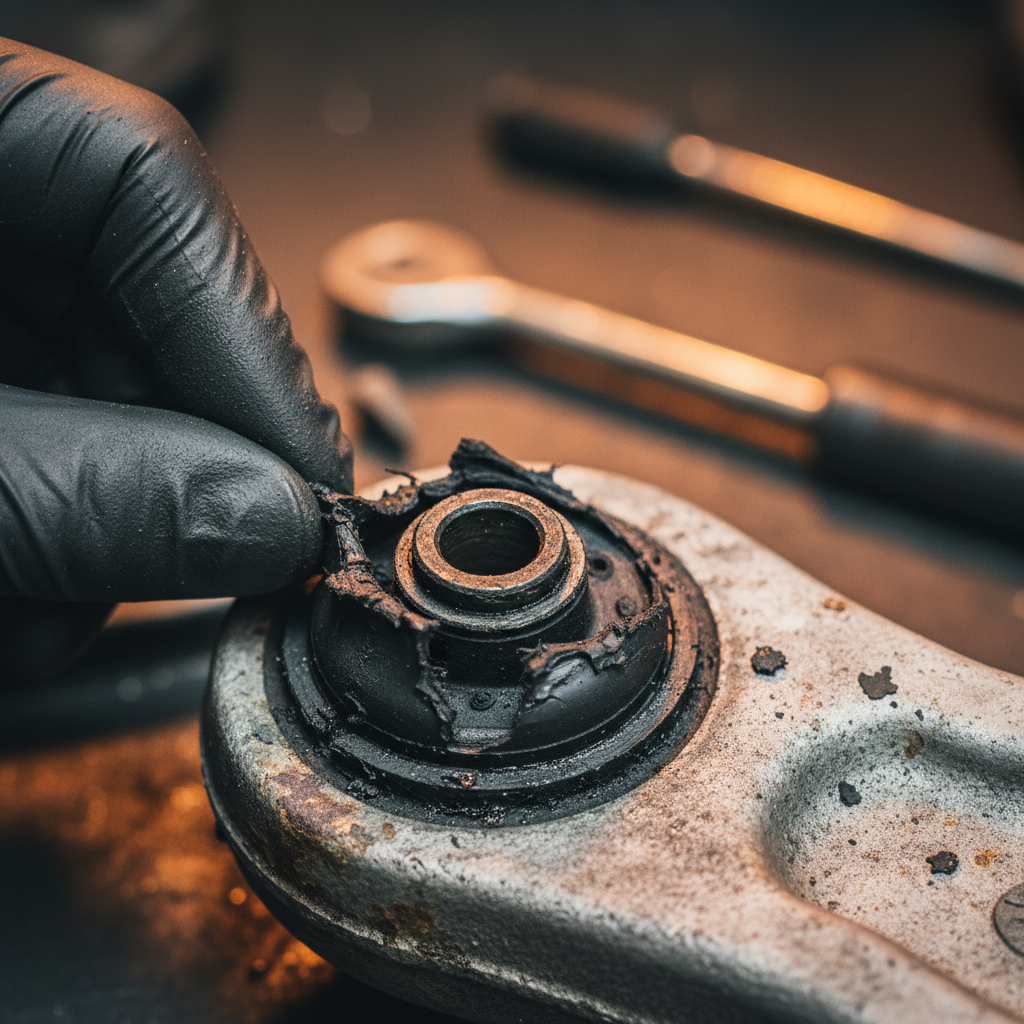
Upper vs Lower Control Arm: What Wears Faster?
The lower control arm usually wears faster than the upper, because it carries more load and sits lower where it eats more road spray, salt, and impact. On vehicles with a double-wishbone setup that have both, the lower is the one I'm replacing first. Not always, but usually. Uppers tend to live longer simply because they do less work and sit higher out of the muck. If you want the full breakdown, I covered the differences between upper and lower control arms separately. And plenty of cars only have a lower control arm up front anyway, with a strut taking the upper's place, so there's nothing to compare.
When You Can Wait vs. When You Can't
This is the question that actually matters, and the answer comes down to which part is worn and how bad.
You can usually wait if the only issue is a slightly cracked or weeping bushing with no real play, the noise is an occasional clunk over bumps, and your steering still tracks straight. Keep an eye on it, get it rechecked in a few thousand miles, and budget for the repair. A tired bushing goes downhill slowly, not all at once.
You cannot wait if there's noticeable play in the ball joint, a clunk that shows up on every turn, steering that wanders or pulls, or any grinding from the joint. For the full diagnostic walkthrough on each of those, see the bad lower control arm symptoms guide. A worn ball joint is a safety item, full stop. Worn suspension and steering components are among the mechanical conditions NHTSA ties to loss of vehicle control, and a lower ball joint that lets go at highway speed is exactly the failure they're talking about. When I'm not sure, I treat it as the urgent case, and you should too.
Risks of Delaying
Putting off a worn lower control arm doesn't stay a control arm problem for long. A failing bushing throws off your alignment, which scrubs your tires into early replacement. A loose ball joint hammers the knuckle and can take out the wheel bearing with it. And in the worst case, a ball joint that separates folds the wheel under the car, and you're looking at a tow at best and a crash at worst. The repair is cheap compared to what it snowballs into. For the full picture on parts and labor, here's my lower control arm replacement cost guide.
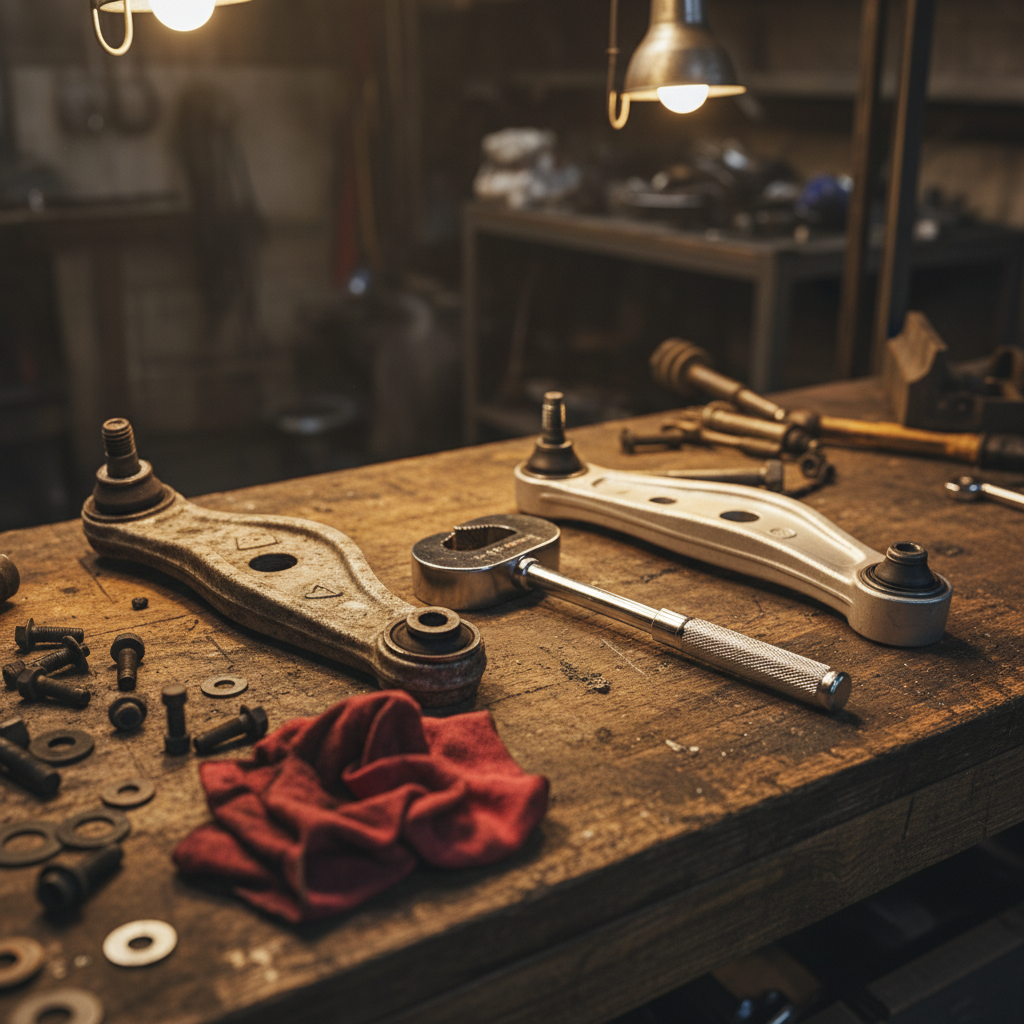
Cost Context
A lower control arm replacement generally runs $160 to $390 per side at a shop, with the part itself a fraction of that and labor making up the rest. Doing both sides at once usually saves on labor since the suspension's already apart. Detroit Axle carries complete control arm assemblies with the bushings and ball joint already installed and a 10-year warranty on many of them, which is the kind of part that gets you back to that 100,000-mile lifespan instead of back under the car next year. If you're going DIY, here's the step-by-step replacement guide.
FAQs
How often should I replace my lower control arm?
You should replace a lower control arm when its bushings or ball joint wear out, which is typically somewhere between 90,000 and 100,000 miles but can come sooner. There's no fixed replacement interval like an oil change, because it depends on road conditions, climate, and how the vehicle is driven. The right move is to have the suspension inspected once it passes 80,000 miles and replace based on actual condition.
What wears out faster, upper or lower control arms?
Lower control arms wear out faster than upper control arms because they carry more load and sit lower where they catch more road salt, water, and impact. On a double-wishbone suspension with both, expect to replace the lower first in most cases. Many vehicles only use a lower control arm up front, with a strut handling the upper's job.
Can I drive with a worn lower control arm?
You can drive briefly with a slightly worn bushing if there's no significant play and your steering still tracks straight, but you cannot safely drive with a worn ball joint. A loose lower ball joint can separate and drop the wheel, causing a complete loss of control. If the clunk shows up on every turn or you feel play in the joint, stop driving it and get it inspected immediately.
Should I replace both lower control arms at once?
You should usually replace both lower control arms at once when the first one wears out from age or mileage, because the second side has lived through the same conditions and is rarely far behind. Doing both together also saves on labor, since the suspension is already disassembled and an alignment is needed afterward either way. The exception is a control arm damaged by a single impact, like a pothole or collision, where the undamaged side may still have plenty of life left.