
Lower Control Arm Bushing Replacement Cost & Symptoms (2026)
·By Lawrence Ma

The bushings go first. Almost always. On a lower control arm, the rubber bushing at the inner mounting point wears out decades before the metal arm itself does, and it's usually the part that sends you to the shop. The tell: a clunk over bumps, loose steering, an alignment that won't hold. Here's what a bushing replacement actually costs in 2026, how to spot one that's gone, and when replacing just the bushing is the right call vs. replacing the whole arm.
Key Points to Review
- Pressing a new bushing into an existing arm runs $150 to $350 per side at a shop with a press. The bushing itself is $15 to $60.
- Replacing the whole control arm (because the bushing is sealed or your arm has a pressed-in ball joint that's also worn): $250 to $650 per side.
- Alignment after: $100 to $150. Any time you pop the inner mount, the geometry shifts. Skip the alignment and you'll eat your inside tire edges in 4,000 miles.
- Main symptom: a sharp clunk from the front over potholes and speed bumps. That's the bushing letting the arm move more than it should.
- DIY on a compact FWD car with the right press adapter: realistic. On a truck or anything with a welded-in bushing: shop work.
- If both sides have 80K+ miles on them, do both. One side fails and the other is weeks behind.
What Is a Lower Control Arm Bushing?
A lower control arm bushing is the rubber (sometimes polyurethane) sleeve that connects the inner end of the control arm to the chassis. The arm pivots on it every time the suspension moves. One job: let the arm rotate under load while absorbing the shock and noise that would otherwise transfer into the cabin. Two bushings per arm on most cars, sometimes one big one and one smaller. The rubber is vulcanized to a metal outer sleeve that presses into the arm's eye.
Here's why the bushing matters so much. The rubber is the only thing holding the arm's pivot point in a precise location relative to the frame. Once the rubber gets soft, cracked, or separates from the sleeve, the arm can shift. Even a few millimeters of shift changes where the wheel sits, and that's enough to knock your alignment out of spec and chew tires. Cheap part, outsized effect.
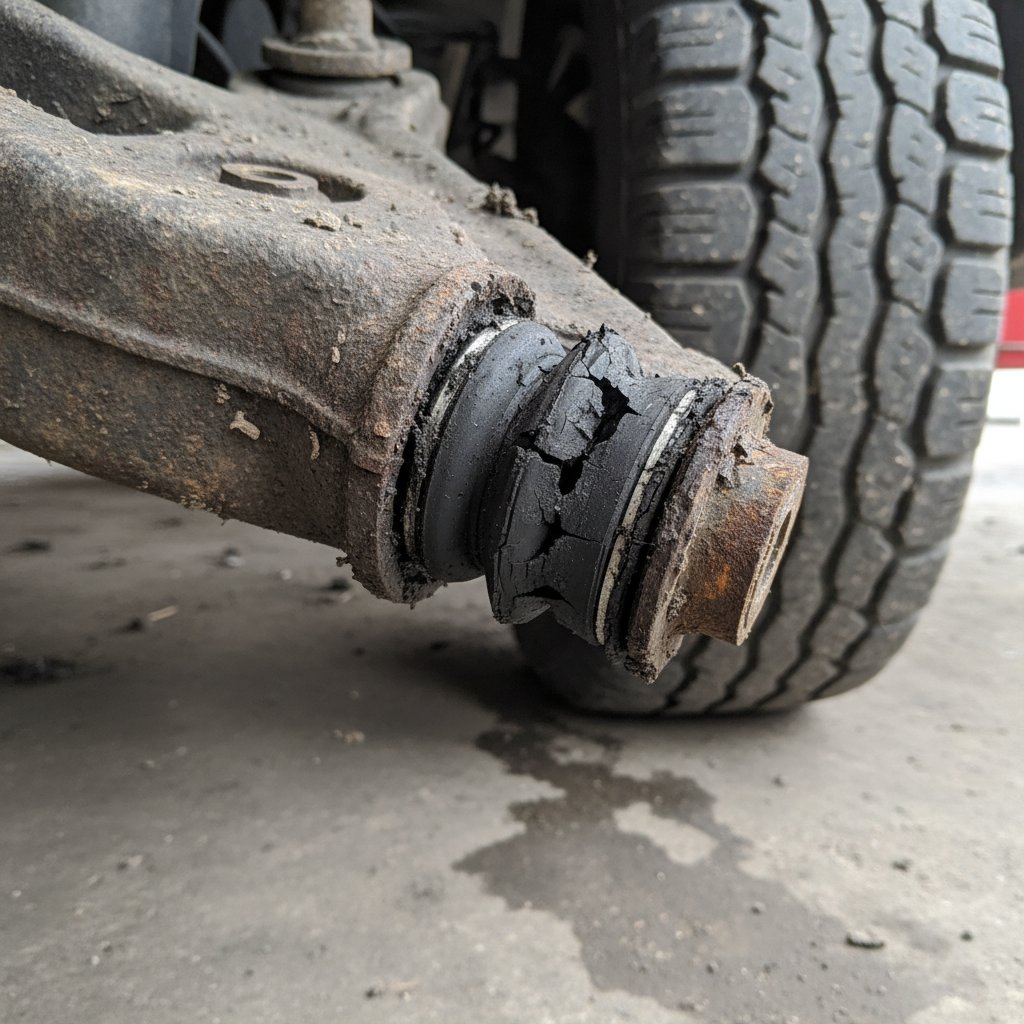
Average Lower Control Arm Bushing Replacement Cost
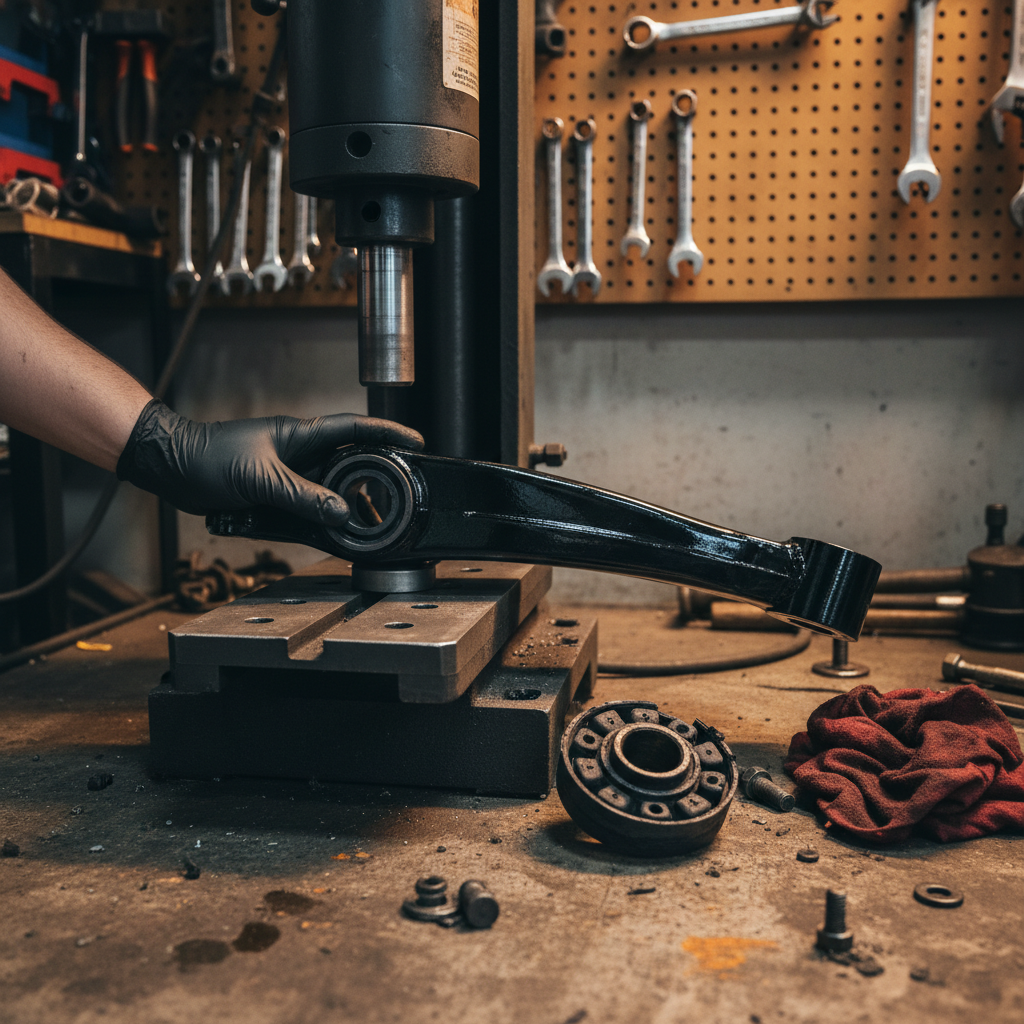
Expect $150 to $350 per side at an independent shop if the bushing is serviceable on its own. That's about $15 to $60 for the bushing itself and the rest in labor and press time. The bushing has to come out with a hydraulic press or a specific pull/push bushing kit, and that's where the shop earns its money.
If the arm has a sealed bushing, or if the ball joint on the outer end is also worn, most shops won't bother pressing a new bushing in. They'll quote you the whole arm: $250 to $650 per side, parts and labor and alignment included. On modern cars with integrated ball joints, this is usually the right call anyway. The ball joint is going to fail within a year or two of the bushing, and you don't want to pay labor twice.
The part swing is big. A rubber bushing for a Civic or Corolla runs $15 to $25. A forged-rubber or hydraulic bushing for a late-model F-150 or a 3-Series can run $40 to $80. Some European cars use a hydraulic bushing with fluid inside it, and those run $60 to $120 each. Price follows complexity.
Symptoms of a Bad Lower Control Arm Bushing
The bushing doesn't fail in one event. It softens, cracks, then eventually the rubber tears or separates from the metal sleeve entirely. You get months of warning signs if you know what you're listening for. Most drivers blame the tires, the struts, or the alignment shop.
Clunking Over Bumps
The #1 symptom. Hit a pothole or a speed bump, hear a sharp clunk or thunk from the front. Sometimes one side, sometimes both. That's the bushing letting the arm move vertically more than it should, and the metal ends of the arm tapping against the mount. Vertical hits point at the bushing. Clunks on turning at low speed point at the ball joint.
Loose or Wandering Steering
Highway speed, straight road, and the car doesn't track straight. Crown, grade, wind, all of it moves you more than it should. The steering doesn't tug, it just drifts. A bad alignment pulls steady and predictable. A bad bushing wanders, because the wheel's camber and caster reference shifts under load.
Inner-Edge Tire Wear
Run your hand across the inside edge of your front tires. If the tread there is visibly shorter than the outside, the wheel has been sitting at the wrong camber. AAA's tire safety and maintenance guide points to inner-edge wear as one of the most common visual signs of alignment drift, and a soft or torn lower control arm bushing is one of the parts that causes it. A worn bushing is one of the few parts that causes exactly that drift. By the time you can feel it with your hand, you've already burned $100 to $300 of tire life. Other symptoms of a bad lower control arm overlap, but the inner-edge wear is the bushing specifically.
Alignment That Won't Hold
You paid for an alignment and three weeks later the wheel is off-center again. The bushing is moving enough that the alignment can't lock in. Straight for a few hundred miles, then drift. The shop didn't mess up. The arm can't hold spec.
Visible Damage
Car on jack stands, wheel off. Look at the rubber at the inner end of the arm. Cracked, torn, separated from the metal sleeve, or squashed visibly to one side, all of those mean the bushing is done. Clean round rubber means the bushing is probably OK and your problem is somewhere else on the arm.
What Drives the Cost
Quick aside before the cost breakdown: if you're doing the install yourself, the bushing only lasts if you torque the pivot bolts at ride height with the suspension loaded. See lower control arm bolt torque specs for the numbers and the ride-height rule.
Quotes for this job are all over the place, and there's a reason. The final bill depends on how your specific arm is built, what your shop's press setup looks like, and whether rust is fighting you.
Serviceable vs. Sealed Bushing
Some arms have a bushing the shop can press out and replace. Others come with the bushing bonded into the arm, and the only way to fix it is replace the whole arm. Check your specific vehicle's arm design before you book a shop visit. If it's sealed, a bushing-only quote is wrong. You're getting a whole arm. Routine suspension inspections are flagged by the Car Care Council's maintenance guide as one of the maintenance items that catches bushing wear before it turns into a larger repair.
Press Access
A 20-ton shop press is standard in most independent shops, but not every one has the right bushing adapter set for every arm. Some bushings need a specific pull kit that clamps onto the arm and presses the bushing out without damaging the eye. If the shop has to order or rent one, that's an hour of extra labor billed to you.
Rust and Corrosion
Salt-belt vehicles fight you. A bushing that should press out in ten minutes can take an hour if the outer sleeve has rusted into the arm's eye. Torches, penetrating oil, sometimes an air chisel. Had a Michigan F-150 last winter where we ended up cutting the old bushing sleeve out with a rotary tool. Both sides, three hours of press time, plus the arms.
One Side or Both
If the driver side is worn, the passenger side has the same miles and the same exposure. Doing both while the car's on the lift adds maybe 30 to 40% to the labor, not 100%. And you only pay for one alignment. If the shop quotes you full price per side, ask why.
Bushing Only vs. Whole Control Arm
The question we get at the counter all the time: do I press a new bushing into my existing arm, or just replace the arm? Here's the honest answer.
Press just the bushing when: the rest of the arm is in good shape, the ball joint is fine (if it's a serviceable joint), the arm isn't rusted through, and the bushing itself is available as a separate part. Typical on older trucks and some European cars with big replaceable hydraulic bushings. Saves you $100 to $300 per side vs. a whole arm.
Replace the whole arm when: the bushing is sealed into the arm, the ball joint is also showing wear, the arm has visible rust or damage, or the parts price is close enough to the arm price that the labor savings don't justify pressing. On most modern cars with integrated ball joints, this is the default. Full replacement cost breakdown here.
How to Save on This Repair
The part is where you save money. A quality aftermarket bushing from a supplier with real warranty runs 40 to 60% less than dealer counter pricing. Same OE-spec rubber, same fit. If you're going the whole-arm route, Detroit Axle carries lower control arm assemblies with the bushing and ball joint already pressed in, backed by a 10-year warranty. That's what a lot of independent shops install when the customer brings the part.
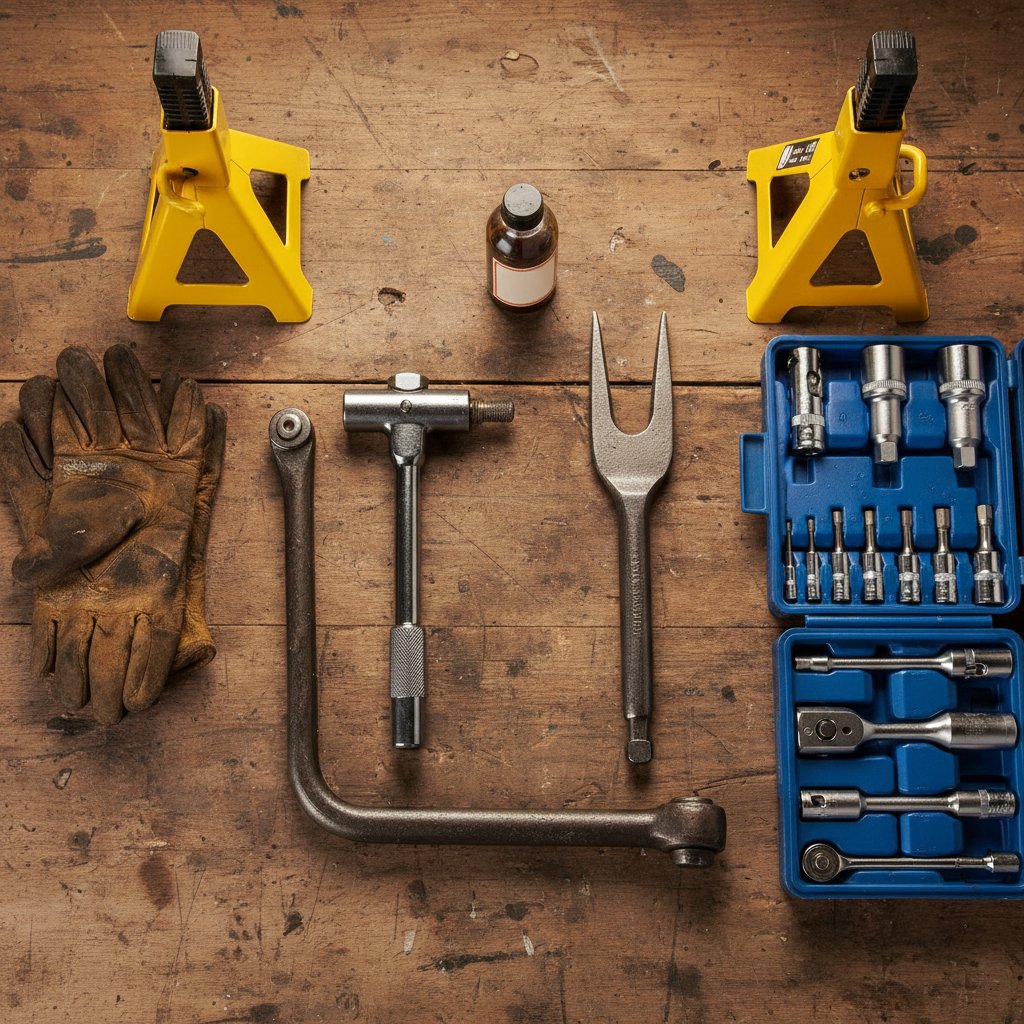
DIY this one only if your car has a realistic bushing press path. On a compact FWD car with a bolt-through bushing, you can pull the arm, take it to a shop that sells press services by the hour ($40 to $60), and bring it back to install. You'll need a torque wrench rated to at least 150 ft-lbs, a good ball joint separator, and patience with rusty bolts. Budget 3 to 5 hours per side your first time. Then the alignment, which you still have to pay for.
FAQs
Can I drive with a bad lower control arm bushing?
Driving with a bad lower control arm bushing is risky for a limited time, usually a week or two if the wear is mild. A soft or cracked bushing gives you loose steering, clunking over bumps, and uneven tire wear. Those are manageable at city speeds. A separated bushing, where the rubber has torn away from the metal sleeve entirely, is a different story. The arm can move enough to affect steering response, and it stresses the ball joint. Get it in before it takes the ball joint with it.
How long do control arm bushings last?
Control arm bushings typically last 90,000 to 150,000 miles on cars driven on decent roads. The rubber is the weak link. It hardens with age and heat, and it cracks with UV exposure. Salt-belt vehicles and anything that lives on gravel see failures closer to 60,000 to 80,000 miles. Luxury cars with hydraulic bushings sometimes go the full life of the vehicle.
Can I replace just the bushing without replacing the whole control arm?
Replacing just the bushing without the whole arm is possible on some designs and impossible on others. If your arm has a pressed-in bushing with the bushing sold separately, a shop with a press can change it for $150 to $350 per side. If the bushing is sealed into the arm at the factory, the whole arm goes. Check your specific vehicle's arm construction before quoting the job either way.
Does a bad bushing cause bad alignment?
A bad lower control arm bushing absolutely causes bad alignment, and it's one of the few parts that can undo a fresh alignment within a few hundred miles. The bushing holds the arm's pivot point in place, which sets the wheel's camber and caster. When the bushing softens or separates, the wheel drifts out of spec under load. If your alignment didn't hold, check the bushings before paying for another alignment.
Is a lower control arm bushing replacement worth doing yourself?
A lower control arm bushing replacement is worth doing yourself only if you have shop press access and the right bushing adapter, which most home garages don't. The bushing itself is cheap, but pressing it in and out without destroying the arm's eye takes the right tools. Most DIYers who try this on a driveway end up at a machine shop with a damaged arm. If you've got a buddy with a 20-ton press and the right adapter set, it's a weekend job. Otherwise, pay the shop.