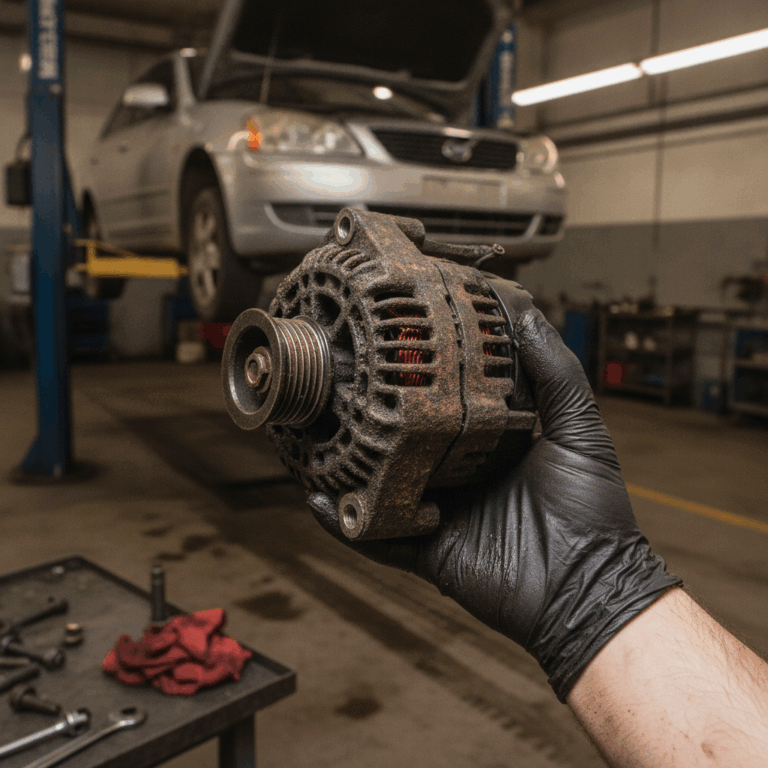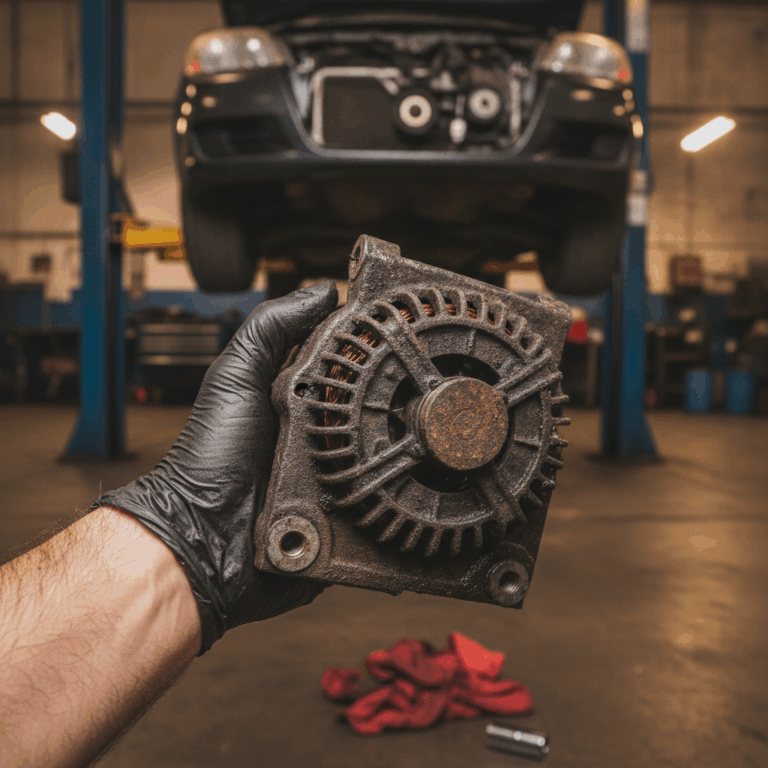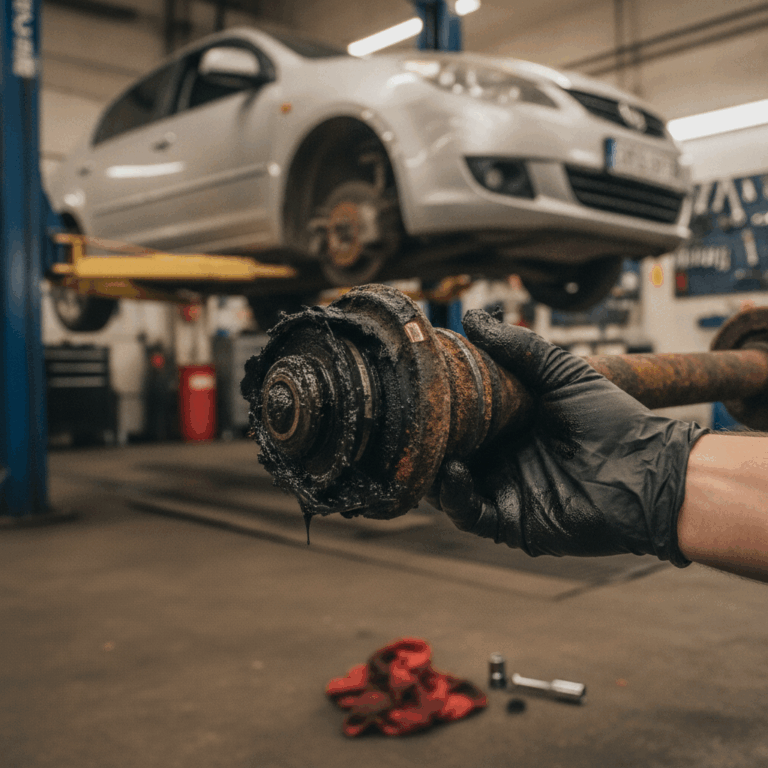
Clicking sound when you turn into a parking spot. Grease sprayed all over the inside of the wheel. A shop quote that made you walk back to your car and Google. That’s textbook bad CV axle behavior, and you’re not crazy for wanting to know what this should actually cost before you say yes.
Most drivers will pay $250 to $800 per side, all-in, to replace a CV axle in 2026. That’s parts plus labor, on a typical front-wheel-drive car at an independent shop. Higher-end SUVs, AWD setups, or a dealership quote can push that past $1,000. The CV axle, also called the CV shaft, half-shaft, or drive axle, is the spinning shaft that takes power from the transmission to the wheel through two flexible joints (one inner, one outer) sealed in rubber boots. When one of those joints dries out or gets contaminated, the whole assembly has to come off.
Key Points to Review
- $250–$800 per side is the realistic range for a typical CV axle replacement in 2026. Parts run $55–$700, labor runs $90–$350.
- Both sides at once costs roughly 1.5x one side, not double, because the second side reuses tools and access already set up.
- If the CV joint is already clicking, the boot is past the “just re-boot it” window. Whole axle.
- You almost never have to replace both axles unless both are symptomatic. A shop bundling both without showing you why is a fair question to ask.
- OEM dealer pricing on this part is brutal. A quality aftermarket axle is usually the right call.
- DIY is doable on most FWD cars if you own a torque wrench, a breaker bar, and an axle nut socket. Plan a half-day.
Cost Breakdown: Parts vs. Labor
The total breaks into two pieces that move independently, and understanding which one is driving your quote up tells you where to push back. Parts cost depends on tier and vehicle. Labor cost depends on access and shop rate. Get burned on either, and your “$300 job” becomes an $800 job real quick.
Parts cost (aftermarket vs. OEM)
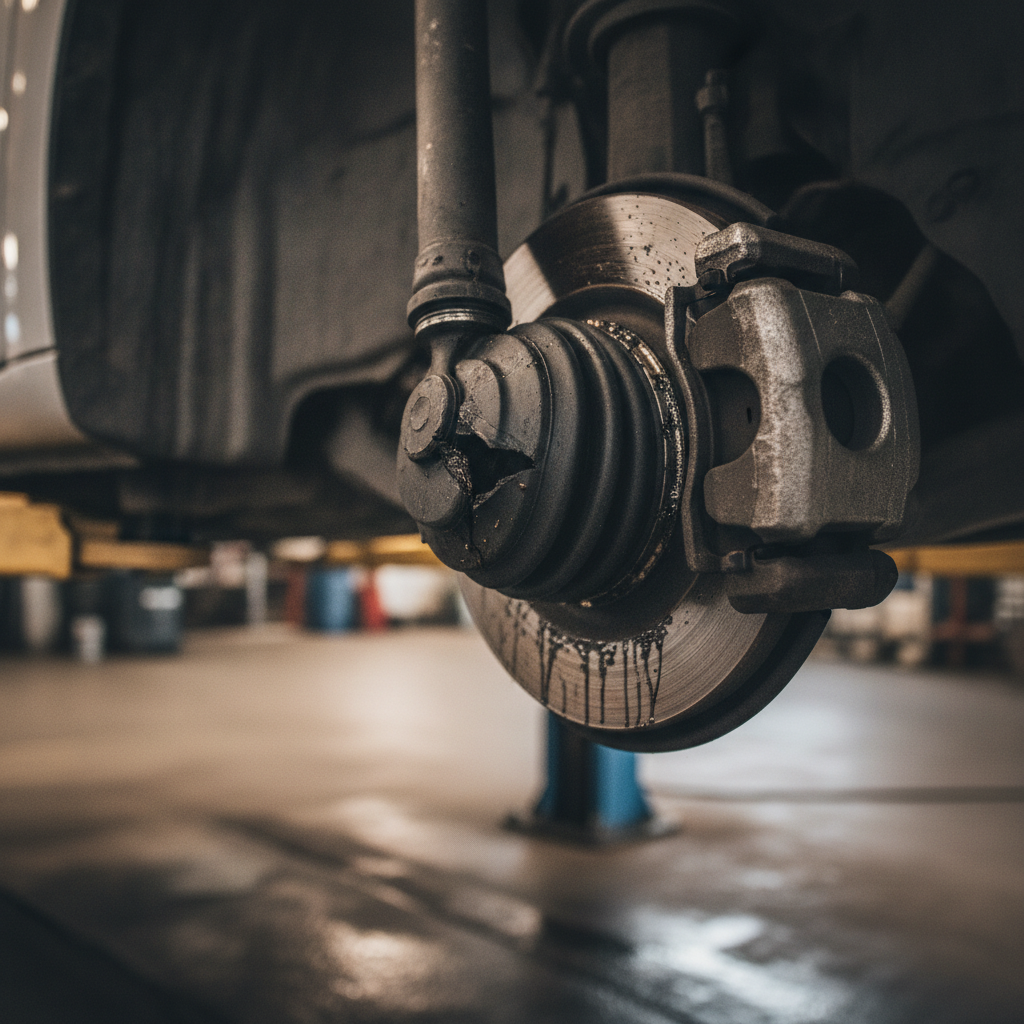
A quality aftermarket CV axle assembly for a typical front-wheel-drive sedan or compact runs $55 to $250 per side. Step up to a luxury SUV or a less-common AWD vehicle, and you’re looking at $150 to $400. OEM dealer parts on those same vehicles? Usually $400 to $700+, sometimes more. Same physical part. Way different sticker.
Here’s where you get burned. Bargain-bin axles on Amazon under $40 are garbage. I’ve pulled those off cars under 25,000 miles where the inner joint was already grinding itself apart and the boot was leaking grease. Skip those. Buy from a brand with a real warranty, or pay the dealer markup if the vehicle is rare enough that aftermarket coverage is thin.
Labor cost (book time + shop rate)
Labor on a CV axle is usually 1.0 to 2.5 hours per side, depending on the vehicle. Compact FWD cars are on the short end. Trucks, AWD setups, and anything with rust live at the long end. Multiply that by the shop’s hourly rate, which in 2026 runs roughly $90/hr in lower-cost regions to $180/hr in metro areas. A dealership will be at the top of that range or higher.
Six years at a Toyota and Lexus shop in Fullerton taught me which vehicles fight you and which don’t. Civics, Corollas, Camrys: clean, fast, in and out. Older Subarus and any SUV with a rusty axle nut? Plan extra time, and don’t be surprised if a $400 quote turns into $550 when the shop pulls the wheel and finds a snapped ABS sensor wire.
Add-ons that catch people off guard
The line items that sneak onto the invoice:
- Axle nut ($8–$25). Most are torque-to-yield, meaning they stretch once and have to be replaced. NEVER reuse a torque-to-yield axle nut.
- ABS sensor ($30–$120 if damaged). Pulling the hub out sometimes breaks the sensor or the wire pigtail. Not the shop’s fault every time, but it shows up on the bill.
- Alignment check ($80–$150). Usually not strictly required if the lower ball joint and tie rod weren’t touched, but a good shop will recommend it. Don’t fight on this one if the truck has any history.
- Transmission fluid drip. Pulling the inner CV joint out of the transaxle on some cars lets fluid weep. Some shops top it off, some charge for it.
Boot Replacement vs. Whole-Axle Replacement: When Each Makes Sense
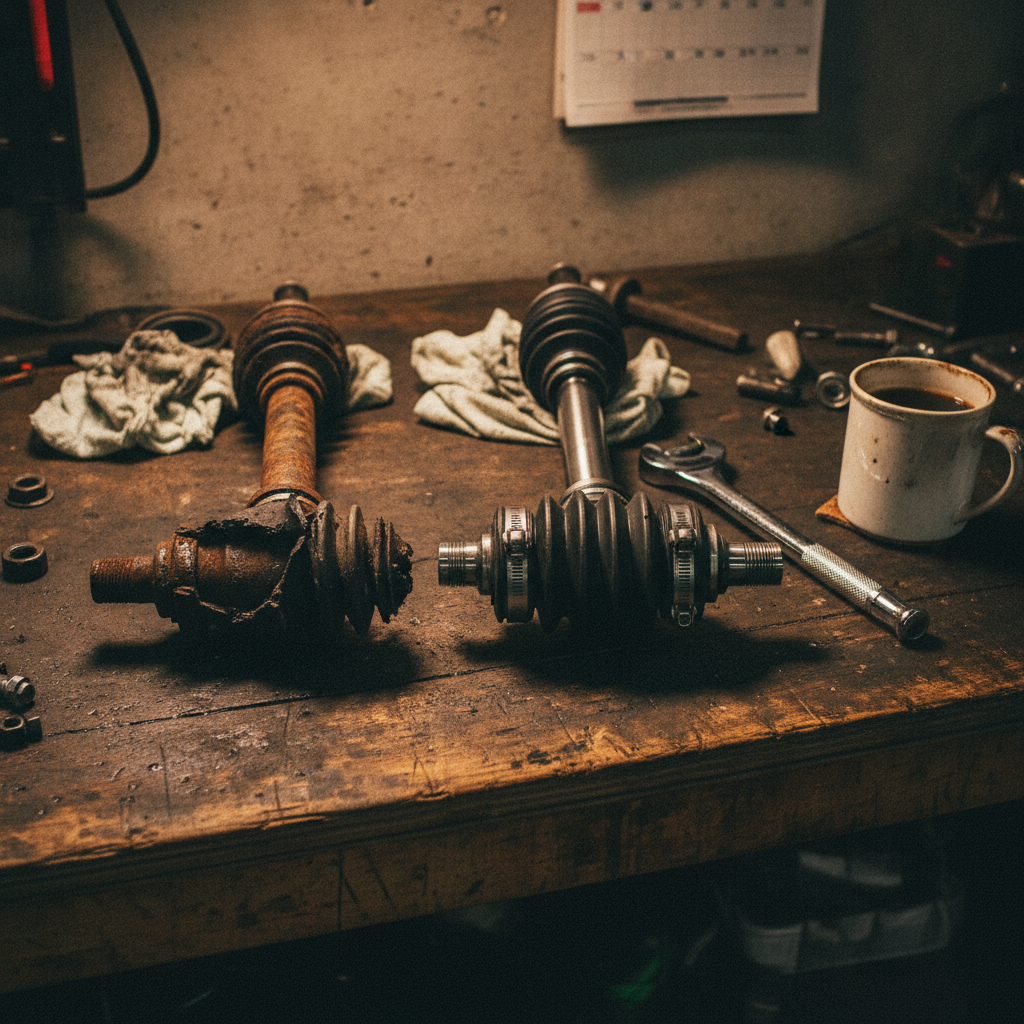
The boot is a $10 piece of rubber. The axle is a $200 piece of forged steel. So why does everyone say “just replace the whole axle”? Because the math hinges on one question: is the joint already clicking?
If you caught a torn boot the day it tore, before any road grit got into the joint and before the joint started clicking on turns, you can re-boot it. A re-boot kit runs $15–$30 in parts. The labor, though, runs 1.5 to 3 hours because the axle has to come off the car, the joint has to come apart, the old grease has to be cleaned out, the new boot has to be banded on, and fresh moly grease packed in. At $120/hr labor, you’re at $180–$360 in labor on a $30 boot. A new aftermarket axle assembly costs $80, comes pre-greased and pre-booted, and bolts in.
You see where this goes.
If the boot is old, cracked at the pleats, or you noticed it weeks ago and the joint clicks on tight turns, the joint is already done. Grit and water have been working their way in. Re-booting a contaminated joint just postpones the failure by a few months. Replace the whole axle.
The decision rule I use:
- Fresh tear, no clicking, caught immediately → boot might be worth it if you’re DIYing and your time is free. Otherwise, whole axle.
- Old tear, no clicking yet → whole axle. The joint has been ingesting grit.
- Any clicking on turns → whole axle. Period.
Don’t let a shop talk you into a re-boot just because it’s the cheap line item on their menu. Ask if they’ll warranty the joint after the re-boot. Most won’t.
Front vs. Rear CV Axles: Which You Have, What It Costs
Most cars on the road have CV axles only in the front, because most cars are front-wheel-drive. That’s the easy case. Rear CV axles show up on AWD crossovers, SUVs with independent rear suspension, and a handful of performance cars. Rear axles typically cost more, not because the part is dramatically different, but because the access is. The rear of an SUV usually means dropping a heat shield, working around the exhaust, and sometimes pulling the rear differential output flange.
Ballpark adders for rear:
- Add $50–$150 to labor for a rear CV axle vs. front on the same vehicle.
- The part itself is usually within $30 either direction of the front part on the same vehicle.
If you drive an AWD vehicle and you’re not sure whether the bad axle is front or rear, the clicking-on-turns test isolates it. A clicking front axle gets louder on full-lock turns at parking-lot speed. A clicking rear axle is more constant under acceleration and quieter on turns. If you can’t tell, jack the vehicle up safely and pull the wheel. A torn boot is usually obvious.
Cost by Vehicle (Why the Same Repair Has Such a Wide Range)
Why does one driver pay $280 and another pays $1,100 for “the same repair”? Three things actually matter: the vehicle, the side, and the shop. Vehicle drives parts and access. Side decides whether the steering knuckle has to come off (driver side on a lot of FWD cars is the worse one for access). Shop sets the labor rate.
Rough 2026 ballpark by vehicle class, per side, all-in at an independent shop with a quality aftermarket part:
- Compact FWD (Civic, Corolla, Sentra): $250–$450
- Midsize FWD sedan (Camry, Accord, Altima): $300–$550
- FWD SUV/CUV (CR-V, RAV4, Equinox): $350–$650
- AWD crossover (Outback, Rogue AWD, Forester): $400–$800 (front), $450–$900 (rear)
- Pickup with IRS or 4WD: $500–$1,200+ depending on configuration and rust
For specific pricing on your make and model, check the CV axles parts catalog at Detroit Axle. Every vehicle has its own part number and price, and the catalog will show you exactly what fits and what it costs before you book the labor.
One Side or Both Sides?
You usually do NOT need to replace both CV axles at the same time. The bad side gets replaced. The other side gets replaced only if it’s also symptomatic (torn boot, clicking, vibration, visible play).
So why do some shops quote both? A few honest reasons, and one that isn’t:
- Honest: The labor overlap is real. Half the access work is the same for both sides (lifting the car, pulling wheels, parts on the lift). Doing both at once saves about 30–40% on labor vs. doing them six months apart.
- Honest: Both axles are the same age. If one has failed, the other is on borrowed time.
- Less honest: Some shops bundle automatically because it’s the higher-revenue path, even when the other side is fine.
Ask the shop to show you the other boot. If it’s intact, no clicking, no grease, you don’t have to replace it. If it’s torn or starting to crack at the pleats, do both. You’ll be back in here in eight months otherwise.
How to Save Money on CV Axle Replacement
The part is where you save money. Labor is mostly fixed by where you live and what shop you walk into. Three moves that actually move the number:
- Buy a quality aftermarket axle instead of OEM dealer. Detroit Axle’s CV axles ship with a 10-year warranty and arrive in 2–4 days, which is the right combination for most people: long enough coverage that you’re not gambling, fast enough that your car isn’t sitting on jack stands for a week. Compared to a dealer part on the same vehicle, you’re usually saving $200–$400 just on the part.
- Use a trusted independent, not the dealer. Dealership labor rates are 30–60% higher than independents for the exact same work. If your car is out of warranty, the dealership is rarely the right call for a routine driveline repair like this.
- Do it yourself if you can. CV axle replacement on most FWD cars is squarely in intermediate-DIY territory. If you’ve done brakes and you’ve replaced a wheel bearing or a control arm, you can do this.
DIY vs. Shop: Is This a Garage-Floor Job?
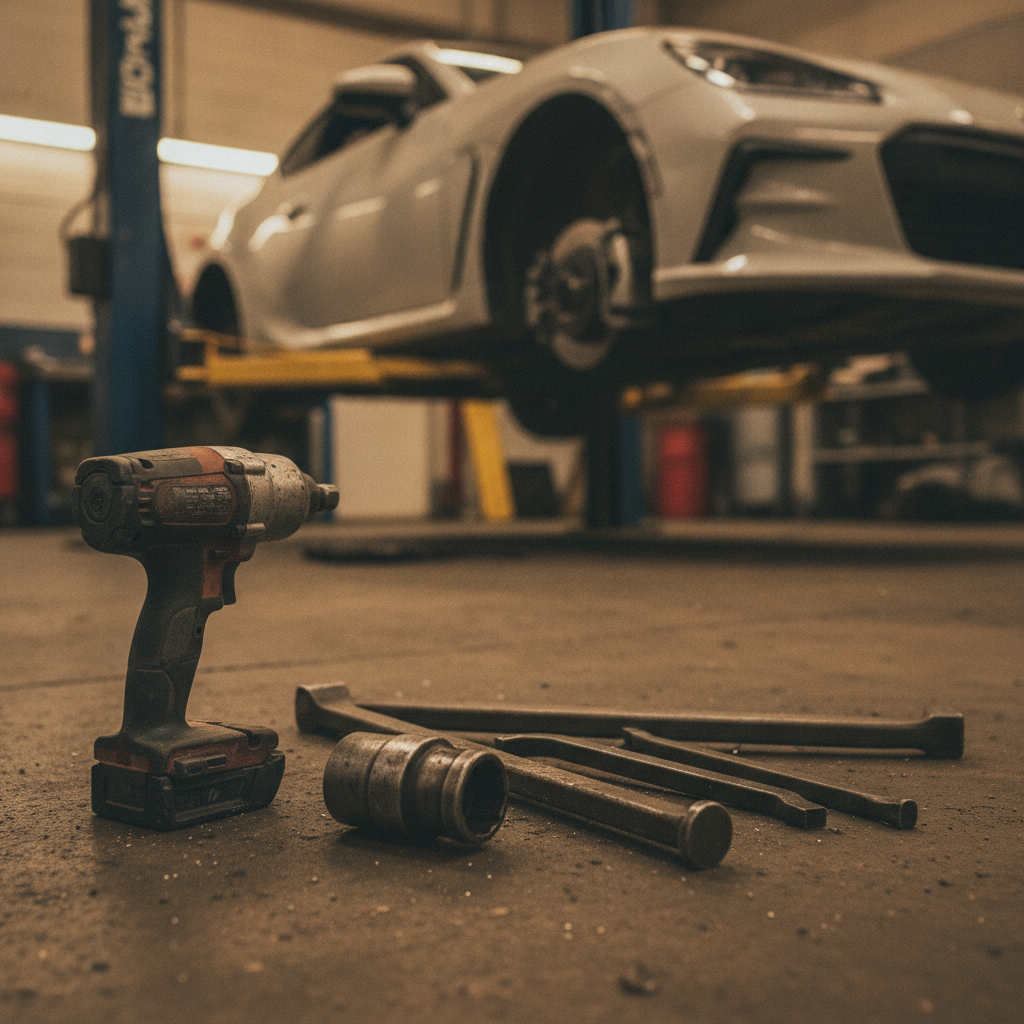
CV axle replacement is doable in your driveway on most front-wheel-drive cars, and saves you the entire labor line. Plan four to six hours your first time, including tool wrangling. If you’ve never tackled a hub-area job before, the same access work overlaps heavily with replacing a wheel bearing, which is a reasonable warm-up if you’re new to this corner of the car.
What you’ll need that you might not already own:
- Axle nut socket (usually 30mm, 32mm, 34mm, or 36mm; check yours)
- Breaker bar or impact wrench rated for the axle nut torque (often 150–250 ft-lbs to break loose)
- Torque wrench that goes to at least 200 ft-lbs for the final tightening
- Pry bar set for popping the inner CV joint out of the transaxle
- Jack stands rated for your vehicle’s weight, plus a real floor jack. NEVER depend on a single jack alone.
Where DIY goes sideways: the axle nut is on there at factory torque plus rust, the inner joint sometimes won’t pop loose from the transaxle without a slide hammer, and on a small number of vehicles you have to disconnect a lower ball joint or tie rod end to swing the knuckle out enough to clear the axle. The Car Care Council’s maintenance guide covers the basics on torque, alignment, and torque-to-yield fasteners that show up on this job, and it’s worth a skim before you start.
One real-world note: I had a guy come in to my mobile bay last fall with a half-done DIY CV axle. He’d gotten the old one out fine, but the new axle’s splines wouldn’t seat into the transaxle, and he ran out of light and called me. Turned out the snap ring on the inner joint hadn’t been replaced and was deformed. Twenty-dollar part, two hours of pry-and-curse. If you’re DIYing this, replace the inner snap ring with the kit that ships with the new axle. Don’t reuse the old one.
Signs You Actually Need a CV Axle (Not Something Else)
The biggest waste of money on a “CV axle replacement” is replacing the CV axle when the noise was actually something else. A few quick differentiators so you don’t pay for the wrong repair:
- Clicking on turns at low speed → CV axle (outer joint). Not wheel bearing.
- Humming or growling that changes pitch with steering load → wheel bearing. Not CV axle.
- Vibration that gets worse under acceleration, smoother when coasting → CV axle (inner joint) or worn engine/transmission mount. Test by lifting off the gas. If it smooths out instantly, lean CV axle.
- Constant low rumble at all speeds, unaffected by turns → tire wear pattern or wheel bearing. Almost never a CV axle.
- Grease ring sprayed on the inside of the wheel → torn CV boot. Doesn’t always mean the joint is gone yet, but the clock is ticking.
If you’re unsure, the cheapest diagnostic in the world is to jack the car up and physically look at both CV boots. If neither is torn and neither joint has obvious play when you grab the axle and try to shake it, the problem is somewhere else, usually a wheel bearing. We have a whole post on what a bad wheel bearing sounds like if that’s what your symptoms actually match.
Worn driveline components also affect tire wear and stopping behavior over time. AAA’s car-care guidance on tire and driveline inspection flags uneven wear patterns and noise changes as the early warning signs worth catching before they become a no-drive situation.
FAQs
Can I drive with a bad CV axle?
Driving with a bad CV axle is possible for a short period, usually days to a couple of weeks, but the failure mode is dangerous and not gradual at the end. The joint will click for a while, then start vibrating, then eventually seize or come apart. If the outer joint fails completely while you’re driving, the wheel can stop receiving power and the loose axle stub can damage the brake hose, the wheel well, or the ABS sensor. Get it fixed within a week of the clicking starting, and don’t take the car on the highway in the meantime.
Do I need to replace both CV axles at the same time?
You do not need to replace both CV axles at the same time unless both are symptomatic. The bad side gets replaced; the other side stays unless it’s also clicking, leaking grease, or has a torn boot. Some shops bundle both as the default quote, which can be a legitimate efficiency move (the labor overlaps) but is also sometimes an upsell. Ask the shop to show you the other boot before agreeing.
Will a torn CV boot ruin my whole axle?
A torn CV boot will ruin the whole axle eventually if you don’t catch it within days. The moment the boot tears, grease starts flinging out and dirt, water, and road grit start getting into the joint. A clean joint with a fresh boot tear can sometimes be re-booted; a joint that’s been running with a torn boot for weeks is contaminated and has to be replaced as a whole assembly. The clicking sound is the giveaway that the joint is already done. By that point, re-booting is throwing labor at a dead part.
How long does CV axle replacement take?
CV axle replacement takes 1 to 2.5 hours per side at a shop, depending on the vehicle. A compact FWD car like a Civic or Corolla is on the fast end. Anything with rust, an AWD setup, or a stubborn axle nut runs longer. DIY in a driveway adds an hour or two on your first attempt for tool wrangling and figuring out the inner joint pop. Plan a half day if you’ve never done one.
Is it cheaper to do CV axle replacement myself?
Doing CV axle replacement yourself is significantly cheaper, often saving $200 to $500 per side in labor. The cost is the time and the tool buy-in if you don’t already own a torque wrench, axle nut socket, breaker bar, and jack stands. If you already have those tools and you’ve done suspension or brake work before, the savings are real. If you’d be buying the tools just for this one job, the cost gap closes fast, and a shop is the cleaner answer.