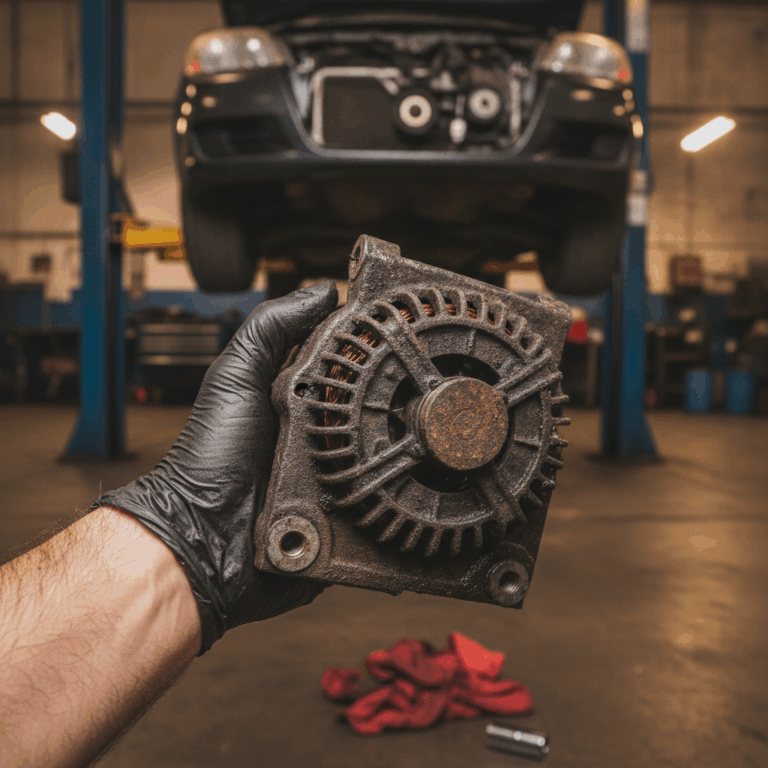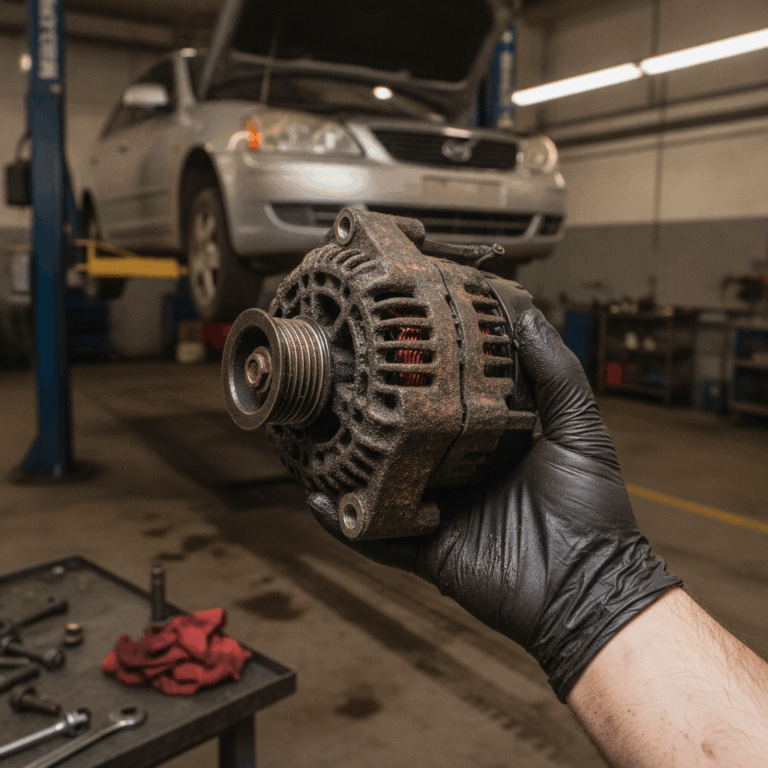
“Replaced the battery last week. The car still died on me yesterday.” I hear that one a lot, and almost every time, it’s textbook bad-alternator behavior, not a battery problem. The battery starts the car. The alternator keeps it running and recharges the battery while you drive. Two different parts, two different failure profiles, and the symptoms overlap just enough at the start to send people to the parts store for the wrong fix.
Good news: you can sort it out in your driveway with about ten minutes and a $20 multimeter. No shop bay, no scan tool. Here’s how I work through it, what each one looks like when it goes, the trap that keeps people replacing the same battery twice in a month, and a few things that aren’t either part but get the blame anyway.
Key Points to Review
- The battery starts the car. The alternator runs the car and recharges the battery.
- A healthy battery reads 12.6V resting; a healthy charging system reads 13.7–14.7V with the engine running.
- Jump-start the car. If it starts and then dies in under a minute, it’s almost always the alternator.
- A battery light on the dash is an alternator/charging-system warning, not a battery warning.
- Brand-new battery that keeps dying = bad alternator (or a bad ground or parasitic draw) killing it.
- You can drive maybe 20–30 minutes on a bad alternator before everything shuts off, less with the AC and headlights on.

The Short Answer: Battery Starts the Car, Alternator Keeps It Running
The 12V battery in your engine bay, sometimes called the starting battery or SLI battery (starting, lighting, ignition), is a chemical energy bank. It dumps a big burst of current to crank the starter, then sits back and lets the engine take over. The alternator is the belt-driven generator that produces electricity once the engine is running. It powers everything in the car while you drive AND recharges the battery for the next start.
Here’s the logic. If the car won’t start but it runs fine the second you jump it, the battery is the suspect. If the car only runs while the alternator is being helped (jumper cables, a charger), or it dies right after a jump-start, the alternator is the suspect. Everything below is just confirming which one.
How to Tell at Home in About 10 Minutes
You don’t need a shop bay or a scan tool. Three tests, two of them free, and the most informative one takes a $20 multimeter and two minutes. Run them in order. The first one you fail tells you most of what you need to know.
The Headlight Test (No Tools)
Start the car, leave it idling, turn the headlights on. Watch them for ten seconds. Now press the gas pedal and rev the engine to about 2,000 RPM. Watch the headlights again.
If the lights dim at idle and brighten when you rev, the alternator is struggling to produce steady voltage at low RPM. That’s a strong sign of a failing alternator. AAA lists this dim-at-idle, bright-at-rev pattern as one of the most reliable at-home tells. If the lights stay steady whether you rev or not, the alternator is probably keeping up. Move on to the next test.
The Multimeter Test (12.6V Resting, 13.7–14.7V Running)
This is the test I’d skip everything else for. Set a multimeter to DC volts, 20V range. Red probe on the positive battery terminal, black on the negative.
Engine off. A healthy fully-charged battery reads 12.6V to 12.7V. At 12.4V it’s about 75% charged. At 12.2V you’re at 50%. Anything under 12.0V and the battery either needs a long charge or it’s done.
Now start the engine. The voltage should jump to 13.7V to 14.7V within a few seconds. That’s the alternator pushing current into the battery and the rest of the electrical system. If the voltage stays at 12.6V or drops below it, the alternator isn’t charging. If it climbs over 15V, the voltage regulator inside the alternator has failed and is overcharging, which fries batteries fast.
Two numbers. That’s the whole test.
The Jump-Start Test (The Cleanest At-Home Tell)
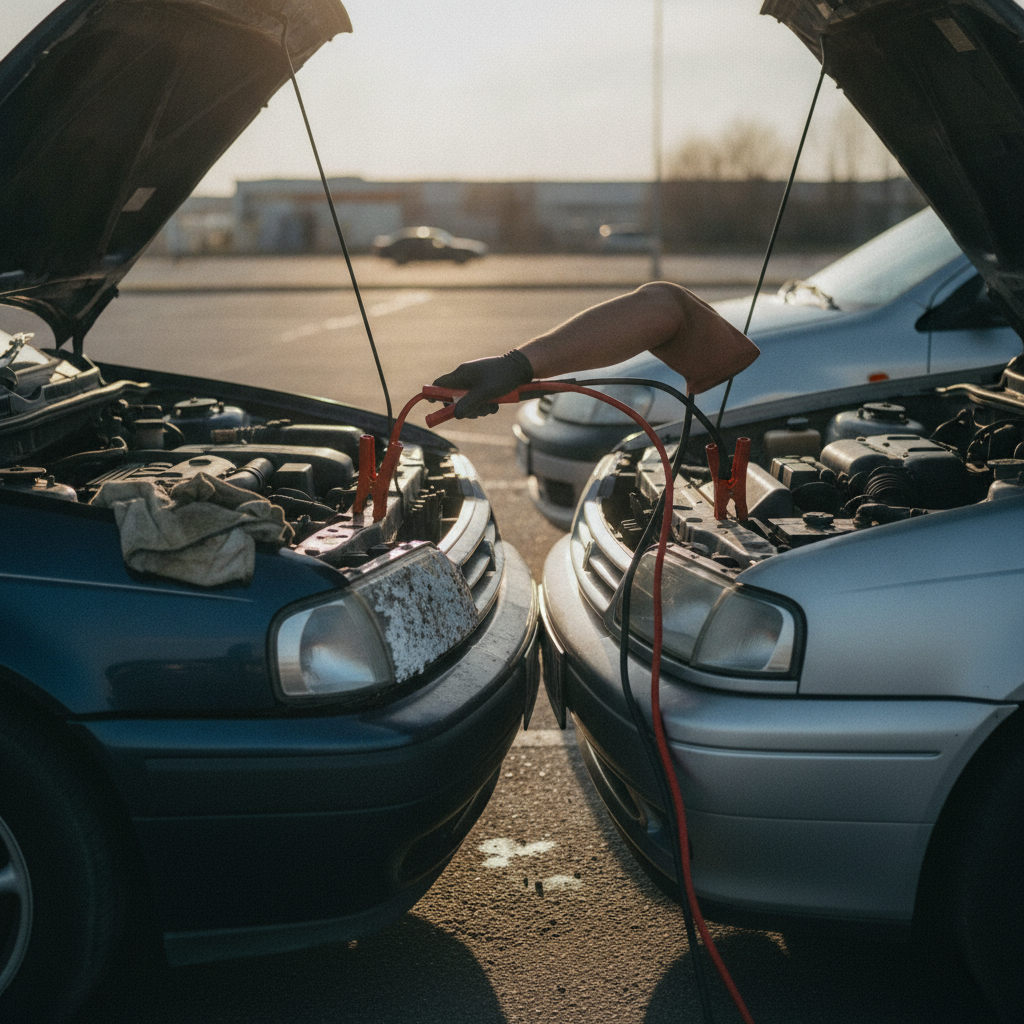
If the car won’t start, jump it from another vehicle or a jump pack. Once it’s running, disconnect the cables and let it idle.
If the car keeps running, the alternator is doing its job and the problem was the battery. Drive it for 20 minutes, then try a cold start in the morning. If it cranks fine, you almost certainly need a battery, not an alternator.
If the car starts and then dies within a minute or two of disconnecting the cables, the alternator is not producing enough current to run the engine, let alone recharge the battery. That’s the cleanest at-home tell for a bad alternator I know of.
Signs of a Bad Battery
A failing battery mostly misbehaves at startup. While you’re driving, the alternator is doing the heavy lifting and the battery is just along for the ride, so a weak battery hides until you turn the key in the morning. Here’s what to look for.
- Slow, lazy cranking. The starter sounds tired, like it’s working through molasses. The engine cranks but it cranks weak. Car Care Council’s maintenance guide notes most batteries last three to five years, and slow cranking is usually the first warning you’ll get.
- One click and nothing. Turn the key, hear a single solenoid click, and the starter never spins. Classic dead-battery move. (Can also be a starter solenoid. We’ll get to that.)
- Needs a jump, then runs fine. Jump it, drive it, no dim lights, no battery light, no further drama. Battery’s done. Replace it.
- Repeat jumps every couple of days. The battery can’t hold a charge anymore. If the alternator is charging it back up to 12.6V and it’s dead again the next morning, that’s a battery problem (or a parasitic draw, see below).
- Battery is 3–5 years old. Look at the date code on the case. Most lead-acid batteries are toast by year five. Cold climates kill them sooner. Hot climates kill them faster than that.
- Swollen case or corroded terminals. A bulging battery case is a heat-damage sign and the battery is unsafe to keep running. Heavy white or green crust on the terminals isn’t always a death sentence (clean it), but if it’s coming back after every cleaning, the battery is venting and it’s done.
Signs of a Bad Alternator
Alternator failures look more dramatic because the car has to keep running while the alternator is supposed to be making electricity. When it can’t, weird stuff happens.
- The battery light on the dash is on. That little red battery icon is misleading. It does not mean “your battery is bad.” It means the charging system isn’t keeping the battery topped up, which 90% of the time is the alternator. If that light comes on while you’re driving, you’ve got 20 to 30 minutes of reserve in the battery and then the car shuts off.
- Headlights dim at idle, brighten when you rev. Already covered above. This is the single most reliable visible sign.
- Starts on a jump, dies in under a minute. Also covered. The alternator isn’t producing enough current to run the engine, so the engine pulls everything from the battery, which is already exhausted.
- Electrical accessories acting strange. Power windows slow. Radio cutting out. Dash flickers when you turn on the heated seats. The interior fan drops a speed when you brake. That’s the alternator unable to keep up with combined electrical load.
- Burning rubber or hot wire smell under the hood. Either the drive belt is slipping on the alternator pulley (heat from friction) or the alternator itself is overheating from internal damage. Pull over and check before it gets worse.
- Brand-new battery that’s already dying. Big one. Has its own section below.
- Whining or grinding from the front of the engine. The bearings inside the alternator are dying. Catch it now and you replace the alternator. Ignore it and the bearing seizes, the belt snaps, and now you’ve also lost power steering and water pump.
Brand New Battery and It’s Already Dying. What’s Going On?
This one is the most-missed diagnosis in the whole charging system. New battery, two weeks in, dead again. Owner blames the parts store, swaps it under warranty, kills the second one. Round three is when most people finally call a shop.
Almost every time, the alternator is the killer. A marginal alternator produces enough current at high RPM to fool a quick check, but at idle or under load (AC on, headlights, blower fan, defroster), it can’t keep up. The battery picks up the slack. Drive 30 minutes a day on a marginal alternator and you’re slowly draining the battery faster than the alternator recharges it. New battery, same fate.
Now the second trap: the parts-store alternator bench test. You unbolt the alternator, bring it in, they spin it on a tester, it spits out the right voltage and amperage, you bolt it back on. The test passed. The problem comes back the next week. Why? The bench test runs the alternator under no electrical load. In your car, it’s pushing through the headlights, AC compressor clutch, ignition, fuel pump, infotainment, heated seats, all at once. A weak alternator handles the bench just fine and fails the real world.
The fix: if you’re on your second battery in three months and the alternator “tested fine,” replace the alternator anyway. Six years at a Toyota and Lexus shop in Fullerton and now mobile work in Orange, that’s the call I make almost every time on this scenario, and it’s almost always right.
When It’s Neither: Starter, Cables, Grounds, and Parasitic Draw
Sometimes the alternator is fine. Sometimes the battery is fine. And the car still won’t start, or it’s killing batteries, or the multimeter readings are weird. Before you start throwing parts at it, walk through these four.
Starter Solenoid
A bad starter cranks slow when the engine is hot and cranks fine when the engine is cold. Or it does the single-click thing that everyone calls a “dead battery.” If your battery tests at 12.6V and the alternator is charging at 14V and the car still cranks like garbage, look at the starter. Detroit Axle carries replacement starters, and the test is straightforward: a known-good starter ends the diagnostic question in one swap.
Corroded Terminals and Battery Cables
Crusty green and white build-up on the battery posts is a current-flow killer. A cable that looks fine on the outside can have copper inside corroded to a green powder that passes voltage but won’t pass amps. The voltmeter reads 12.6V at the post and you think the battery is fine. Crank the starter and it drops to 9V because the cable can’t move the current.
Pop the cable ends off. Wire-brush the posts and the clamp interiors. If the cable feels stiff or you see green dust falling out when you flex it, replace the cable. Half the “bad battery” calls I get on mobile turn out to be cables, not the battery.
Bad Ground Straps
The engine-to-chassis ground strap completes the electrical circuit. When it’s corroded, frayed, or loose, current can’t flow back to the battery properly. The alternator looks like it’s underperforming because the path is bad, not the part. A multimeter check between the engine block and the battery negative should read under 0.1V with the engine running. Higher than that, you’ve got a ground problem.
Parasitic Draw
Parasitic draw is anything pulling current with the key off. Stuck trunk light. Glovebox light wedged on. Aftermarket stereo or dashcam wired to the battery instead of an ignition-switched circuit. Bad alternator diode that lets current flow backward when the engine is off. A draw of more than about 50 milliamps will kill a good battery overnight, and both the battery and alternator will test fine.
The cheap test: pull the battery negative cable, put a multimeter (set to DC amps, 10A range) in line between the cable and the post. Anything over 0.05A with everything off and the doors closed, you’ve got a draw. Pull fuses one at a time until the draw disappears. That circuit is your culprit.
How Long You Can Drive on a Bad Alternator
A bad alternator gives you about 20 to 30 minutes of drive time on a fully-charged battery before the car shuts off. That’s the conservative number. Heavy electrical load (headlights, heater fan, defroster, wipers, infotainment) cuts it in half. Hot weather on a marginal battery cuts it more.
The cascade goes like this. First the radio cuts out. Then the climate fan drops to nothing. Then the dash lights dim. Then power steering goes (electric power steering vehicles only), the engine starts running rough as the ignition system gets less voltage, and finally the car just dies. Once it dies, it won’t jump start to keep running. You’re getting towed.
If the battery light comes on while you’re driving, get to a safe place to stop NOW. Don’t take the long way home, don’t run the errand. Heading straight to a shop or your driveway is the only call. And if you’re on the highway when it happens, turn off everything you don’t need (defroster, infotainment, heated seats) and aim for the nearest exit.

Replacing the Alternator vs. Replacing the Battery
The cost framing matters because it changes the calculus on what to do next.
A new battery is usually $150 to $300 installed at a chain parts store or shop. Most shops will replace one in the parking lot in 15 minutes. DIY is straightforward if you have a 10mm wrench and can move 40 pounds of lead-acid.
An alternator replacement is $200 to $600 all-in for most front-wheel-drive sedans and crossovers, parts plus labor. Trucks and bigger V8s can push higher. The part itself is the bulk of the cost, and a quality aftermarket alternator from a reputable supplier costs a fraction of what a dealership charges for the same unit. Detroit Axle carries alternators for most domestic and import vehicles, with a 10-year warranty on many of them and 2 to 4 day shipping, so you’re not stuck waiting a week to get back on the road. Browse alternators at Detroit Axle if you’ve narrowed it down to that.
DIY alternator replacement is intermediate-difficulty on most vehicles. The hard parts are getting the serpentine belt off cleanly, getting a wrench on the rear bolt without dropping anything, and dealing with the bracket clearance on engines where the alternator hides behind the AC compressor. Plan two to three hours your first time. Some vehicles are nasty though. Newer transverse V6s sometimes need the front motor mount loosened to get the alternator out, and that’s the kind of job where you’d rather pay a shop.
FAQs
The shop said the alternator tested fine. Why does it still die?
The shop’s alternator test is almost always a no-load bench test, which doesn’t replicate the real conditions the alternator fails under. A weak alternator can pass the bench because the test doesn’t run headlights, AC, blower fan, and ignition at the same time. In the car, with the full electrical load, the alternator can’t keep up and the battery slowly drains. If a battery keeps dying and the parts-store alternator test keeps passing, replace the alternator anyway. The bench test missed it.
Will a bad alternator kill a brand-new battery?
A bad alternator absolutely kills a brand-new battery, and it’s the most common reason people replace the same battery twice in a month. A marginal alternator can’t keep up with the car’s electrical load, so the battery has to fill the gap. Every drive drains the battery a little more than the alternator recharges it. Within a week or two, the new battery is dead and the cycle starts again. The fix is to replace the alternator, not the battery.
Is the alternator the same as a generator?
The alternator and the generator do the same job but they’re different parts. Cars before about 1960 used DC generators. Every car since uses an AC alternator, which is more efficient and produces useful output even at engine idle. In modern usage, “alternator” is the correct term. If you hear someone call it a generator, they either drive something very old or they grew up working on cars when generators were still common.
Can I jump-start a car with a bad alternator?
You can jump-start a car with a bad alternator, but it won’t keep running for long once you disconnect the cables. The alternator is supposed to take over after the jump, and if it can’t, the engine drains the battery you just jumped. Expect 20 to 30 minutes of run time, less if the battery was already weak. Use the jump to get to a shop or your driveway. Don’t try to make a long drive.
How much does it cost to replace an alternator?
Alternator replacement costs $200 to $600 for most cars, with the part itself running $90 to $400 depending on the vehicle and the brand. Labor at a shop is usually one to two hours on a sedan or crossover. Trucks and engines where the alternator is buried behind other accessories can run higher. You save a lot by buying the part yourself from an aftermarket supplier and either installing it or bringing it to an independent shop.