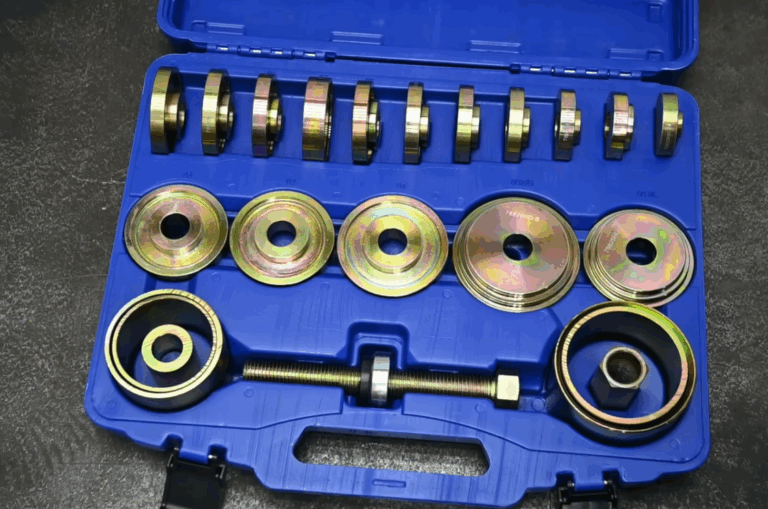
A wheel bearing press is one of the most important tools used when replacing press-fit wheel bearings safely and correctly. Improper installation might lower the hub assembly’s lifespan, harm the replacement bearing, interfere with ABS operation, or even cause early noise. Knowing how a wheel bearing press operates can make the replacement process go more smoothly and dependably, whether you’re doing repairs at home or at a professional shop.
Many contemporary cars, particularly those with front-wheel drive and SUVs, use press-fit bearings. In contrast to bolt-on hub assemblies, these bearings require precise alignment and controlled force when placed into the steering knuckle. Working on suspension and steering repairs over the years, we have witnessed numerous wheel bearings break early due to improper installation techniques. Before the car even leaves the garage, damage can frequently be avoided with a high-quality wheel bearing press kit.
Key Points to Review
This guide covers:
- What a wheel bearing press does
- Different types of wheel bearing press tools
- How wheel bearing press kits work
- Step-by-step wheel bearing pressing basics
- Common mistakes during wheel bearing installation
- When a full hub assembly may be easier than pressing bearings
What Is a Wheel Bearing Press?
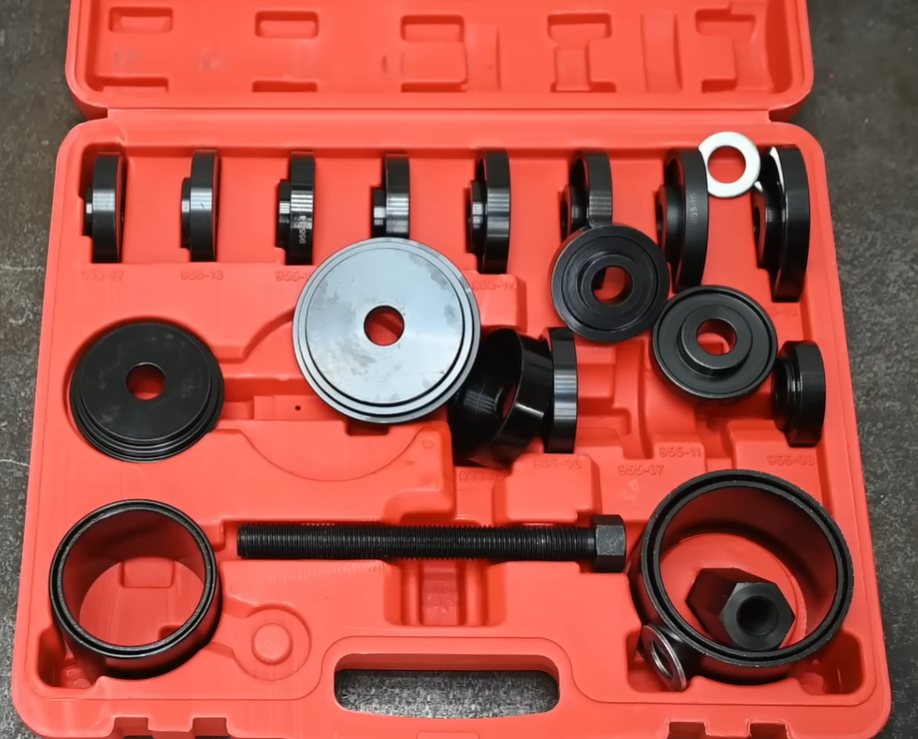
A wheel bearing press is a tool designed to remove and install press-fit wheel bearings without damaging the bearing, hub, or steering knuckle.
A lot of contemporary cars have interference-fitted bearings that are firmly lodged inside the steering knuckle. As a result, normal hand tools are frequently insufficient to remove or install them properly. Many drivers later encounter problems like a clicking sound from the front wheel when driving or early bearing failure since excessive pounding or uneven force can easily harm components.
There are several common types of wheel bearing press tools:
Hydraulic Shop Press
A hydraulic shop press uses controlled hydraulic force to push bearings in or out.
These are commonly found in professional repair shops because they provide:
- High pressing force
- Better control
- Reduced risk of bearing damage
- Compatibility with stubborn or rusted assemblies
When working on larger truck bearings or severely rusted suspension systems, hydraulic presses are frequently chosen.
Portable Wheel Bearing Press Kit
A portable wheel bearing press kit allows wheel bearings to be serviced directly on the vehicle.
These kits usually include:
- Threaded forcing rods
- Cups and adapters
- Bearing sleeves
- Receiver tubes
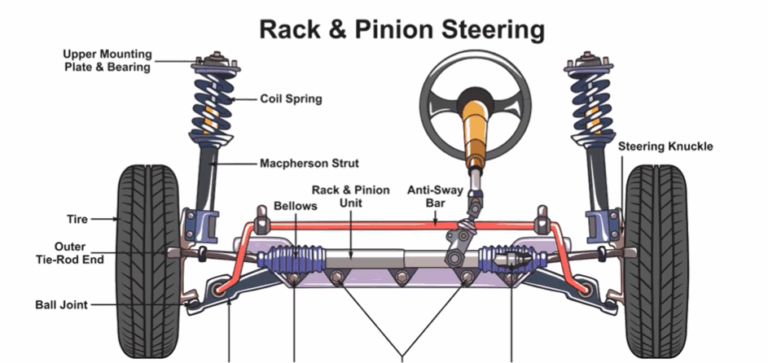
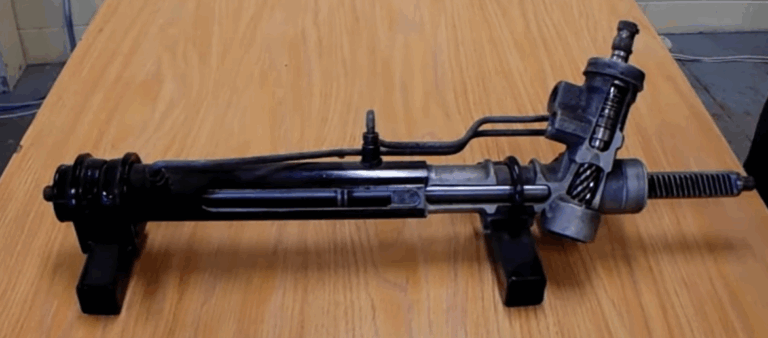
Portable kits are extremely popular because they can often eliminate the need to remove the entire steering knuckle. When compared to more involved steering repairs, such as replacing rack and pinion systems or maintaining intricate automobile suspension parts, this can save a substantial amount of work time.
Hub Tamer-Style Tools
Hub tamer kits are specialized bearing service kits designed for specific hub and bearing configurations.
These are commonly used on:
- Front-wheel-drive vehicles
- Compact SUVs
- Vehicles with integrated ABS hubs
Fitment matters heavily with these kits because incorrect adapters can apply pressure to the wrong part of the bearing.
How a Wheel Bearing Press Kit Works
A wheel bearing press kit works by applying even, controlled pressure to remove or install bearings without shock loading the assembly.
The key to proper bearing installation is pressing only against the correct bearing race. Before the car even moves, pressing on the incorrect surface might cause internal bearing damage.
A standard press kit typically works in this order:
- Select the correct adapter size
- Position receiver cups properly
- Align the forcing screw
- Slowly apply pressure
- Remove or install the bearing evenly
Installers hurrying the alignment procedure is one problem we frequently observe in wheel-end repairs. Bearing races can be distorted or ABS tone rings cracked by even a small misalignment. Improper installation on cars with integrated electronics may even need knowing how to reset the abs light after changing the wheel bearing.
Tools Commonly Used With a Wheel Bearing Press
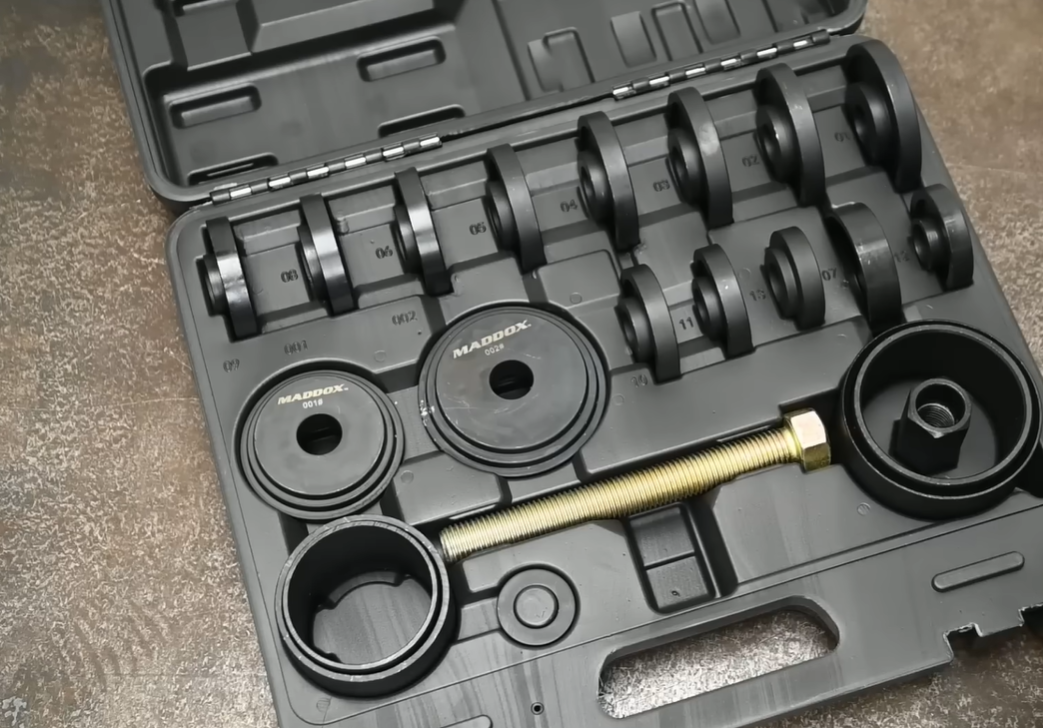
Several supporting tools are usually needed alongside a wheel bearing press to complete the repair safely.
Common tools include:
- Torque wrench
- Snap ring pliers
- Impact gun
- Bearing separator
- Dead blow hammer
- Pry bars
- Anti-seize compound
Depending on the vehicle, additional suspension disassembly may also be required. Tie rods, lower ball joints, or axle shafts may need to be disconnected in order to service the bearing. Because of this, wheel bearing labor costs can occasionally be on par with those of repairs involving steering assemblies or various rack and pinion systems.
Another important factor in the installation of serviceable bearings is greasing. In older-style tapered bearing systems, using the proper wheel bearing oil helps prevent contamination and heat accumulation.
How to Use a Wheel Bearing Press
Using a wheel bearing press correctly is critical because improper pressure placement can ruin a new bearing almost immediately.
Although procedures vary by vehicle, the basic process generally follows similar steps.
1. Remove the Wheel and Brake Components
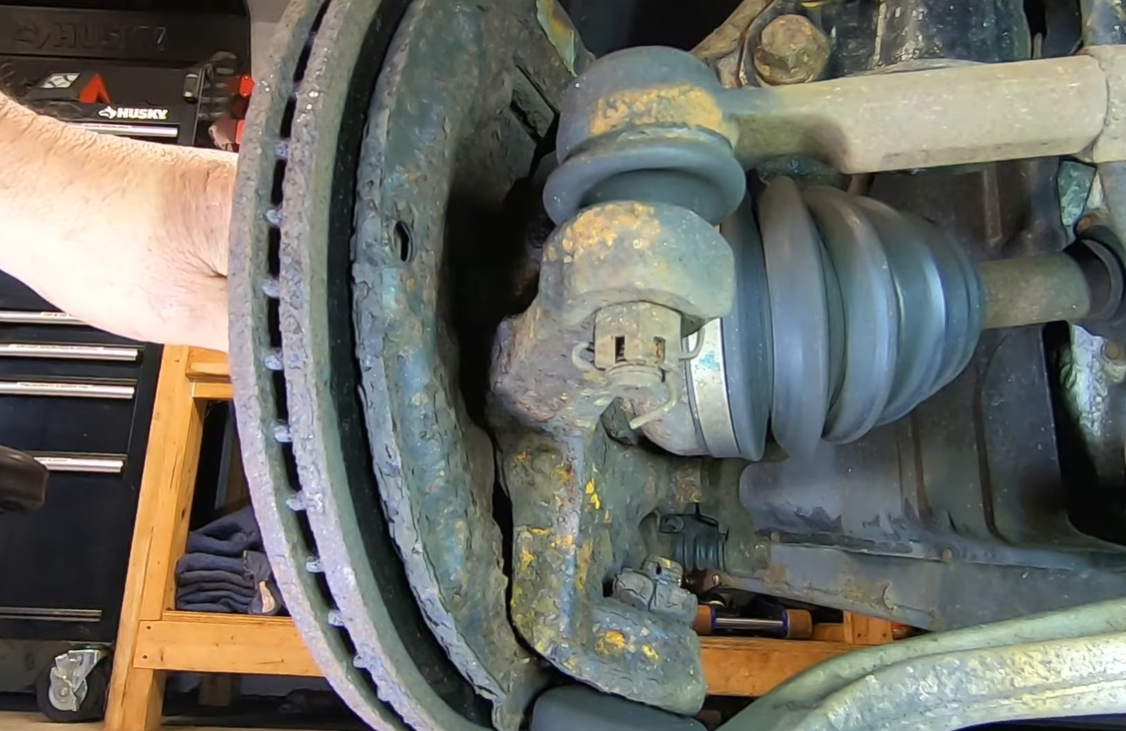
The wheel, caliper, rotor, and axle components must first be removed to access the hub assembly.
At this stage, many technicians also inspect related components such as:
- Tie rods
- Ball joints
- CV axles
- Steering knuckles
If the car already exhibits symptoms, such as pulling to the left or right, this is frequently a good time to check adjacent systems.
2. Remove the Hub Assembly or Steering Knuckle
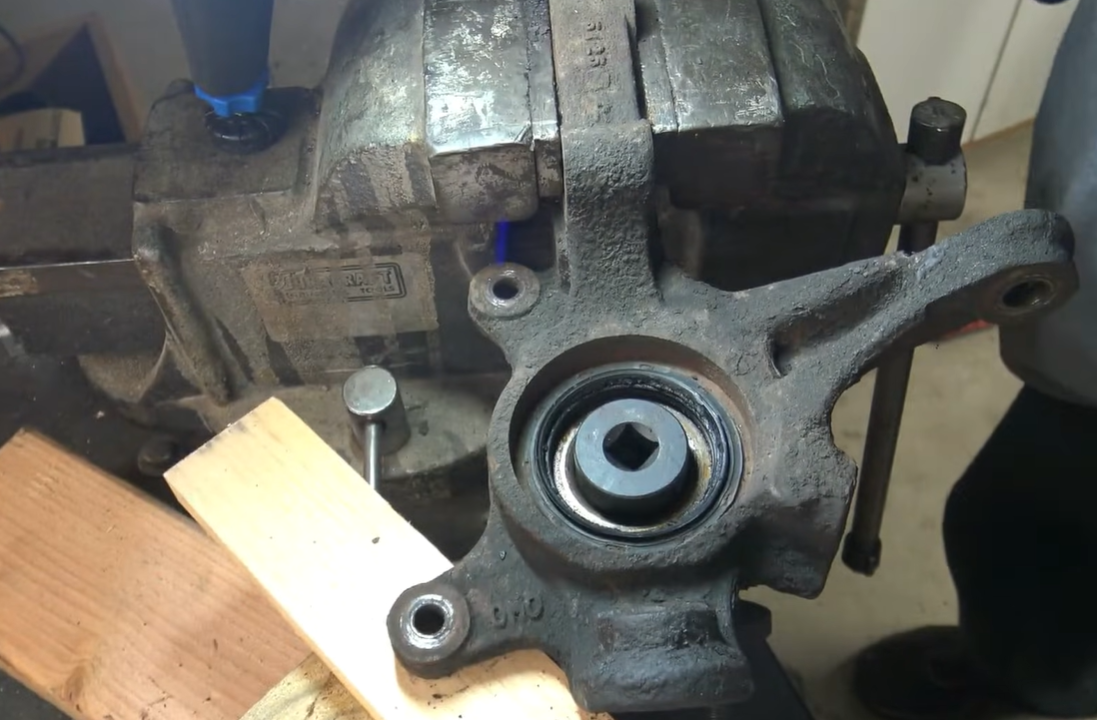
Some vehicles allow on-car bearing service, while others require removing the entire steering knuckle.
Some owners look into ways to remove wheel bearings without the use of presses if the corrosion is severe enough to make removal challenging. However, there is typically a higher chance of harming costly suspension parts when bearings are forced out incorrectly.
3. Press Out the Old Bearing
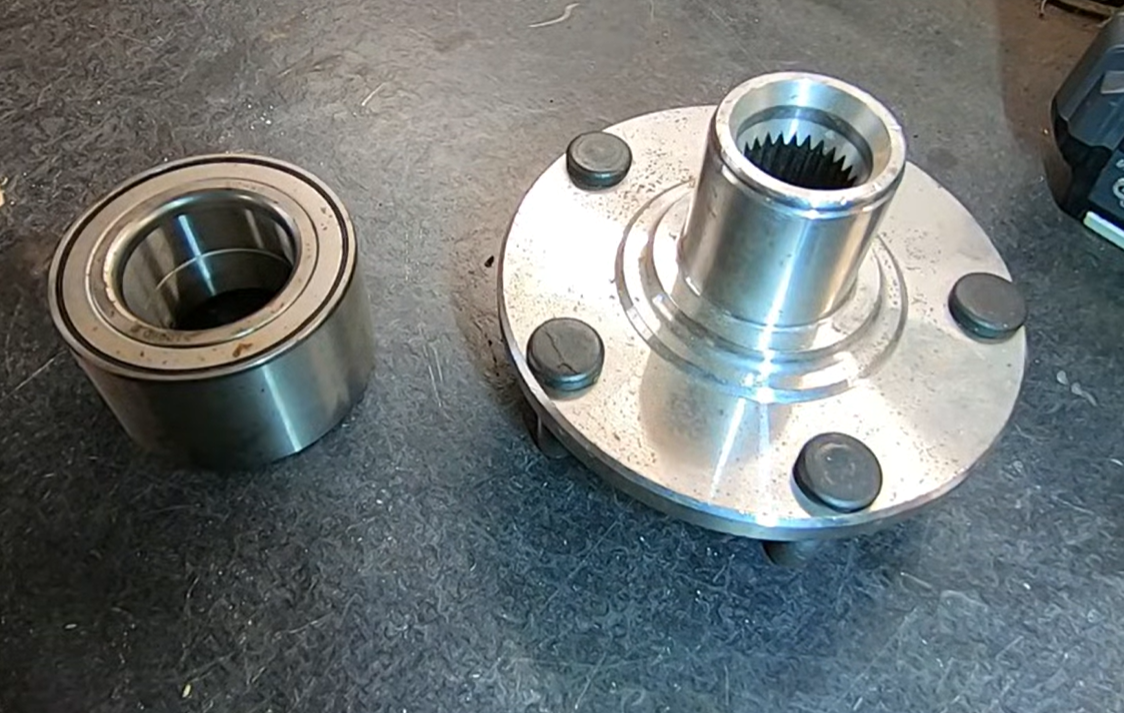
The old bearing is pressed out using correctly sized adapters and receiver cups.
Pressure must be applied evenly to avoid:
- Knuckle damage
- Bearing fragmentation
- Hub distortion
Rust buildup can make this process significantly harder on older vehicles.
4. Clean and Inspect the Bore
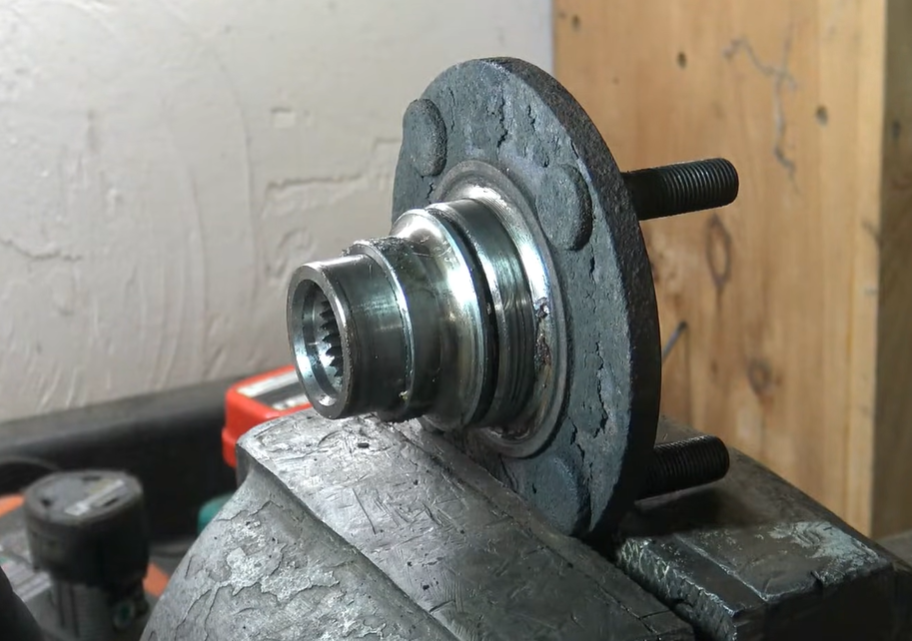
The bearing bore should be cleaned thoroughly before installing the new bearing.
Technicians typically inspect for:
- Corrosion
- Cracks
- Burrs
- Distortion
Poor surface preparation can affect bearing seating and shorten lifespan.
5. Press In the New Bearing
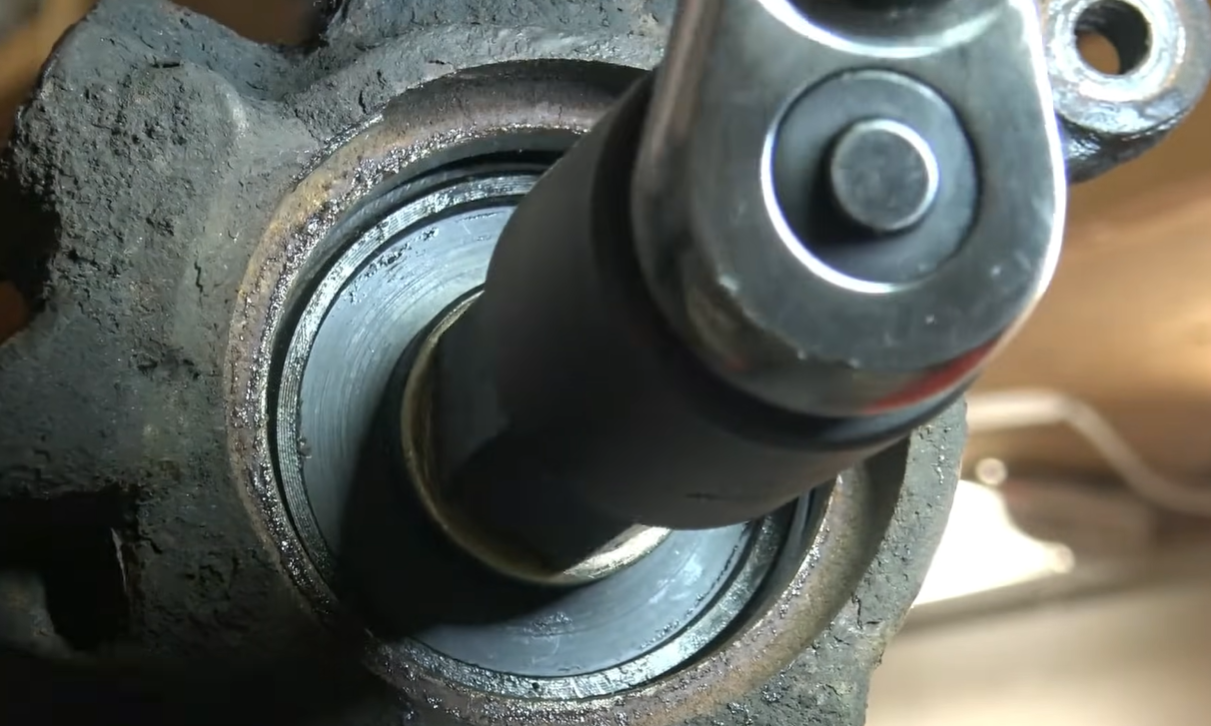
The new bearing is carefully pressed into place using the correct race support.
Pressing through the rolling elements rather than the outer race is a common error we’ve encountered in years of suspension and hub repair. Internal damage frequently manifests later as humming, vibration, or ABS problems, even if the bearing feels smooth at first.
6. Reassemble and Torque Properly
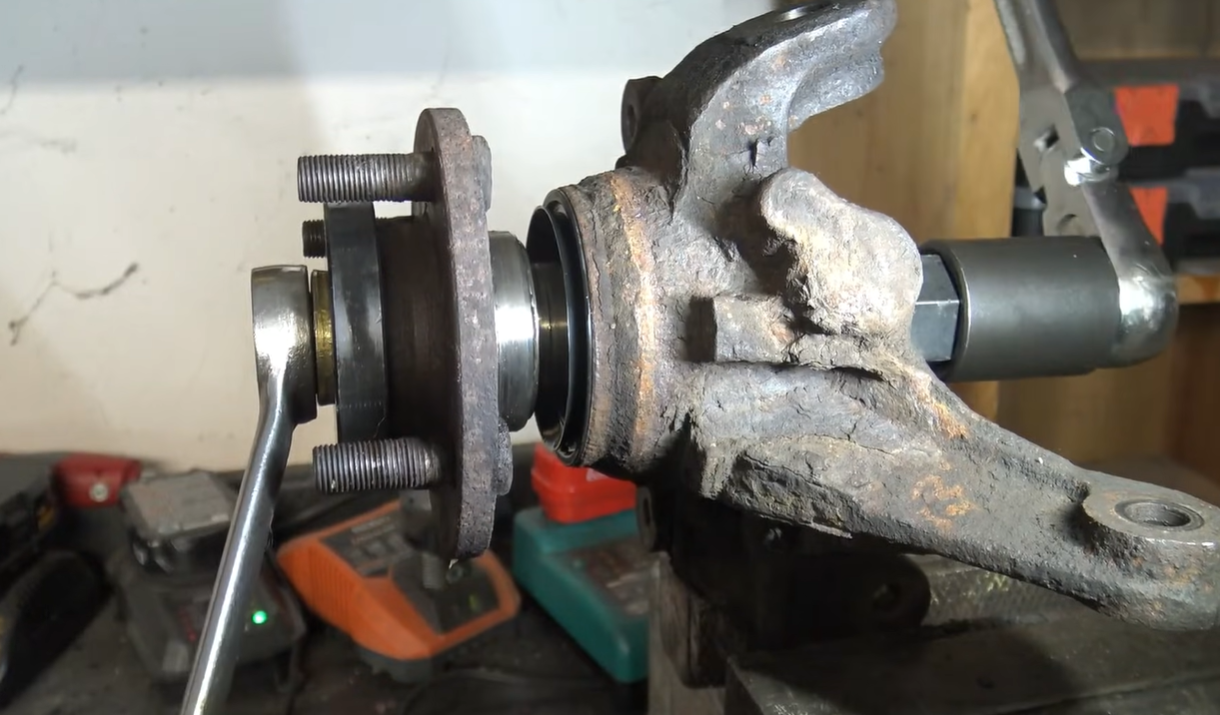
Final assembly should always follow manufacturer torque specifications.
Improper axle torque can:
- Damage the new bearing
- Cause premature wear
- Affect wheel hub preload
In contemporary hub assemblies, where wheel hub vs. wheel bearing designs incorporate several components, this becomes particularly crucial.
Common Wheel Bearing Press Mistakes
Common wheel bearing press mistakes usually involve incorrect force placement, poor alignment, or rushing the installation.
The most frequent mistakes include:
Pressing on the Wrong Race
Applying force to the wrong bearing race can damage internal rollers or balls immediately.
This is one of the leading causes of early bearing noise after installation.
Using Impact Force Instead of Steady Pressure
Hammering bearings into place often damages both the hub and bearing.
Controlled pressure is always safer than shock loading.
Reusing Damaged Snap Rings or Hardware
Old retaining clips and hardware can fail after reinstallation.
Many manufacturers recommend replacement during service.
Ignoring Related Component Wear
Bad suspension or steering parts can increase wheel bearing stress.
Worn suspension geometry, damaged hubs, or unsolved steering problems related to systems like rack and pinion steering vs. power steering setups have all been known to cause repeated bearing failures.
Wheel Bearing Press vs Full Hub Assembly Replacement
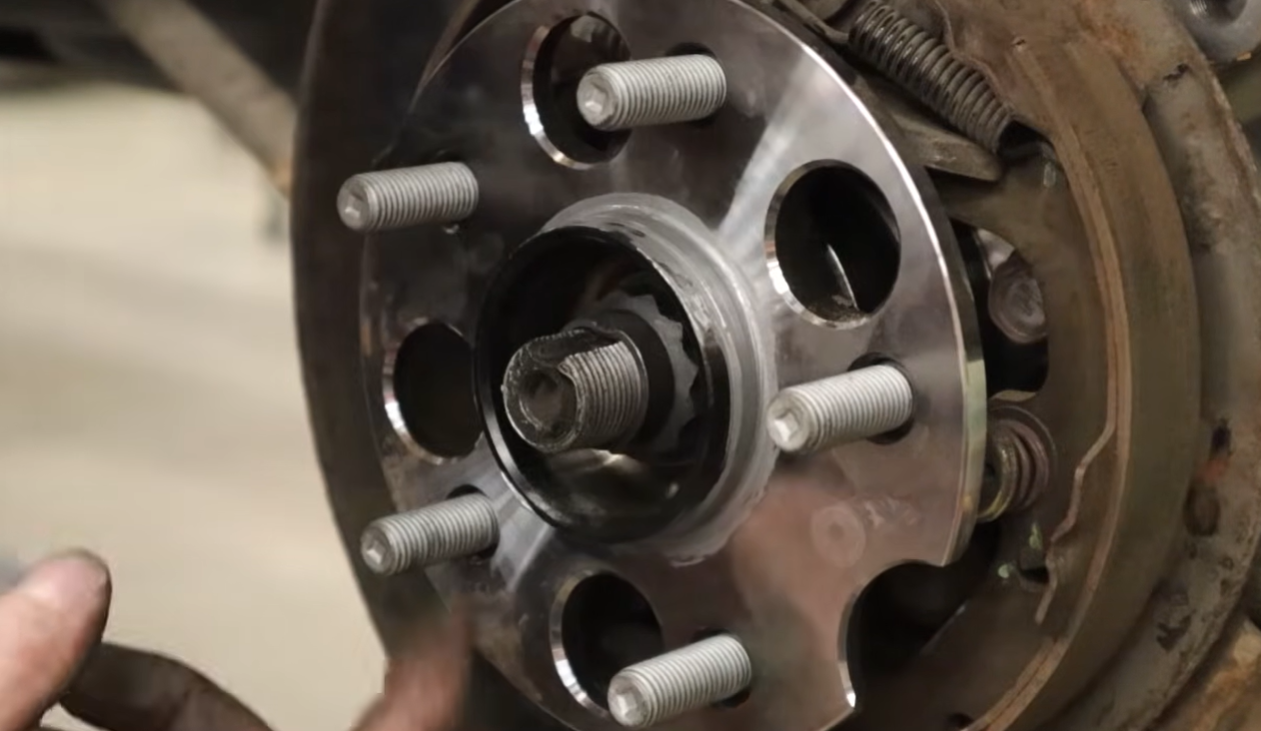
A wheel bearing press is mainly used for press-fit bearings, while hub assembly replacements often eliminate pressing entirely.
Many modern vehicles now use complete bolt-on hub assemblies. These combine:
- The hub
- Bearing
- ABS sensor
- Mounting flange
In these situations, changing the entire assembly is frequently quicker and easier than pressing individual bearings.
However, many sedans, small SUVs, and older cars still have press-fit bearings. Knowing the distinctions between wheel bearings and hub assemblies can help you decide which repair technique is best for a given car.
Cost is another factor. While complete assemblies can save labor time and complexity, pressing bearings may result in reduced part costs. When contrasting the expense of replacing the entire wheel hub assembly with the cost of servicing individual bearings, this becomes crucial.
When Should You Replace a Wheel Bearing?
Wheel bearings should be replaced when they become noisy, loose, rough, or show signs of failure.
Common symptoms include:
- Humming noise
- Grinding sound
- Steering vibration
- ABS warning lights
- Uneven tire wear
- Wheel play
Ignoring these signs may potentially have an impact on steering stability and braking. In extreme circumstances, continuing to drive could harm nearby suspension parts or hub assemblies. For this reason, a lot of people look into things like how long you can drive on a bad wheel bearing as soon as symptoms start to manifest.
The quality of the replacement item itself is important, but so is proper installation. Incorrect installation and pressing methods can cause early failure of even the greatest wheel bearing brand.
FAQs
Can you use a wheel bearing press at home?
You can use a wheel bearing press at home if you have the correct press kit, adapters, and enough mechanical experience to perform the repair safely. Without the need for a complete hydraulic shop press, many do-it-yourself mechanics employ portable wheel bearing press kits to work directly on the car. To prevent harming the new bearing, however, precise alignment and appropriate torque methods are essential.
Do all wheel bearings require a press?
Not all wheel bearings require a press because many modern vehicles use complete bolt-on hub assemblies instead of press-fit bearings. Many front-wheel-drive cars and older suspension systems still use press-fit bearings. Determining which style your car utilizes can also be aided by knowing the differences between front and rear wheel bearings.
Can a wheel bearing be damaged during installation?
A wheel bearing can be damaged during installation if pressure is applied incorrectly or the bearing is pressed unevenly. Noise and vibration are frequently the first signs of internal bearing degradation. One of the most crucial aspects of the installation procedure is the use of appropriate adapters and consistent pressure.
Is it better to replace the hub assembly or press in a new bearing?
It is better to replace the hub assembly or press in a new bearing depending on the vehicle design, labor cost, and repair complexity. While individual press-fit bearings can save part costs, full hub assemblies are frequently quicker and easier to install. Complete hub replacement could be more advantageous for cars with integrated ABS electronics or challenging suspension access.