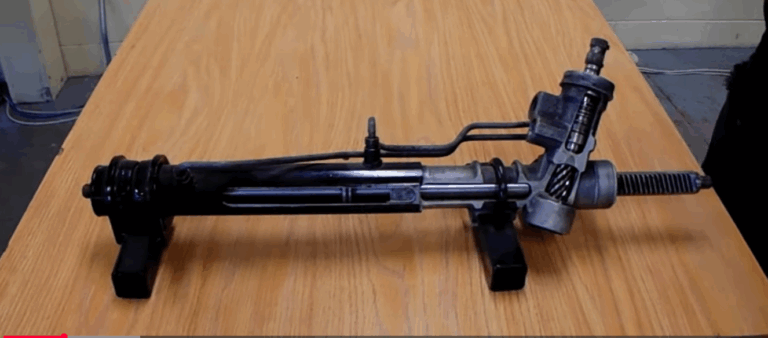
Many drivers hear the term rack and pinion when discussing steering repairs but may not fully understand what it does. The rack and pinion system is responsible for converting steering wheel movement into the motion that turns the vehicle’s wheels.
This steering design is used in most modern vehicles because it provides precise control, responsive handling, and fewer moving parts compared to older steering systems.
Step one in understanding how the rack and pinion works is knowing the variations used in modern vehicles.
Key Points to Review
- A rack and pinion converts your steering wheel rotation into the left-right wheel movement that turns the car. It’s the core mechanical link in your front steering system.
- Most rack and pinion systems last 100,000–150,000 miles on a well-maintained vehicle. Earlier failure usually traces to seal degradation or contaminated power steering fluid.
- Replacement cost runs $700–$2,100 all-in depending on vehicle type and labor complexity.
- Early warning signs: power steering fluid leaks under the front of the car, stiff or loose steering, and clunking noises when turning at low speeds.
What Is a Rack and Pinion?
The rack and pinion is the component that translates what you do with the steering wheel into actual wheel movement. Here’s how the mechanism breaks down and why it became the standard design in most passenger cars.
Basic Definition
A rack and pinion is a steering mechanism that converts the rotational movement of the steering wheel into the linear motion needed to turn the vehicle’s wheels.
A tiny circular gear known as the pinion rotates when the driver cranks the steering wheel. The rack is a flat, toothed bar that meshes with this gear. The pinion pushes the rack to the left or right as it rotates.
The steering parts then use this sideways movement to turn the front wheels. Steering system engineering ties back to standards maintained by SAE International, which is part of why rack and pinion has become the dominant design in passenger cars.
The design dominates modern vehicles because it delivers precise steering response with fewer moving parts than older recirculating ball systems.
Main Parts of a Rack and Pinion System
Every component in the rack assembly has a specific job in translating steering input into wheel movement.
Common parts include:
- Steering rack – the long toothed bar that moves left and right
- Pinion gear – the small gear connected to the steering shaft
- Inner and outer tie rods – connect the rack to the steering knuckle
- Protective boots – rubber covers that protect the rack from dirt and moisture
- Hydraulic or electric assist components – provide steering assistance in power steering systems
When combined, these components enable the driver to maintain precise steering reaction while controlling the vehicle’s direction with little effort.

If the steering rack develops wear or leaks, the repair process usually involves replacing the rack and pinion assembly.
How the System Works
Turn the steering wheel and this is exactly what happens inside the system:
The process works like this:
- The steering shaft rotates the pinion gear
- The pinion gear moves the rack left or right
- The rack pushes the inner and outer tie rods
- The tie rods turn the front wheels
This method enables the driver to precisely control the direction of the vehicle by converting rotation into side-to-side motion.
Compared to earlier steering systems, this comparatively straightforward design also has fewer moving parts, which increases dependability.
Signs of Rack and Pinion Problems
A failing rack and pinion gives clear warning before it completely fails.
Common symptoms include:
- Loose or wandering steering
- Power steering fluid leaks
- Clunking or knocking noises when turning
- Uneven tire wear
- Steering wheel vibration
For instance, faulty seals may allow power steering fluid to leak from the rack assembly, and worn internal gears may result in steering looseness. Steering rack defects continue to appear in the recall data tracked by NHTSA’s recalls database, which is why those symptoms warrant a prompt inspection.
It may help to understand how long you can drive with a bad rack and pinion before repairs become necessary if you notice these symptoms.
When Replacement May Be Necessary
Rack and pinion systems typically last 100,000–150,000 miles under normal driving conditions.
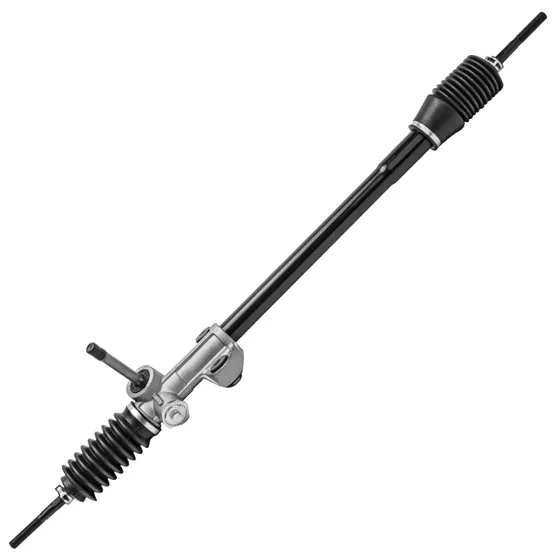
However, several factors can cause earlier failure, including:
- Worn internal gears
- Damaged hydraulic seals
- Contaminated power steering fluid
- Impact damage from road hazards or accidents
Replacing the rack assembly is typically the most dependable fix when internal parts deteriorate or hydraulic leaks occur, just make sure to review the typical rack and pinion replacement cost and labor estimates.
FAQs
What does a rack and pinion do?
A rack and pinion converts the rotational movement of your steering wheel into the left-right motion that turns the front wheels. The pinion gear meshes with the toothed rack, pushing it left or right as you turn.
Is rack and pinion the same as a steering rack?
The terms are used interchangeably, though they mean slightly different things. The steering rack is the toothed bar itself. The rack and pinion is the complete assembly including the pinion gear, tie rods, and power assist components.
How long does a rack and pinion system last?
Most rack and pinion systems endure at least 100,000 to 150,000 miles when properly maintained,. However, early replacement may be necessary due to leaks, old seals, or internal gear wear.
What causes rack and pinion failure?
Worn internal gears, leaking hydraulic seals, tainted power steering fluid, and damage from impacts or worn steering components are common reasons. The longevity of the system can be increased by routine inspection and appropriate fluid management.