There are four main types of steering systems: rack and pinion, recirculating ball, hydraulic power steering, and electric power steering (EPS). Each system controls how steering input is transferred from the steering wheel to the front wheels, but they differ in complexity, durability, steering feel, and maintenance requirements. We’ve noticed these differences firsthand when switching between vehicles. Smaller cars tend to feel quicker and lighter, while larger trucks require more steering input but feel more stable under load.
These differences matter because the steering system directly affects handling, driver control, and repair costs. Modern cars prioritize precision and efficiency, while trucks and heavy-duty vehicles often focus on strength and load capacity. Understanding how each system works helps explain why some vehicles feel light and responsive while others feel heavier but more stable.
What Each System Actually Feels Like Behind the Wheel
Rack and pinion systems feel quick because there are fewer components between the wheel and the tires. Small inputs translate to noticeable direction changes, especially at city speeds. That is why modern compacts and sports cars use it. Steering system engineering standards are maintained in part by SAE International, which is part of why rack and pinion has become the default across the industry.
Recirculating ball feels heavier. It is slower off-center and less precise on a highway drift correction, but it takes abuse from large tires, towing, and cargo weight without loosening up. That is why half-ton and three-quarter-ton trucks still run it.
Hydraulic power steering gives you variable assist: light at parking lot speeds, firmer at highway speed. It also gives real road feedback, which electric systems have been chasing for a decade. The downside is the pump-belt-hose-reservoir chain: more parts, more leaks, more fluid maintenance.
Electric power steering takes weight and drag off the engine and lets software tune the feel per drive mode. What you lose is raw road feel. On worn EPS cars, steering can go numb or clicky as the motor wears.
Key Points to Review
- There are four main steering system types used in modern vehicles: manual rack and pinion, hydraulic power steering (HPS), electric power steering (EPS), and electro-hydraulic power steering (EHPS).
- Manual rack and pinion has the best steering feel. No assist means more effort, which is why it’s mostly found on lightweight sports cars and older economy cars.
- EPS has replaced hydraulic systems in most new vehicles since 2010. No fluid, better fuel economy, and driver-selectable weight modes in many cars.
- EHPS is a hybrid: hydraulic assist but powered by an electric motor instead of a belt-driven pump. Common on larger vehicles that need stronger assist than EPS can provide.
1. Rack and Pinion Steering
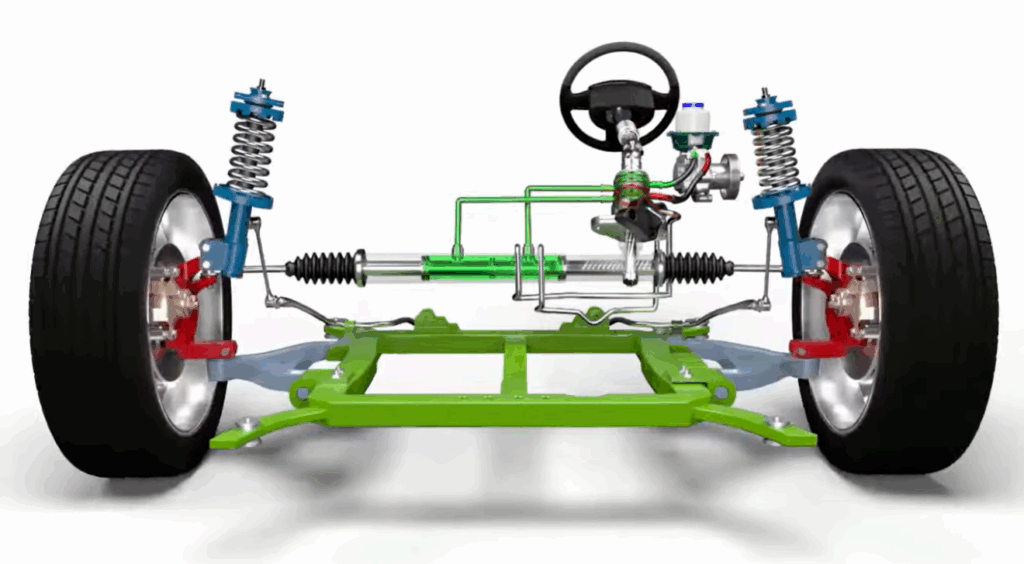
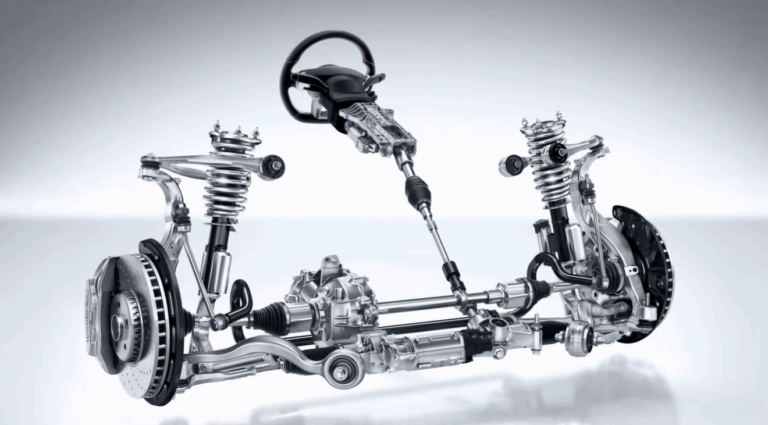
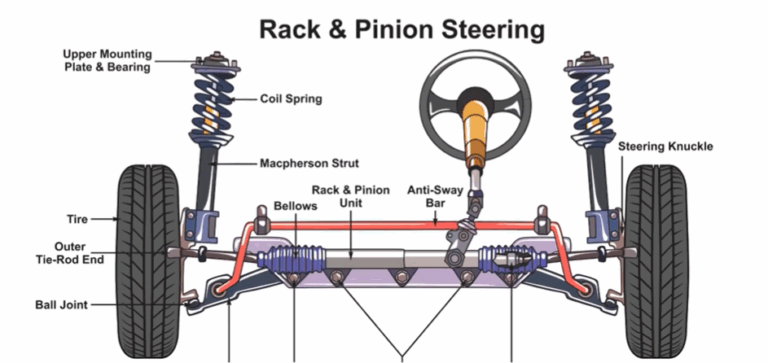
Rack and pinion steering is the most common system used in modern cars because it provides precise and responsive control.
This system directly converts steering wheel rotation into side-to-side wheel movement using a simple gear mechanism. Its straightforward design improves feedback and reduces complexity compared to older systems.
How it works:
- A gear (pinion) rotates when you turn the wheel
- It moves a flat gear (rack) side-to-side
- This motion turns the front wheels
Where it’s used:
- Most modern cars, sedans, and crossovers
Pros:
- Precise steering feel
- Simple design
- Fewer moving parts
Cons:
- Can wear over time (especially internal seals and gears)
For example, rack and pinion systems provide more immediate response because there are fewer components between the steering wheel and the wheels. I’ve felt this when driving vehicles with rack and pinion steering, even small steering inputs cause noticeable direction changes, particularly at city speeds. This is why many drivers notice quicker response compared to older steering setups.
One thing many drivers notice after switching from an older truck to a smaller sedan is how much quicker rack and pinion steering feels. Even small steering inputs result in immediate wheel movement, which makes parking and lane changes easier.
2. Recirculating Ball Steering
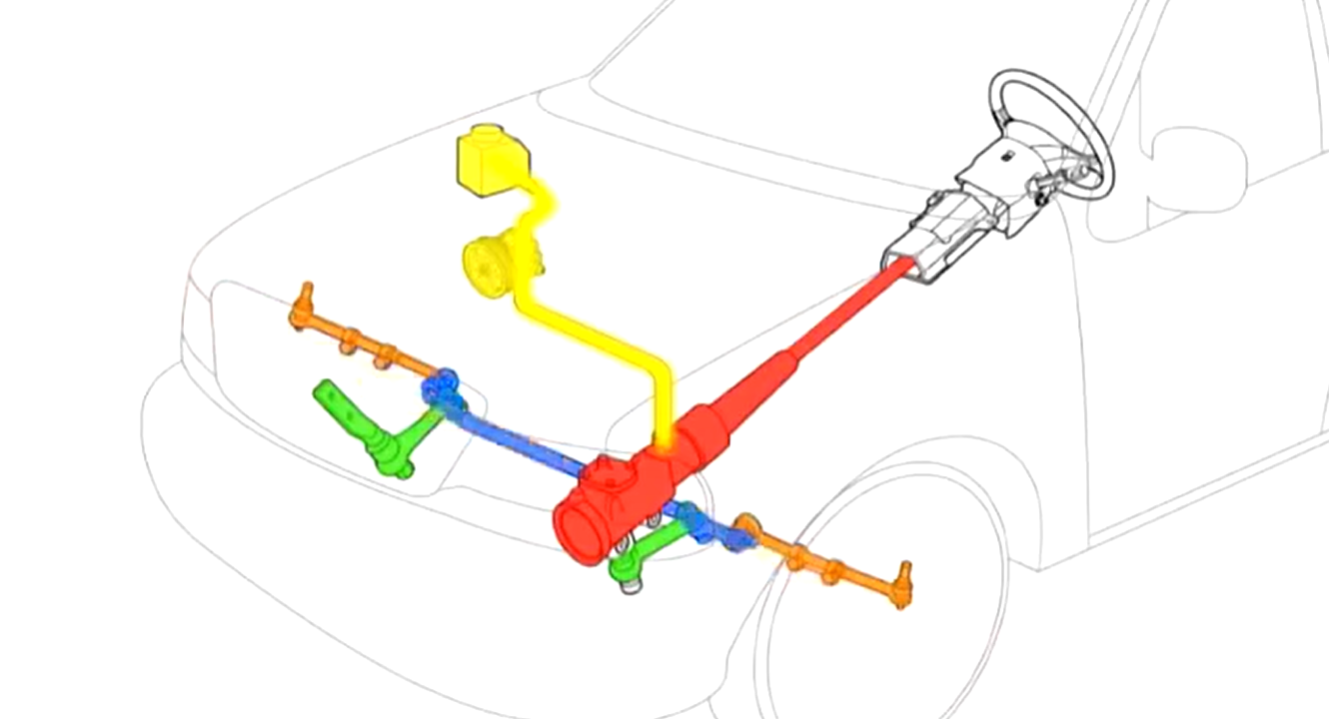
Recirculating ball systems are commonly used in trucks because they handle larger tires and heavier loads without excessive wear. This becomes more noticeable when towing or carrying cargo, where steering remains stable even with added front-end stress. Drivers often describe this as heavier steering, but it helps maintain control under load.
This system uses multiple internal components, including a worm gear and ball bearings, to transfer motion. While this design reduces steering precision, it spreads load across more parts, which improves durability under heavy front-end weight.
This system uses multiple internal components, including a worm gear and ball bearings, to transfer motion. You will see this design mostly in older trucks where the steering feels slightly less precise, but the system handles heavy front-end weight better. While this design reduces steering precision, it spreads load across more parts, which improves durability under heavy front-end weight.
This system uses a steering gearbox filled with ball bearings to reduce friction and handle higher steering forces. It’s built for strength rather than precision. Steering system defects of all kinds are tracked in the recall data maintained by NHTSA’s recalls database, which is why regular steering inspections matter regardless of design.
How it works:
- Uses a gearbox with ball bearings to reduce friction
- Converts steering wheel movement into side-to-side motion
Where it’s used:
- Trucks, SUVs, and older vehicles
Pros:
- Strong and durable
- Handles heavy loads well
Cons:
- Less precise than rack and pinion
- More complex design
A common reason manufacturers use this system in trucks is that it tolerates larger tires and heavier front-end loads. For example, vehicles used for towing often rely on recirculating ball steering because it remains stable under stress.
3. Hydraulic Power Steering
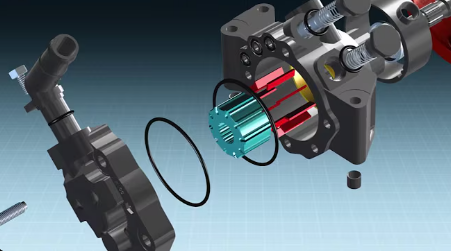
Hydraulic power steering uses pressurized fluid generated by an engine-driven pump to assist steering movement. I’ve personally experienced that vehicles with hydraulic systems still provide good road feedback while reducing steering effort, especially when maneuvering in tight spaces. This reduced the effort needed to turn the wheel, especially at low speeds, while still maintaining a mechanical connection to the wheels.
A common situation is when steering gradually becomes harder at low speeds due to fluid leaks. Drivers often top off the fluid and notice temporary improvement before the issue returns.
This system doesn’t replace the mechanical steering setup but adds hydraulic assistance to make steering easier.
How it works:
- A pump pressurizes fluid
- Fluid assists movement inside the steering system
Where it’s used:
- Older vehicles and some performance cars
Pros:
- Strong steering assist
- Smooth operation
Cons:
- Requires maintenance (fluid, hoses, seals)
- Can develop leaks over time
In many high-mileage vehicles, steering effort gradually increases as fluid degrades or small leaks develop. We see cases where steering feels normal while driving but became noticeably stiff when parking, which often points to aging fluid or reduced hydraulic pressure.
We also see hydraulic systems develop leaks at hoses or seals, which leads to stiff steering. In those cases, restoring proper fluid levels often improves steering temporarily before repairs are needed.
4. Electric Power Steering (EPS)
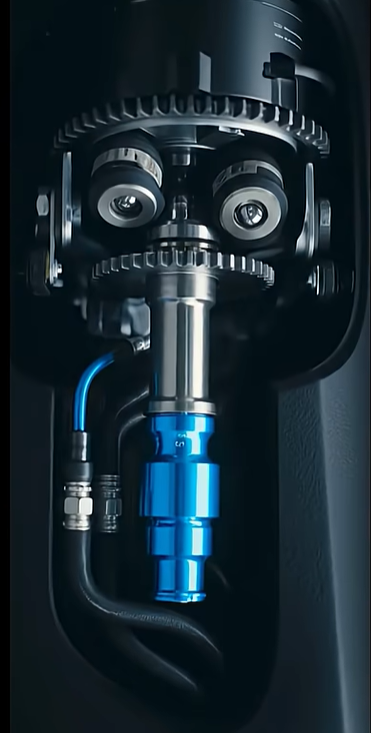
Electric power steering uses an electric motor instead of hydraulic fluid to assist steering.
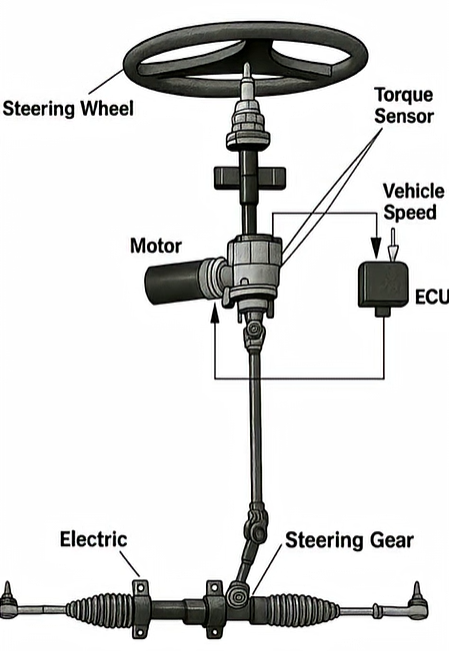
Electric power steering uses an electric motor and sensors instead of hydraulic fluid to provide steering assistance. The system adjusts assistance electronically, increasing help at low speeds and reducing it at higher speeds for better stability.
How it works:
- Sensors detect steering input
- An electric motor provides assistance
Where it’s used:
- Most modern vehicles
Pros:
- More efficient (improves fuel economy)
- Low maintenance (no fluid required)
- Adjustable steering feel
Cons:
- Can feel less “connected” than hydraulic systems
EPS systems often reduce steering assist at higher speeds to improve stability. This is why some vehicles feel lighter when parking but firmer on the highway. This variable assistance is why steering often feels very light during parking but becomes firmer on the highway. Many drivers notice this change when transitioning from city driving to higher speeds, where the steering naturally tightens for better control.
Comparison of Steering System Types
Each steering system differs in precision, maintenance, and overall driving feel.
Each steering system has trade-offs, which is why manufacturers choose them based on vehicle purpose. Lighter passenger cars prioritize responsiveness and efficiency, while trucks and heavy-duty vehicles focus more on durability and load handling.
Quick comparison:
- Rack and pinion → Best balance of precision and simplicity
- Recirculating ball → Best for durability and heavy-duty use
- Hydraulic power steering → Strong assist but requires maintenance
- Electric power steering → Most efficient and low maintenance
Most modern vehicles use rack and pinion combined with electric power steering, which balances responsiveness and efficiency.
Which Steering System Is Best?
Rack and pinion with electric power steering is considered the best overall system for most drivers.
This combination offers:
- Precise control
- Lower maintenance
- Better fuel efficiency
However, the “best” system depends on the vehicle:
- Trucks → benefit from recirculating ball durability
- Performance cars → sometimes prefer hydraulic feel
- Daily drivers → use EPS for efficiency and convenience
For example, heavier trucks still prioritize durability, while compact cars benefit more from lightweight electric-assisted systems. Before choosing to make repairs, it would be helpful to know how much it will cost to replace a rack and pinion if you have steering problems.
FAQs
What is the most common steering system?
Rack and pinion is the most common steering system used in modern vehicles. It gives fine control and has a simpler design than previous systems.
What steering system do trucks use?
Many trucks use recirculating ball steering systems because they are more durable under heavy loads. Larger forces are better handled by this system than by rack and pinion.
Is electric steering better than hydraulic?
Electric power steering is more efficient and requires less maintenance than hydraulic systems. Nonetheless, some drivers find that hydraulic steering feels better.
Which steering system lasts the longest?
Recirculating ball steering systems typically last the longest due to their heavy-duty design. They are designed to withstand prolonged use and larger loads.