A power steering leak should be fixed quickly because low fluid can damage the pump and cause loss of steering assist. The location of the leak (hoses, fittings, the pump, or the rack and pinion itself) determines the repair technique.
Drivers frequently become aware of a leak when the steering stiffens or fluid starts to appear beneath the front of the car. Early leak repair can avoid more costly repairs and bring back reliable steering.
Common Causes of Power Steering Leaks
The most common causes include:
- Worn rack and pinion seals
- Cracked or aging hoses
- Loose fittings or clamps
- Failing power steering pump seals
- Damaged reservoir
Leaks frequently appear gradually. I’ve seen cases where the fluid level dropped slowly over weeks, causing intermittent steering assist before the leak became visible. Because of this, routine inspections are crucial.This makes regular inspections important.
Step 1: Locate the Source of the Leak
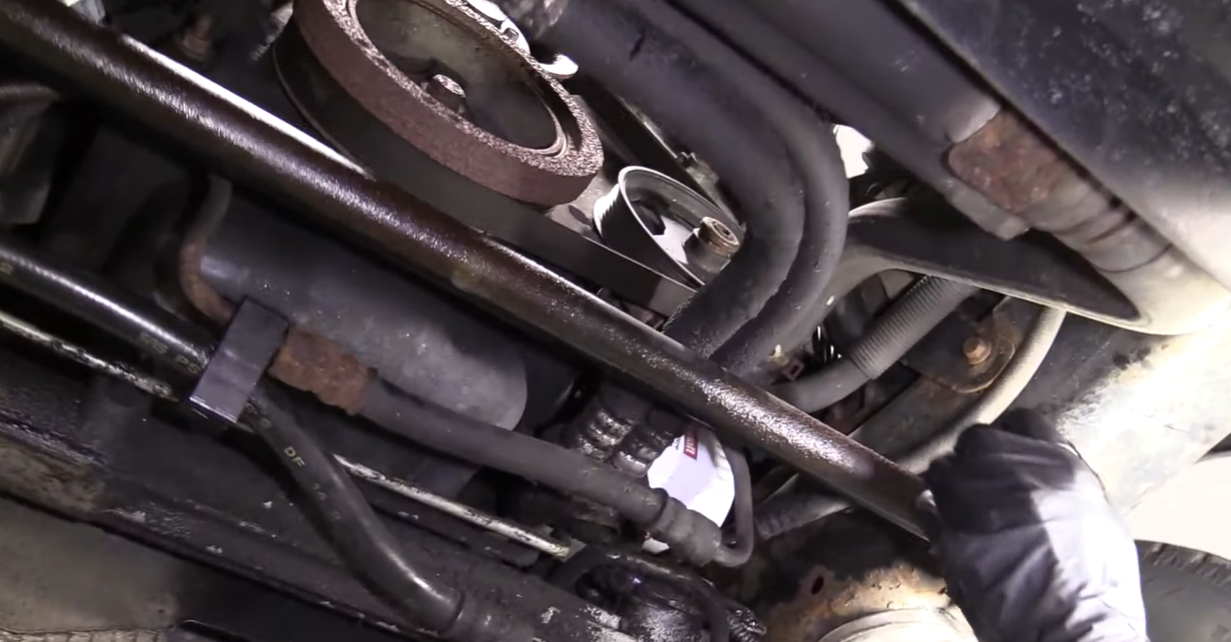
Start by inspecting the entire power steering system. Look for:
- Wet or oily hoses
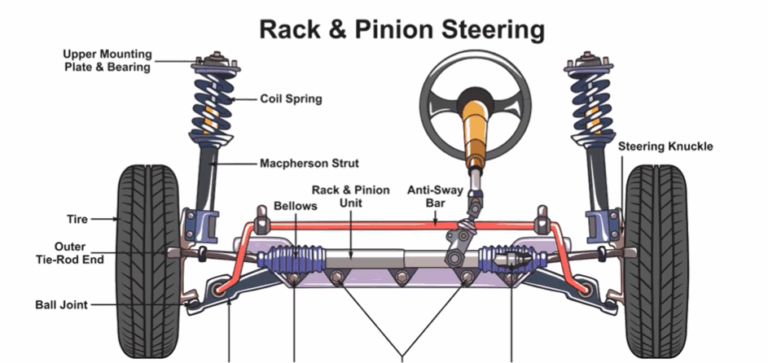
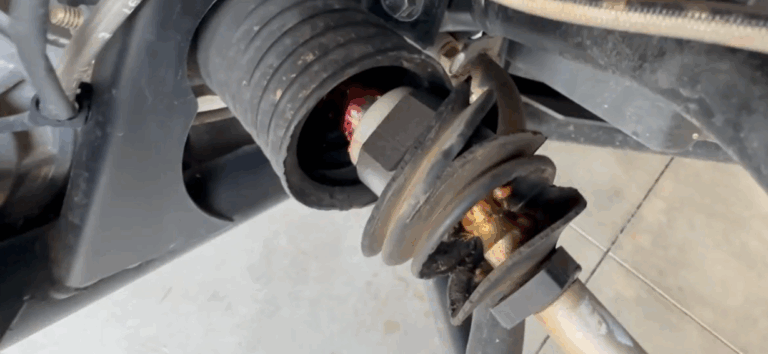
- Fluid around the rack boots
- Drips near the pump
- Fluid on suspension components
Sometimes fluid travels along components before dripping. In a previous case, the leak seemed to originate from the rack, but it was actually caused by a fractured return hose above it. Finding the true source was made easier by cleaning the area and double-checking.
Step 2: Tighten Loose Connections
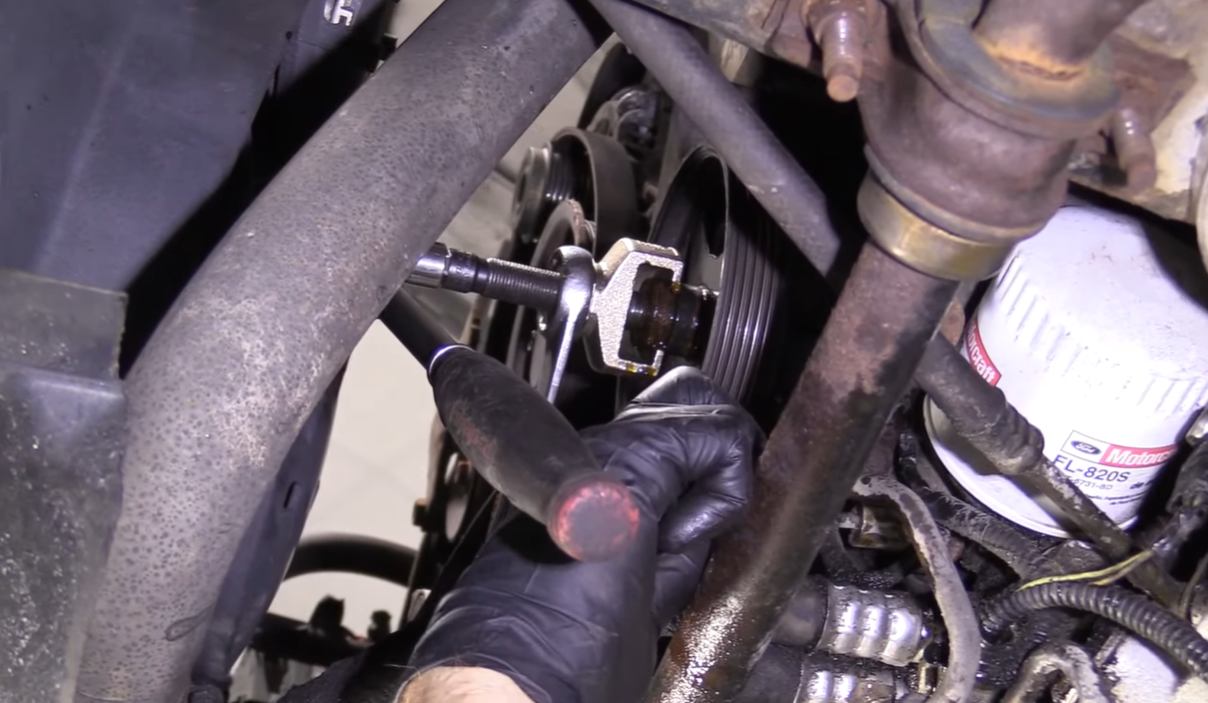
Loose fittings are one of the easiest fixes. Check:
- Hose connections
- Pump fittings
- Reservoir clamps
Use the appropriate wrench to gently tighten connections. Steer clear of overtightening since this might crush seals or break fittings.
Minor leaks can be fixed with this easy technique. After fixing a little loose return line, I seen steering systems cease leaking right away.
Step 3: Replace Damaged Hoses
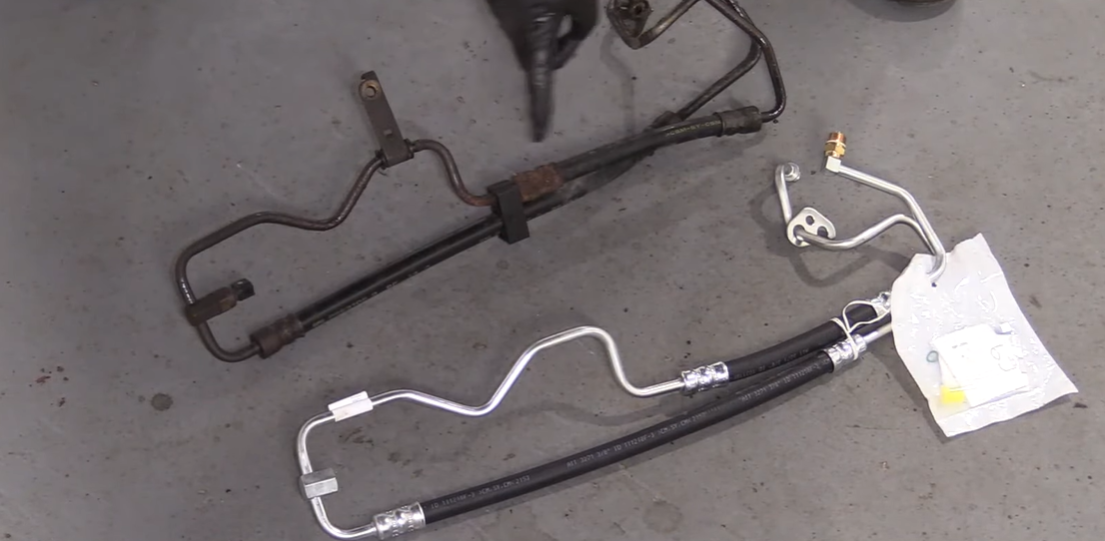
If a hose is cracked, brittle, or swollen, replacement is usually required.
Steps:
- Place a drain pan under the vehicle
- Disconnect the leaking hose
- Install the new hose
- Secure clamps or fittings
- Refill power steering fluid
Hoses often deteriorate from heat exposure. We’ve seen return hoses on older cars soften and begin to leak fluid, especially around corners.
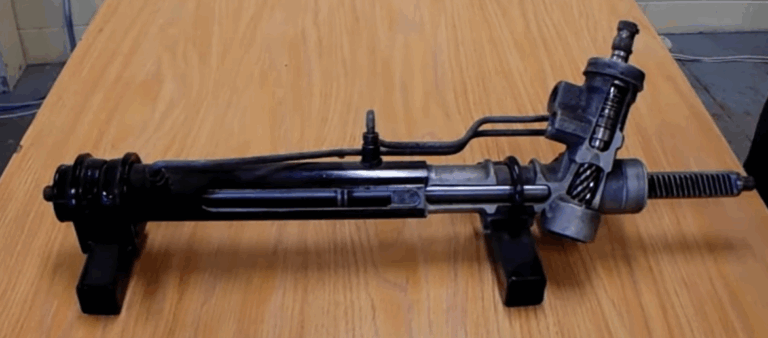
Step 4: Repair or Replace Rack and Pinion Seals
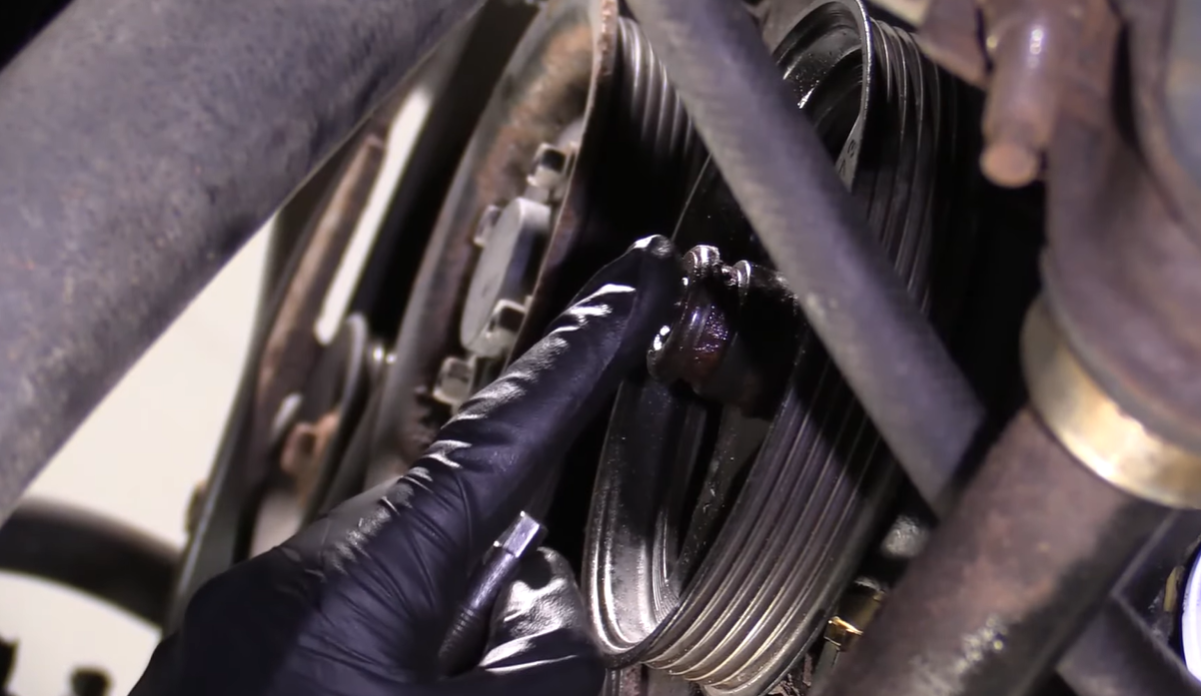
Leaks from inside the rack boots usually indicate worn internal seals. In this case:
- Temporary fixes are limited
- Seal replacement is complex
- Rack replacement is often recommended
When fluid collects inside the rack boots, it usually means internal seal wear. We’ve seen cars where fluid filled the boot but didn’t drip right away, resulting in symptoms like stiff steering that took time to manifest. Knowing what causes a rack to leak helps here.
Step 5: Fix Power Steering Pump Leaks
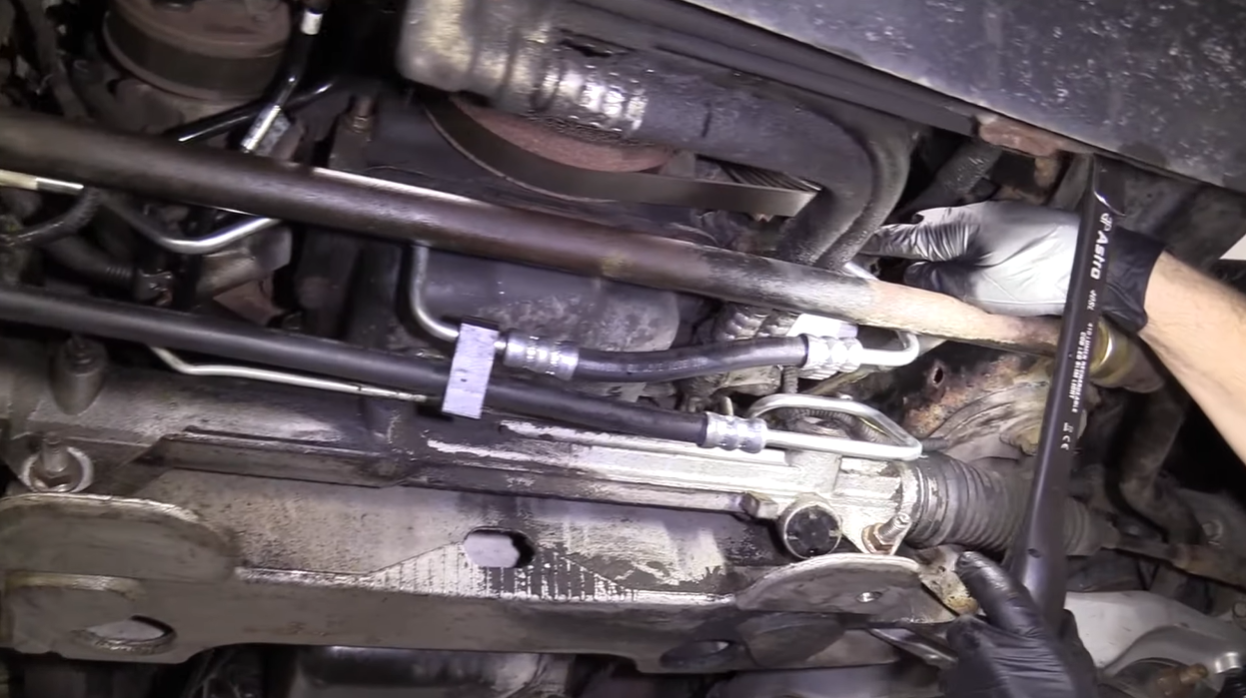
Pump leaks typically appear around:
- Pump shaft seal
- Reservoir connection
- Pressure line fitting
Minor leaks may be resolved by tightening fittings. However, replacing the pump is typically necessary due to worn pump seals.
One repair involved a pump that only leaked when the engine warmed up. When the engine was cold, it was more difficult to find the leak since the seal expanded with heat, allowing fluid to escape.
Step 6: Flush and Refill the System
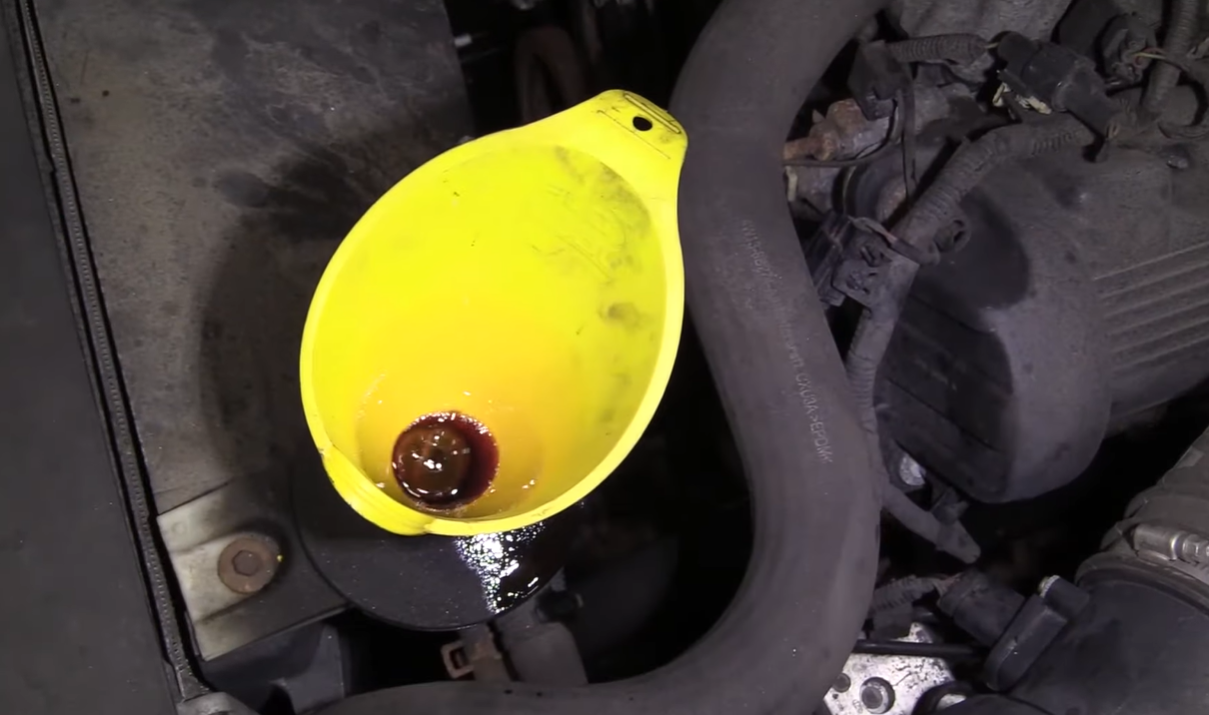
After fixing the leak, flush the system to remove contaminated fluid and air.
Basic process:
- Drain old fluid
- Refill with fresh fluid
- Turn steering wheel lock-to-lock
- Top off fluid level
- Check for leaks
Flushing helps restore smooth steering. There have been instances where the steering was uneven until the trapped air was completely released.
The steps involved in doing a complete power steering system flush are comparable to this one.
Temporary Fixes (When You Can’t Repair Immediately)
Temporary solutions may include:
- Topping off fluid regularly
- Using stop-leak additives (short-term only)
- Monitoring steering performance
Stop-leak products may swell seals temporarily, but they don’t permanently fix worn components. In many cases, they only delay the repair.
Symptoms That the Leak Is Fixed
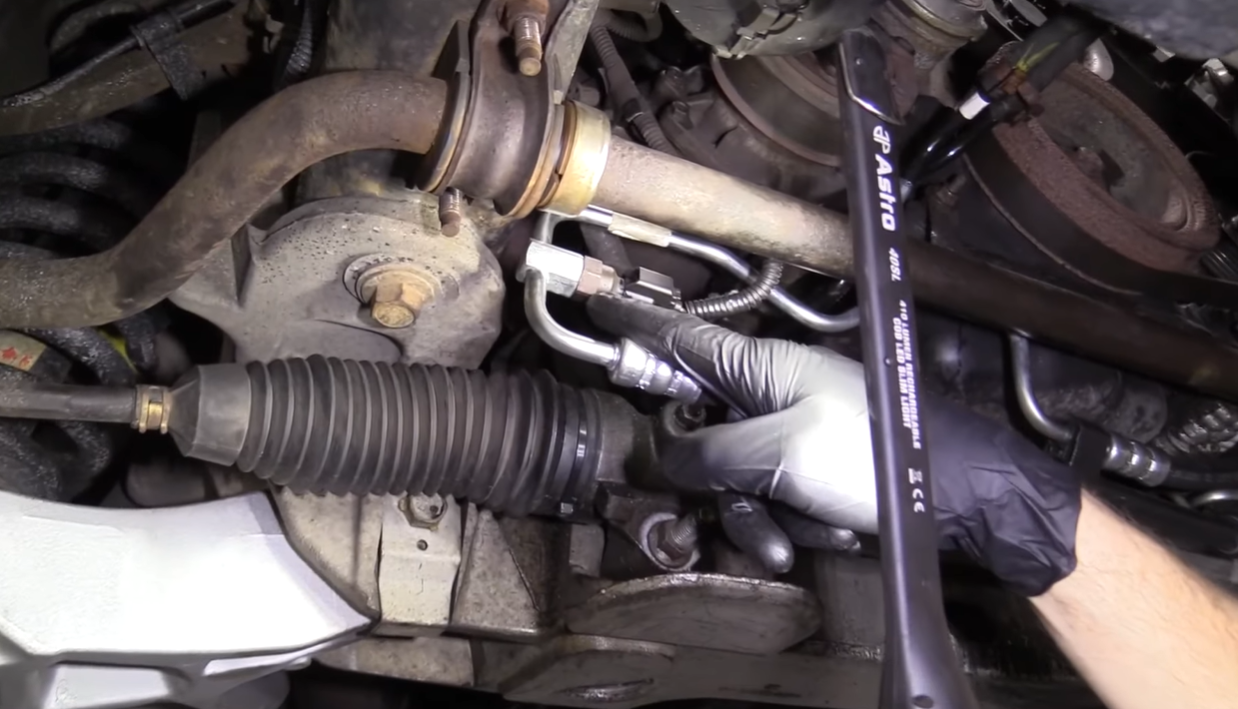
After repair, check for:
- Stable fluid level
- No whining noise
- Smooth steering assist
- No fluid under vehicle
After a few days, drive the car and do another inspection. Only under strain might tiny leaks show up.
Cost Considerations
Repair cost depends on the leak source:
- Tightening fittings: lowest cost
- Hose replacement: low to moderate cost
- Pump replacement: higher cost
- Rack replacement: highest cost
When the rack needs to be removed, labor costs rise dramatically. Similar to lengthy rack replacement procedures, some vehicles need separating suspension components.
Preventing Future Power Steering Leaks
Preventive steps include:
- Checking fluid regularly
- Inspecting hoses for cracks
- Replacing old fluid
- Listening for pump noise
- Fixing small leaks early
I see small hose seepage ignored for months, eventually leading to pump failure due to low fluid. Catching leaks early helps avoid larger repairs.
FAQs
Can I drive with a power steering leak?
Yes, you can drive with a power steering leak, but steering will become harder and you risk damaging the pump. It’s best to repair the leak as soon as possible. Additionally, driving with low fluid can introduce air into the system, which could result in whining noises and uneven steering assistance. This can eventually hasten internal component deterioration and result in more costly repairs.
Will stop leak fix power steering leaks?
Stop leak products may temporarily fix minor power steering leaks by swelling worn seals, but they usually don’t provide a permanent repair. Although these additives can reduce minor leaks by expanding rubber seals, they are unable to repair worn internal rack seals, fractured hoses, or damaged fittings. Once the additive wears off or the seal continues to weaken, the leak frequently reappears.
Is a power steering leak expensive to fix?
A power steering leak can be inexpensive or costly depending on the source of the leak. Hose repairs are inexpensive, while rack replacement is more costly. Labor also contributes significantly to the overall cost, particularly for cars where removing suspension parts is necessary to reach the rack. Early leak repair is typically far less expensive than waiting until the pump or rack is damaged.
How long does it take to fix a power steering leak?
Fixing a power steering leak can take under an hour for simple hose repairs, while rack replacement may take several hours depending on access. Flushing the system, bleeding off air, and testing for leaks may take more time. Tight engine bays and subframe interference frequently necessitate more labor, which lengthens the time needed for repairs.