Many drivers hear the terms wheel hub, wheel bearing, and hub assembly used interchangeably, which causes misunderstanding while repairs are being made. You can diagnose noise, vibration, or ABS issues more precisely if you know what a wheel hub actually accomplishes.
Wheel hubs are a component of the system that maintains correct alignment and supports the weight of the vehicle while enabling smooth wheel and tire rotation.
People frequently mistake the hub for the bearing itself because it is typically combined with other parts of contemporary cars.
Key Points to Review
We’ll be going through:
- What a wheel hub is and where it sits in the wheel assembly
- How the hub works with the wheel bearing and ABS system
- When replacement may be necessary
What Is a Wheel Hub?
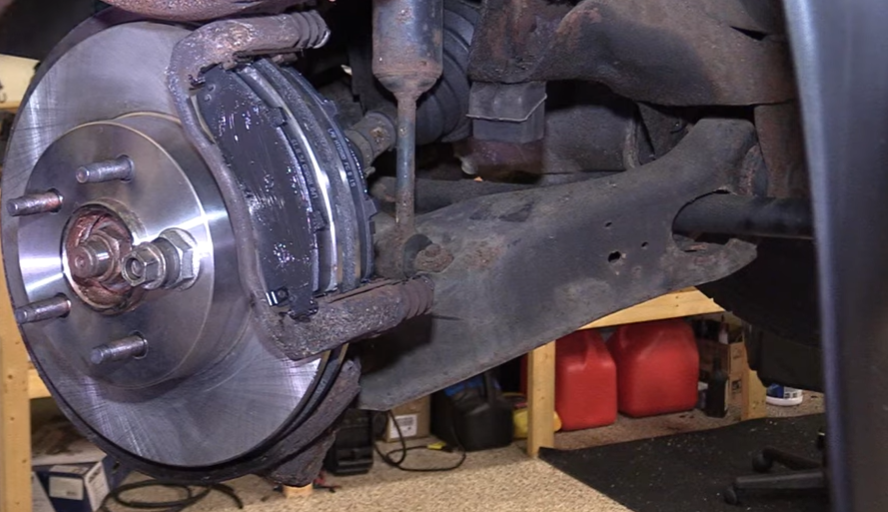
A wheel hub is the central mounting component that connects the wheel to the vehicle’s suspension and drivetrain. It permits the wheel to rotate freely while keeping it firmly fixed to the car.
The hub serves as the structural intersection of the wheel, brake rotor, and suspension knuckle, among other crucial parts. It also supports a portion of the vehicle’s weight and absorbs forces from braking, accelerating, and cornering because it is positioned in the middle of the wheel assembly.
For instance, the wheel hub aids in distributing forces across the suspension system when your car hits a pothole or corners and the load moves to one side. Because of this, hubs are made of forged alloys or hardened steel that can withstand severe stress.
Where the Wheel Hub Is Located
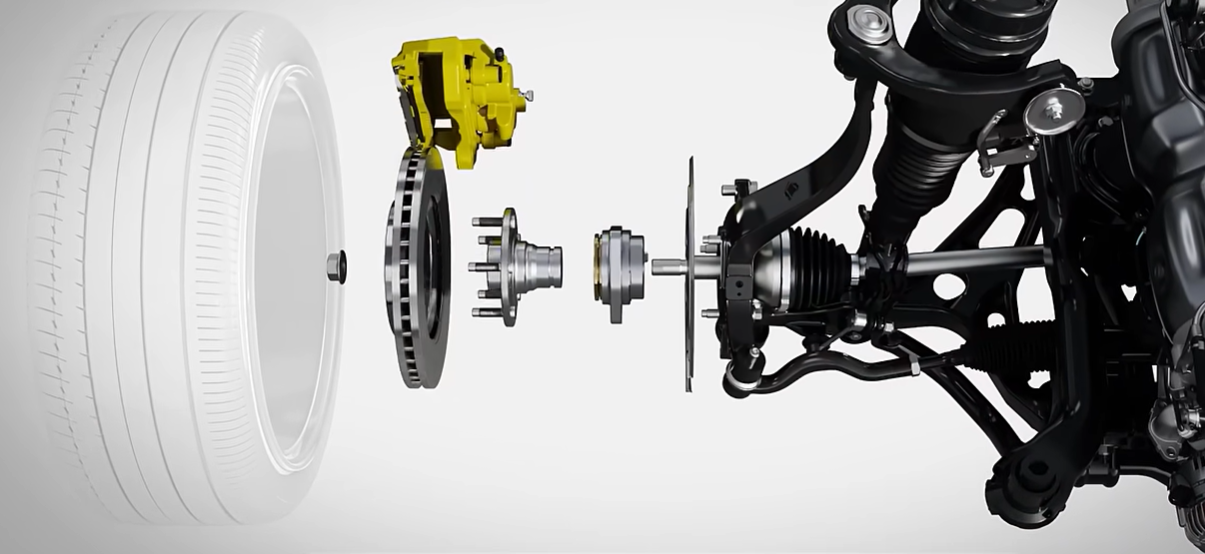
The wheel hub sits between the brake components, suspension knuckle, and axle shaft.
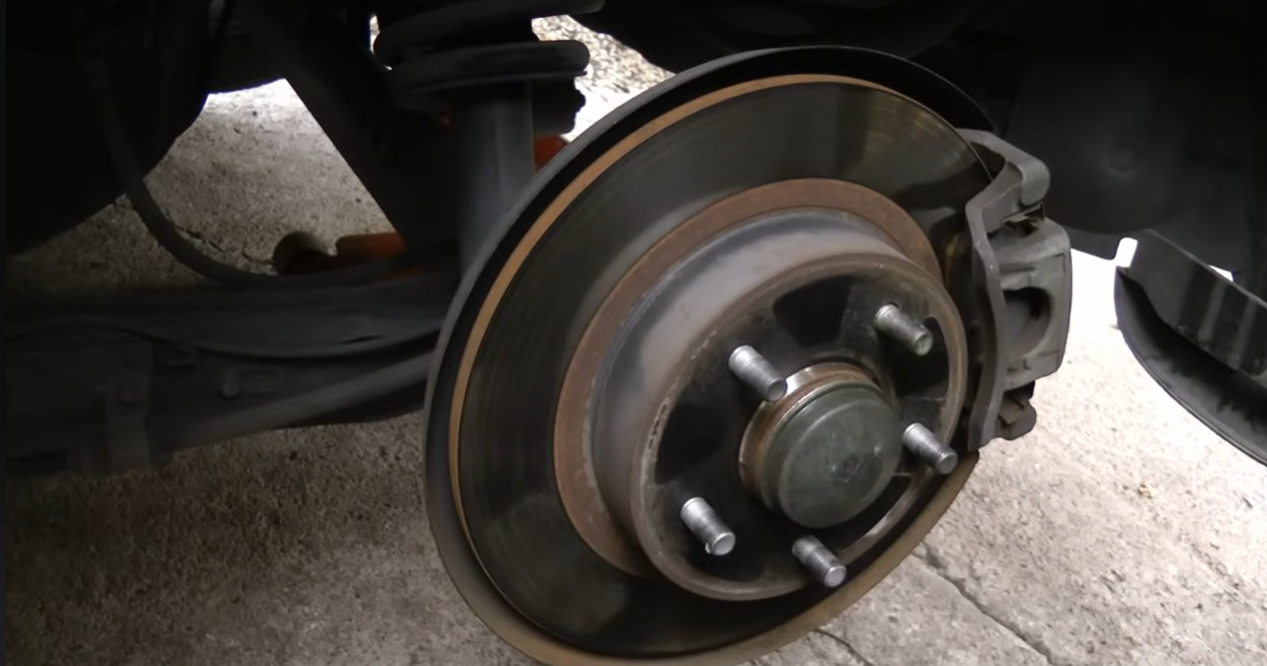
Specifically, it connects:
- The brake rotor or drum mounted to the hub flange
- The steering or suspension knuckle, which holds the hub assembly
- The axle shaft on driven wheels
The axle shaft on a front-wheel drive car is fastened with a big axle nut and goes straight through the hub’s center. The hub is often fixed to the rear knuckle or axle housing on vehicles with rear-wheel drive.
A sealed wheel bearing used inside the majority of contemporary hub assemblies enables smooth, low-friction rotation of the hub and wheel.
What Is Included in a Wheel Hub Assembly?
A wheel hub assembly combines several components into a single pre-assembled unit.
Many contemporary cars have sealed hub assemblies made for simpler installation, but older vehicles frequently required separate bearings that had to be pressed into the steering knuckle.
A typical hub assembly includes:
- Wheel hub flange where the wheel bolts on
- Sealed wheel bearing that allows rotation
- Wheel studs for mounting the wheel
- ABS wheel speed sensor or mounting point
- Tone ring that sends wheel speed data to the ABS system
Because the bearing is protected from impurities like water and road debris, this design increases reliability.
It also makes repairs easier. Technicians can remove the entire hub unit and bolt on a replacement bearing rather than pushing out an old one and installing a new one.
There’s always talk about wheel hub vs wheel bearing – the structural differences and replacement methods.
How the Wheel Hub Works With the Bearing
The wheel hub provides the structural mounting point for the wheel, while the wheel bearing allows the assembly to rotate smoothly.
Inside the hub assembly sits the bearing, which contains precision steel balls or rollers designed to reduce friction between moving components.
Together, the hub and bearing allow the wheel to:
- Rotate smoothly at highway speeds
- Support thousands of pounds of vehicle weight
- Maintain proper wheel alignment
For instance, a normal wheel bearing can revolve more than 800 times per minute at 60 mph. While the bearing controls the rotating load, the hub maintains the wheel’s attachment and alignment.
The hub assembly may become noisy or loose if the bearing starts to deteriorate, with some common other warning signs.
Symptoms of a Failing Wheel Hub
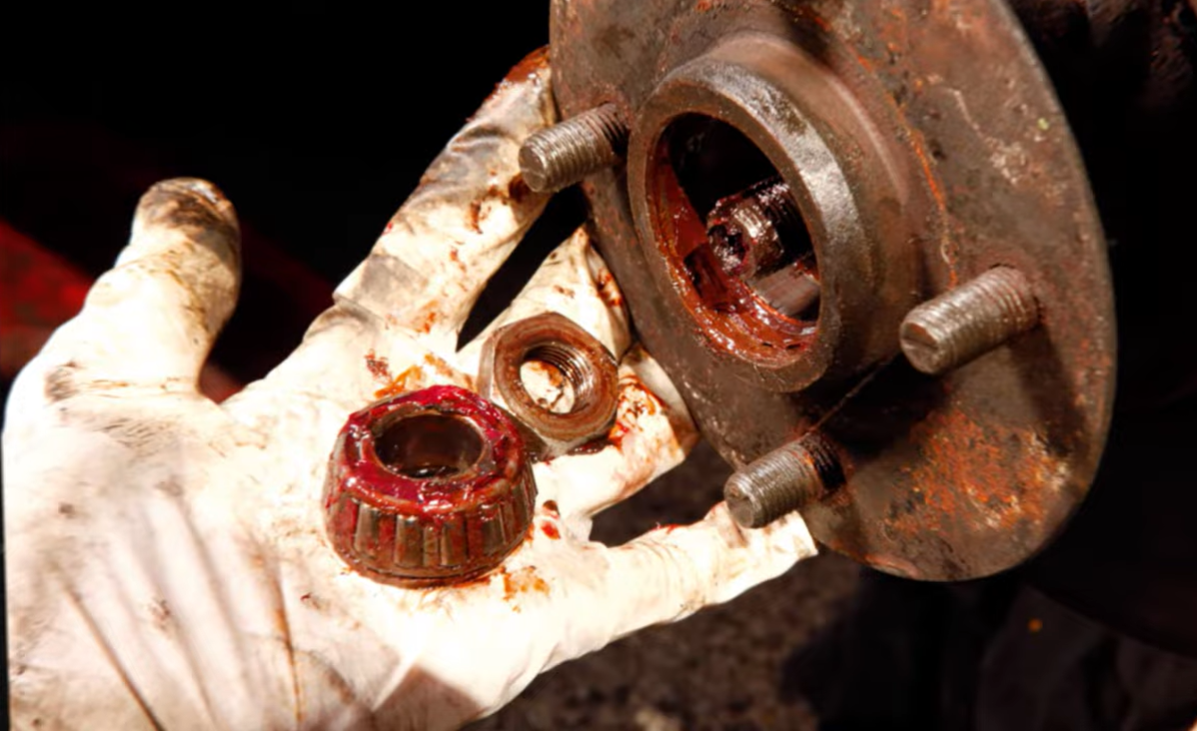
A failing wheel hub typically produces noise, vibration, or ABS warnings.
The most common symptoms include:
- Humming or grinding noise while driving
- Steering wheel vibration
- Uneven tire wear
- ABS warning light
As the speed of the vehicle increases, the noise usually gets louder. It is frequently described by drivers as a growling or buzzing sound that shifts when they turn.
For instance, the right-side hub bearing may be failing as a result of the load shifting onto that wheel if the noise is louder when turning left.
Wheel bearing noise is sometimes confused with tire noise, according to many mechanics, which is why it’s crucial to recognize the sound.
When a Wheel Hub Needs Replacement
Wheel hub assemblies usually need replacement when the bearing inside the unit fails.
Although severe driving conditions can reduce its lifespan, the majority of hub assemblies endure between 85,000 and 150,000 miles.
Common causes of failure include:
- Water intrusion from damaged seals
- Impact damage from potholes or curb strikes
- Normal bearing wear over time
For instance, because the impact affects the bearing races inside the assembly, many drivers report hub failure soon after striking huge potholes.
Because the bearing is contained inside the unit, many cars require replacing the complete hub assembly when the bearing fails.
As experts in the field, we recommend reading more about the full installation process if you’re planning to perform the repair yourself to ensure not facing any issues.
It is also possible to interfere with the tone ring or wheel speed sensor during installation. After the repair, the ABS warning light can display if that occurs, and it needs to be reset.
FAQs
What is the purpose of a wheel hub?
The purpose of a wheel hub is to connect the wheel to the suspension while allowing it to rotate smoothly. Additionally, it offers a place to mount the wheel studs, brake rotor, and occasionally the ABS sensor.
The hub transfers forces from braking, accelerating, and road impacts onto the suspension system since it is positioned in the middle of the wheel assembly.
Can a wheel hub fail without the bearing failing?
Yes, a wheel hub can fail independently if the studs, flange, or mounting surface becomes damaged.
For instance, even if the bearing itself is still operating correctly, hub problems may arise from stripped wheel studs, corrosion on the mounting surface, or impact damage from colliding with a curb.
However, the majority of failures are caused by the hub assembly’s internal bearing wearing out, which is why the complete device is usually replaced.
Is a wheel hub the same as a hub assembly?
No, a wheel hub is one component while a hub assembly includes the hub, bearing, and additional parts.
The hub assembly consists of a number of interconnected parts that are intended to cooperate, whereas the hub alone is just the wheel’s mounting flange.
Modern cars frequently have this integrated design since it makes installation easier and increases durability.
How long do wheel hubs last?
Most wheel hubs last between 85,000 and 150,000 miles under normal driving conditions.
Potholes, exposure to water, and reckless driving, however, can reduce their longevity.
For example, many drivers report that their wheel hubs need to be replaced after 100,000 miles, especially on cars that are driven in places with difficult roads or in severe winter weather where moisture and salt hasten deterioration.