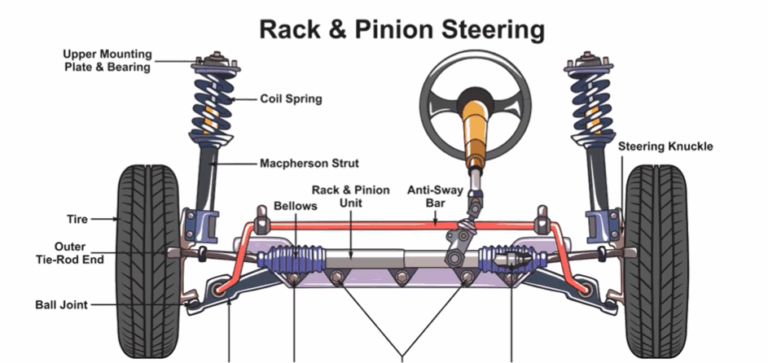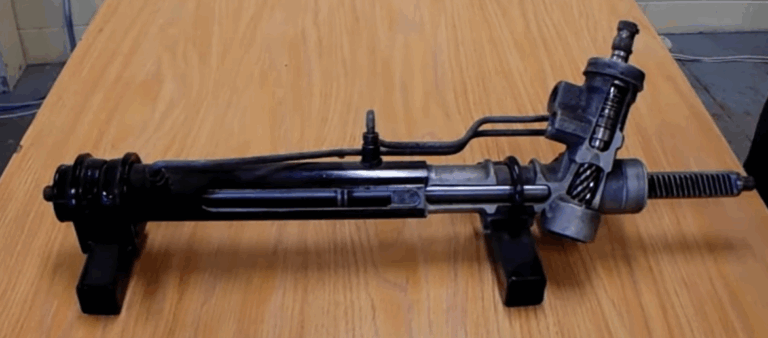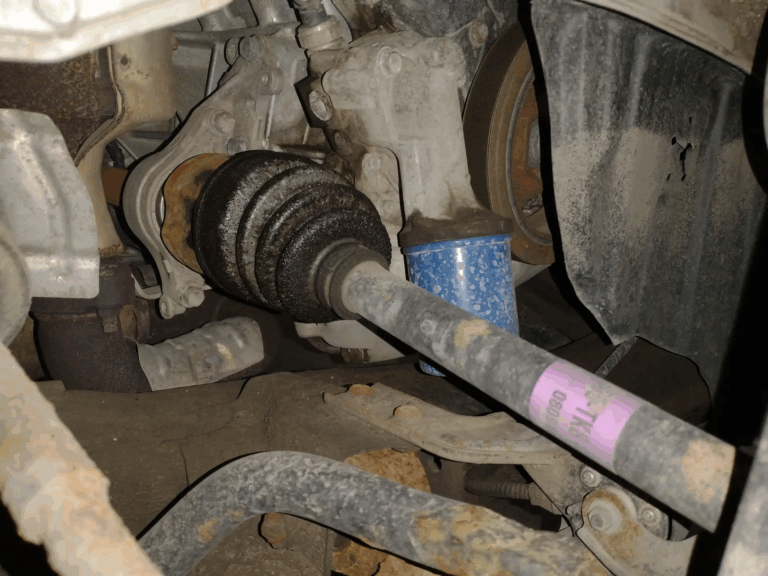
A rack and pinion leak occurs when power steering fluid escapes from the steering rack or related components. Fluid leaks can cause stiff steering, noise, and eventually component failure because the rack and pinion depends on hydraulic or electric assistance to lessen steering effort.
When fluid appears close to the steering assembly, many drivers believe the rack itself has failed. In reality, leaks often start in hoses, fittings, or seals and run down onto the rack, making the source harder to pinpoint. Knowing how the system functions can help identify the cause, particularly when contrasting the assist system described in rack and pinion steering vs. power steering with the mechanical steering components.
Key Points to Review
- Most rack and pinion leaks start at the internal seals or rack boots, not at the rack housing itself. A swollen or wet boot is usually the first visible sign.
- Fluid appearing on the rack body is often actually coming from a hose above it. Pressure-wash the engine bay and dry it before assuming the rack is the source.
- A small external leak (hose, fitting, boot) is usually repairable. Internal seal failure or gear damage typically requires full rack replacement.
- Contaminated power steering fluid is the primary cause of early seal wear. Flush the system on schedule (every 50,000–75,000 miles) to extend rack life.
Most Common Causes of Rack and Pinion Leaks
1. Worn Rack and Pinion Seals
Worn internal seals are one of the most common causes of rack and pinion leaks. These seals permit smooth internal component movement while keeping power steering fluid contained inside the rack.
The seals eventually harden and shatter due to heat, pressure, and contaminated fluid. When seals fail, fluid seeps into the rack boots at each end of the assembly. Seal and rack defects have been the basis of recall actions catalogued by NHTSA’s recalls database, which is why a leak that looks small at first often signals bigger issues inside the rack.
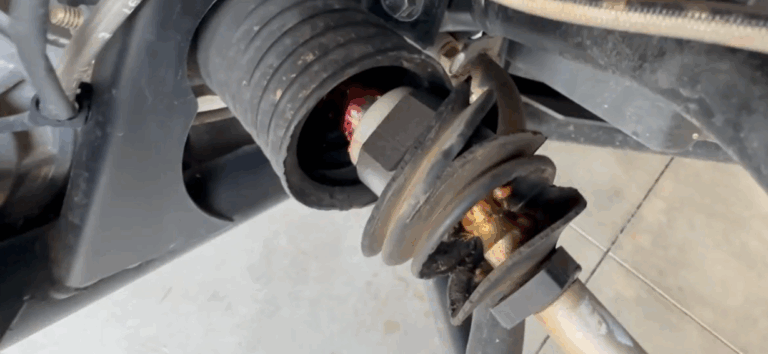
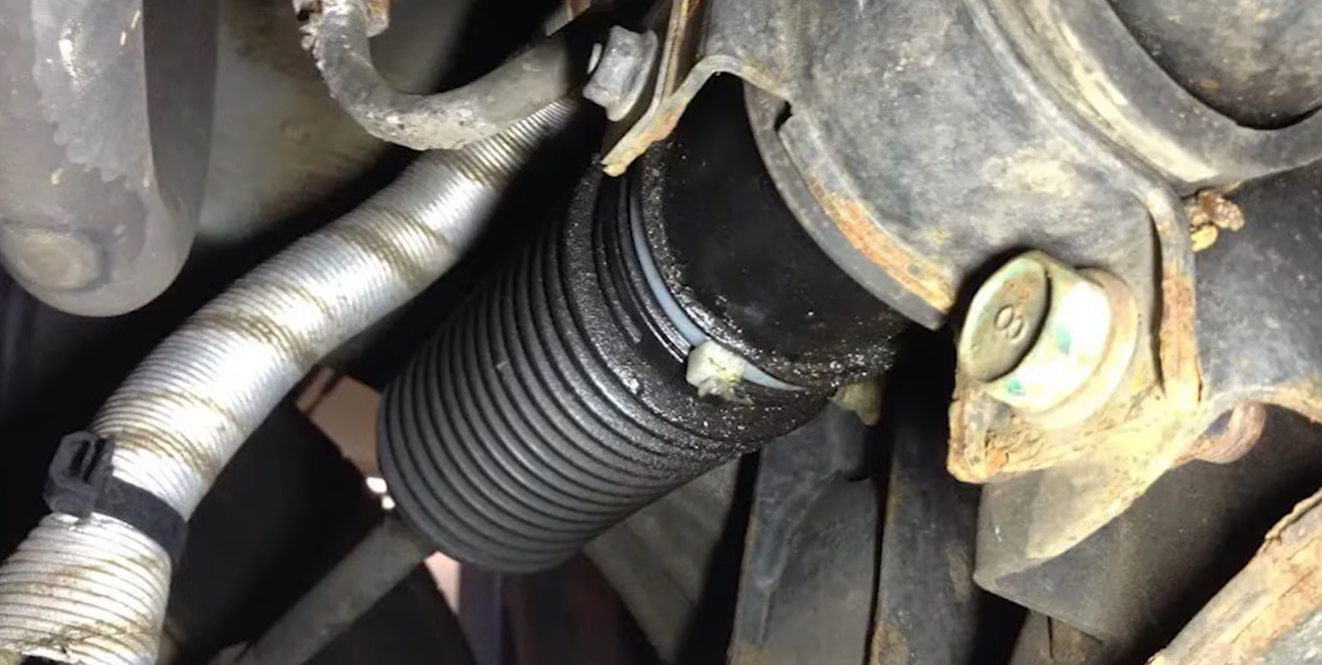
A swollen or oily rack boot is often the first sign. Fluid can build up inside the boot before any dripping appears, which makes this easy to miss on a quick visual check. Because contaminated fluid is a primary cause of seal wear, regular maintenance, such as flushing the power steering system, can occasionally slow degradation.
If the boot feels unusually soft, loosen the clamp and check. Fluid can collect inside the boot for weeks before showing up as a drip under the car.
2. Leaking Power Steering Hoses
Power steering hoses carry pressurized fluid to and from the rack. Fluid may leak and run down onto the rack when these hoses break or deteriorate, giving the impression that the rack is leaking.
High-pressure hoses above the rack are a common failure point on high-mileage vehicles. Fluid sprays from a cracked hose, runs down onto the rack housing, and looks like an internal leak. A hose repair has saved many unnecessary rack replacements.
In several inspections I’ve done, fluid appearing on the rack was actually coming from a cracked high-pressure hose above it. Once the engine ran, the fluid sprayed lightly and followed the rack housing, making it look like an internal rack leak. After replacing the hose, the rack itself remained completely dry, confirming the leak source was external.
3. Loose or Damaged Line Fittings
The connections where the power steering lines attach to the rack can loosen or become damaged. Even a small gap can allow fluid to escape under pressure.
Sometimes this problem arises following prior steering fixes. For example, slightly under-tightened fittings may eventually create slow leaks after replacing a pump or line. Instead of appearing inside the boots, these leaks frequently manifest as fluid gathering around the connecting points.
4. Torn Rack Boots Allowing Contamination
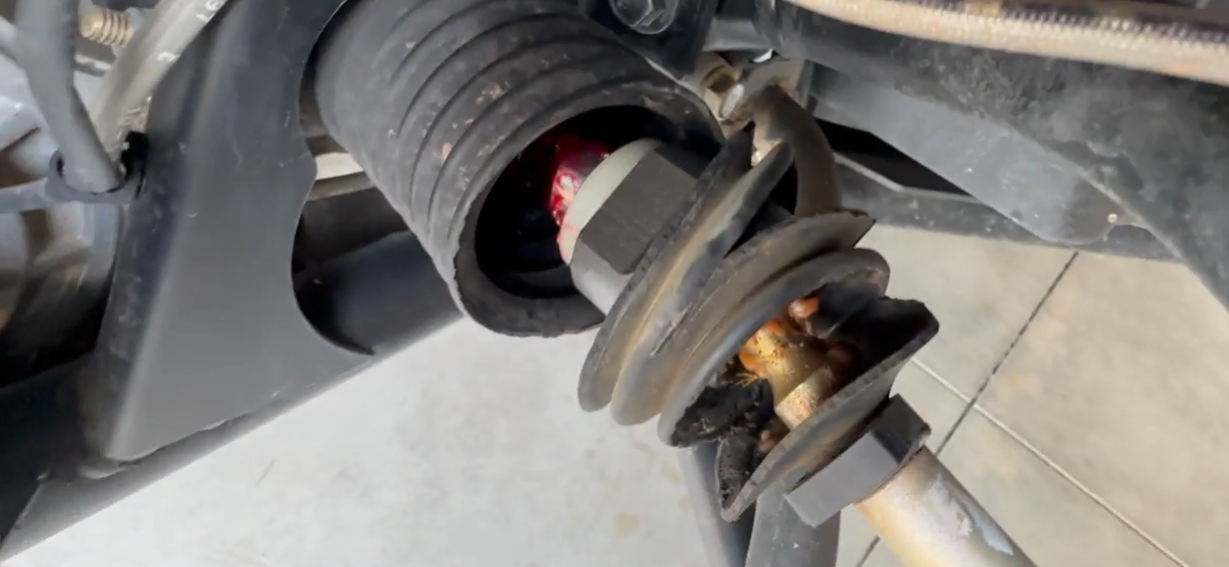
Rack boots protect the inner tie rods and seals from dirt and moisture. When a boot rips, impurities may get inside and harm the internal seals, which could lead to a leak.
Small tears can cause long-term issues, yet they are easy to overlook. There have been situations where a small boot split allowed debris from the road to enter, resulting in seal failure months later. This kind of damage frequently coexists with wear in the portions covered in car suspension components since boots are directly connected to steering and suspension components.
5. Internal Rack Wear
High mileage or heavy use can cause internal wear in the rack housing or gears.Fluid leaks may occur when internal seals fail to maintain adequate pressure due to component deterioration.
Uneven steering response or slack steering are frequently associated with this kind of leak. Internal wear often necessitates replacing the rack rather than fixing it. Labor time becomes an issue when thinking about replacement.
6. Overfilled Power Steering Reservoir
Overfilling the power steering reservoir can increase system pressure and push fluid past seals. This may result in unexpected leaks following a fluid top-off.
Adding fluid without monitoring the proper amount when the engine is running or warmed up is a classic do-it-yourself error. Excess fluid can occasionally froth, which raises pressure and causes leaks.
7. Contaminated Power Steering Fluid
Dirty or degraded fluid reduces lubrication and accelerates seal wear. Internal surfaces may be scratched by fluid debris, which could lead to leaks.
After replacing highly polluted fluid, we have observed improvements in early-stage leaks, particularly in cases where the seals were not totally worn.
In some high-mileage vehicles, steering fluid appeared very dark and had a burnt smell before leaks developed. After flushing the system, minor seepage slowed temporarily, suggesting the degraded fluid had accelerated seal wear. While flushing didn’t permanently fix the leak, it confirmed the contamination was contributing to seal deterioration.
Where Rack and Pinion Leaks Usually Appear
Rack and pinion leaks typically show up in a few common areas:
- Inside inner tie rod boots
- Around power steering line fittings
- At the ends of the rack housing
- Near the steering input shaft
In actuality, one of the most trustworthy signs of internal seal leakage is fluid-filled boots. The rack seals are frequently the cause of fluid draining out when the boot is loosened.
Symptoms of a Rack and Pinion Leak
Common symptoms include:
- Low power steering fluid
The fluid level in the reservoir frequently progressively decreases due to a leaking rack. Drivers may observe that they need to refuel more frequently than usual. The level frequently drops gradually at first, making it simple to ignore the leak until steering performance improves. - Whining noise when turning
The power steering pump may start to pull in air when fluid spills out. This frequently results in a moaning or whining sound, particularly while twisting the steering wheel slowly. As the fluid level decreases further, the noise typically gets louder. - Stiff or inconsistent steering
Steering may feel heavier when there is less hydraulic pressure, especially while parking or making gentle movements. Sometimes the steering feels normal on highways but stiff at low speeds, which is more likely to indicate a loss of hydraulic assistance than a problem with mechanical binding. - Fluid under the front of the vehicle
Underneath the front of the car, power steering fluid may show up as red, pink, or amber patches. Leaks don’t always flow straight from the rack, though. There have been instances where fluid moved over suspension parts before dripping, making it more difficult to pinpoint the source.
These symptoms often appear gradually, so early detection can help prevent additional damage to the power steering pump and other steering components.
Can You Drive With a Rack and Pinion Leak?
You can drive with a rack and pinion leak for a short time, but it is not recommended. The power steering pump may run dry and sustain damage when the fluid level falls. At low speeds, steering may become challenging due to loss of aid.
Sudden stiffness might result from larger leaks, particularly when parking. This can lead to additional component wear and raise safety issues.
Repair vs Replacement
Whether a rack and pinion leak can be repaired depends on the source:
- Hose leaks can usually be repaired
- Loose fittings can be tightened
- Torn boots can sometimes be replaced early
- Internal seal leaks often require rack replacement
Determining the precise cause often avoids needless replacement. In certain cases, a straightforward hose repair prevented a much more expensive whole rack replacement.
Cost Considerations
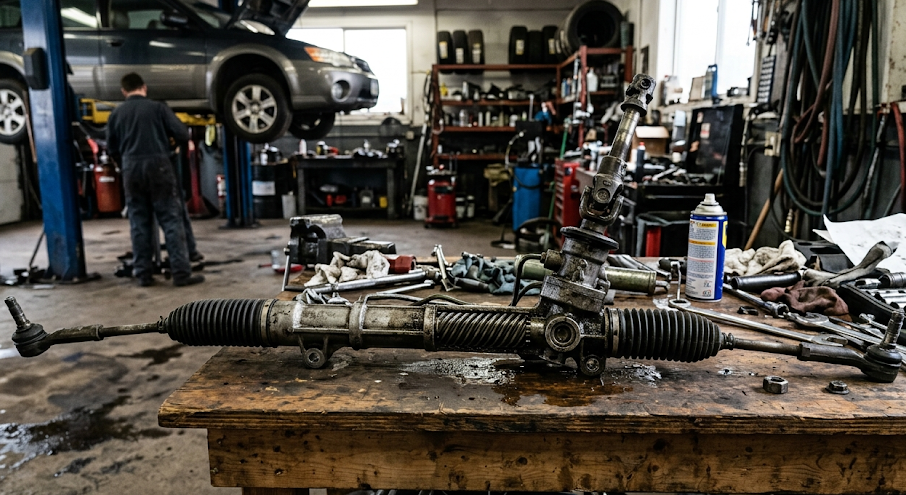
Repair costs vary depending on the cause:
- Hose replacement: typically lower cost
Since the rack itself does not need to be removed, replacing a leaky hose is typically less expensive. The repair frequently entails replacing a single component, and labor time is reduced.
- Fitting repair: minimal cost
It is occasionally possible to tighten or reseal loose or broken fittings. If detected early before fluid loss harms other components, this kind of repair is typically quick and affordable.
- Rack replacement: highest cost
Due to the cost of materials and labor, replacing the rack is the most expensive alternative. Disconnecting steering and suspension parts is frequently necessary to access the rack, which lengthens the repair process.
- Fluid flush: lowest cost
The least priced service is usually a fluid flush. It won’t stop leaks brought on by old seals, but it might help with early-stage problems brought on by tainted fluid.
Preventing Rack and Pinion Leaks
Preventive steps include:
- Checking fluid level regularly
- Inspecting rack boots for tears
- Replacing contaminated fluid
- Avoiding overfilling the reservoir
Leaks That Hide Where You Will Not See Them
Not every rack leak puts a puddle on the driveway. We have seen boots feel unusually soft on one side with no fluid anywhere on the ground. Loosen the clamp, and fluid drains out of the boot itself. That is an internal seal failure dumping fluid into the boot instead of onto the pavement.
The opposite also happens. A fluid film on the rack housing that looks like an internal rack leak is sometimes a cracked high-pressure hose above it, spraying with engine pressure and running down the housing. Replace the hose and the rack stays bone dry, which tells you the leak was never internal.
Dark, burnt-smelling fluid is a warning sign on its own. On high-mileage cars, we have seen seepage slow temporarily after a flush, because contaminated fluid was eating the seals. Power steering fluid is one of the fluids the Car Care Council’s maintenance guide lists for routine inspection, which is how most fluid-driven seal failures get caught before they force a full rack replacement. A flush does not fix a seal leak, but if seepage improves after fresh fluid, that is confirmation the old fluid was part of the problem.
FAQs
What is the most common rack and pinion leak?
The most common rack and pinion leak comes from worn internal seals. These seals degrade over time due to heat, pressure, and contaminated fluid, allowing fluid to escape into the rack boots. Fluid building up inside the rubber boots at either end of the rack is a common sign of this kind of leak. Early on, it can be more difficult to spot leaks because they frequently begin slowly and may not instantly flow onto the ground.
Can a rack and pinion leak be fixed?
Some leaks can be fixed depending on the source. Hose leaks, loose fittings, or minor boot damage can often be repaired, while internal seal leaks usually require rack replacement. Because rebuilding the rack needlessly will raise repair costs, pinpointing the precise source of the leak is crucial. In reality, hoses or fittings above the steering unit are often the source of apparent rack leaks.
Will flushing stop a rack leak?
Flushing may help in early-stage leaks caused by contaminated fluid. However, if the seals are already worn, flushing alone will not permanently stop the leak. When seal deterioration has already started, replacing unclean fluid should be considered a temporary treatment. However, it can occasionally restore proper lubrication and prevent small seepage.
Is a rack and pinion leak serious?
A rack and pinion leak is serious because low fluid can damage the power steering pump and lead to loss of steering assist. Addressing leaks early helps prevent more expensive repairs. Steering effort may abruptly increase, particularly at low speeds, if the fluid level falls too much. Driving with low fluid levels for an extended period of time may also introduce air into the system, resulting in noise and additional component damage.