Although many drivers confuse power steering with rack and pinion steering, they are not the same. Power steering is an assist system that lessens the effort needed to steer, whereas rack and pinion refers to the mechanical steering mechanism that rotates the wheels.
Both terms refer to different components of the steering system, but the terms are frequently used interchangeably because the majority of contemporary cars use a rack and pinion architecture in conjunction with power steering help. It is helpful to first grasp what a rack and pinion system is and how it operates if you are not familiar with the mechanism itself.
In practice, many drivers assume these terms mean the same thing when diagnosing steering problems. I always see situations where someone replaced a power steering pump expecting to fix loose steering, only to discover the issue was actually worn rack components. This confusion often leads to unnecessary repairs and extra cost.
Key Points to Review
This guide explains:
- What rack and pinion steering is
- What power steering is
- How they work together
- Key differences
- Which system your vehicle uses
What Is Rack and Pinion Steering?
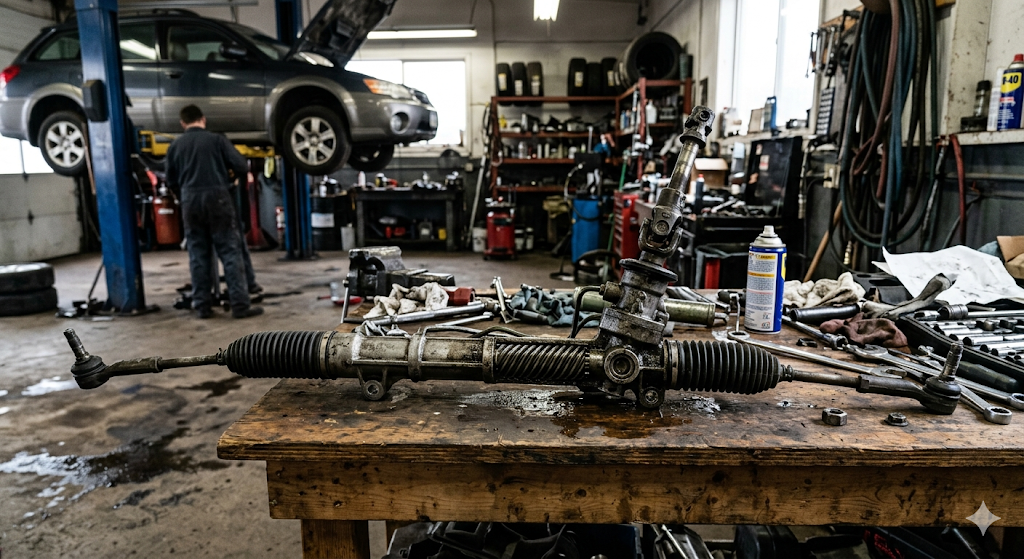
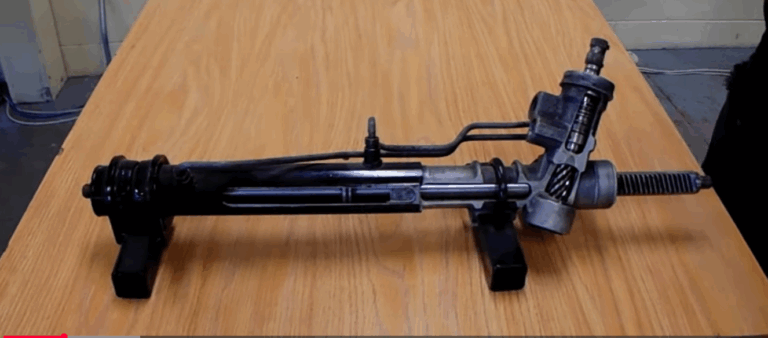
A rack and pinion steering system is a mechanical steering design that converts steering wheel rotation into side-to-side movement that turns the wheels. A flat gear (rack) is moved by a tiny gear (pinion) as the steering wheel revolves, pushing the tie rods and altering the direction of the wheel.
Because of its ease of use and accurate steering response, rack and pinion steering is the most popular steering design seen in contemporary passenger cars. For instance, rack and pinion arrangements, which have fewer moving parts and better handling than previous steering gearboxes, are used in most SUVs, compact sedans, and crossovers.
What Is Power Steering?
Power steering is an assistance mechanic that lessens the effort needed to turn the steering wheel. It facilitates easier steering component movement for the driver rather than altering the direction of the wheel itself.
There are two main types:
- Hydraulic power steering, which uses pressurized fluid
- Electric power steering, which uses an electric motor
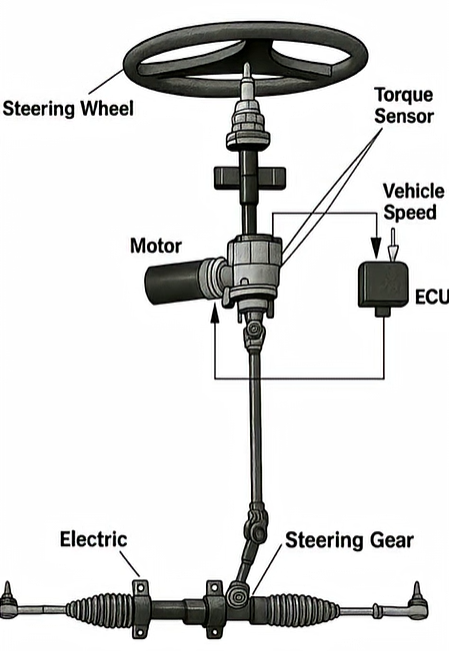
Whether the steering mechanism is a rack and pinion or another type of steering gearbox, power steering systems operate in tandem with it. For instance, an electric system employs sensors and motors to help at low speeds, whereas a hydraulic system uses a pump and fluid pressure to assist movement.
When talking about the four different kinds of steering systems found in contemporary cars, these systems are also discussed.
How Rack and Pinion Works Without Power Steering
Rack and pinion works without power steering by relying entirely on the driver’s input to move the steering rack. This implies that the rack is moved directly by the steering wheel, which takes more work, particularly while parking or at low speeds.
For instance, it frequently took a lot of force to move the wheel when the vehicle was stationary in older compact automobiles without power steering. However, because there was less friction once the car was underway, steering effort dropped.
Although they are uncommon in contemporary cars, manual rack and pinion systems can still be found in select lightweight and vintage models.
Personally, manual rack and pinion systems felt noticeably heavier during parking but surprisingly responsive at speed. Drivers often describe the steering as more “connected” to the road, which is why some older sports cars used manual racks even when power assist was available.
How Power Steering Works With Rack and Pinion
Power steering works with rack and pinion by providing hydraulic or electric assistance that helps move the steering rack. Electric systems use motors installed on the steering rack or column, whereas hydraulic systems use fluid pressure.
Power steering systems may need maintenance, such as fluid replenishment, to keep them functioning properly because they rely on fluid or electric assistance. For instance, even when the rack is in good condition, tight steering may result from low or polluted power steering fluid.
For this reason, it is occasionally advised to do routine maintenance, such as cleansing the power steering system.
Our experience demonstrates that many drivers confuse stiff steering brought on by outdated fluid for a malfunctioning rack. We observed in numerous forum posts and repair videos that smooth steering was restored by flushing dark, tainted fluid without the need to replace the rack.
Key Differences Between Rack and Pinion vs Power Steering
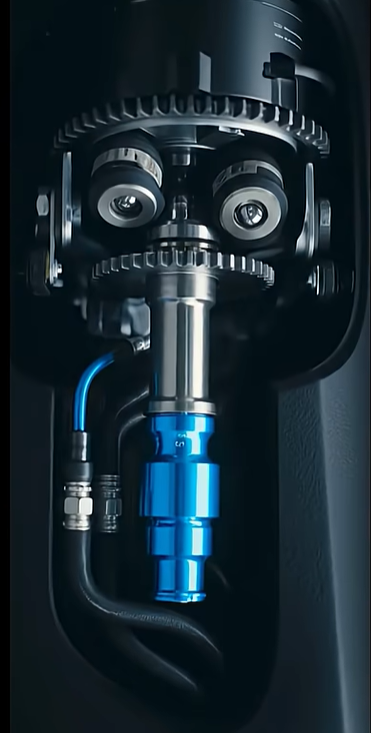
The key difference between rack and pinion and power steering is that rack and pinion controls wheel direction, while power steering reduces steering effort.
Rack and Pinion:
- Mechanical steering mechanism
- Controls wheel direction
- Can operate with or without assistance
Power Steering:
- Assist system
- Reduces steering effort
- Works with the steering mechanism
Rack and pinion systems are combined with power steering in the majority of contemporary cars to increase comfort without compromising steering accuracy. Electric power steering, for instance, enables harsher steering at highway speeds and lighter steering at parking speeds.
Do All Rack and Pinion Systems Have Power Steering?
No, not all rack and pinion systems have power steering, although most modern vehicles include steering assist. Nowadays, hydraulic or electric power steering assistance is a feature of almost all rack and pinion systems.
For example:
- Older compact cars may use manual rack and pinion
- 2000s vehicles often use hydraulic assist
- Newer vehicles commonly use electric power steering
These variants fit into the more general categories covered by the four steering system types.
Maintenance and Repair Differences
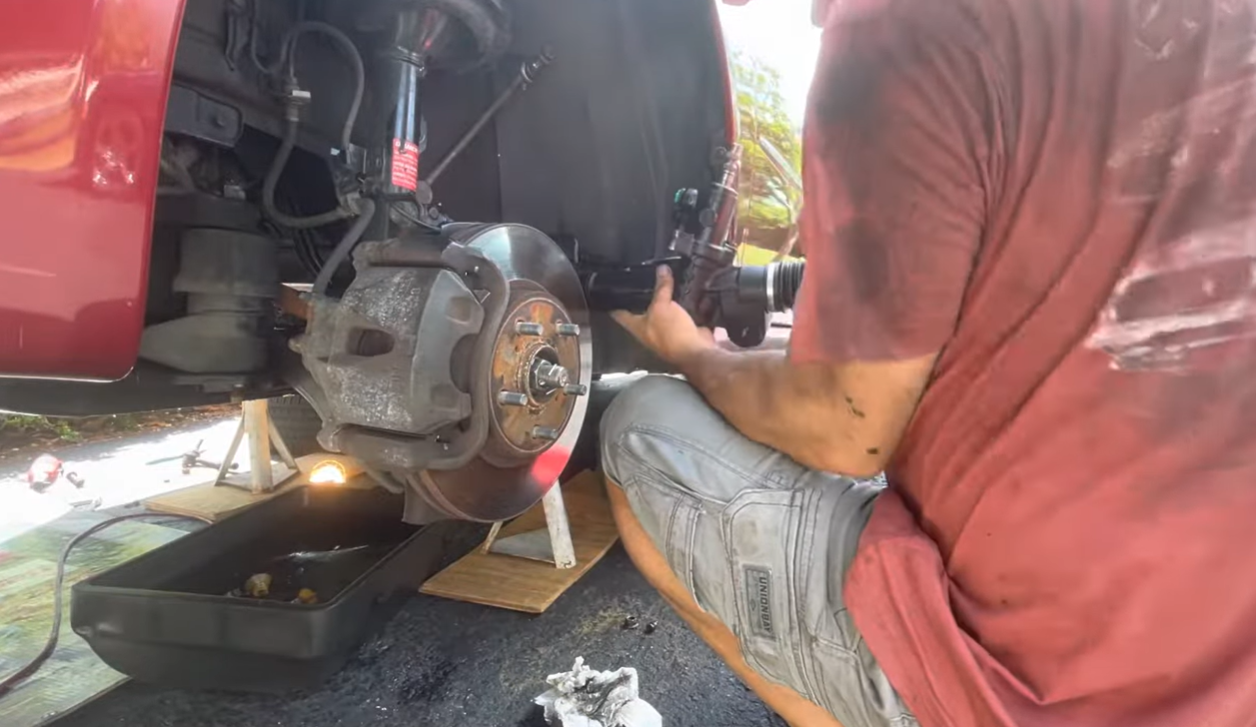
Maintenance and repair differences between rack and pinion and power steering depend on whether the issue affects the mechanical rack or the assist components. For instance, a malfunctioning power steering pump may result in stiff steering or a whining sound, while worn rack gears may create looseness.
Determining whether the fault is with the power steering assist system or the rack itself is crucial when steering issues arise. For example:
- Loose steering may indicate rack wear
- Whining noise may indicate pump failure
- Fluid leaks may indicate hose or seal issues
A common diagnostic scenario we come across happens when steering feels loose but there’s no noise or fluid loss. In many of these cases, the rack bushings were worn while the power steering system was still functioning normally. This distinction helps narrow down whether the repair involves mechanical components or assist-related parts.
It could be necessary to replace the rack if it is worn. If the issue is fluid-related, it might be resolved with a less complicated fix. When assessing how long you can drive with a defective rack and pinion or whether changing the rack is worth the expense, this distinction becomes crucial.
Cost Differences
Since the complete steering mechanism must be replaced, rack replacement is usually more costly. In contrast, power steering repairs could just need to replace a pump, pipe, or fluid.
Typical cost comparisons:
- Rack and pinion replacement: $700–$2,100
- Power steering pump replacement: $300–$800
- Power steering hose repair: $150–$400
- Fluid flush: $80–$150
For instance, fixing a leaking hose might only cost $300, but depending on labor time, fixing a worn rack might cost more than $1,500. When you look at how much it costs to replace a rack and pinion and how long it usually takes, you may further evaluate these expenses.
Which Is Better?
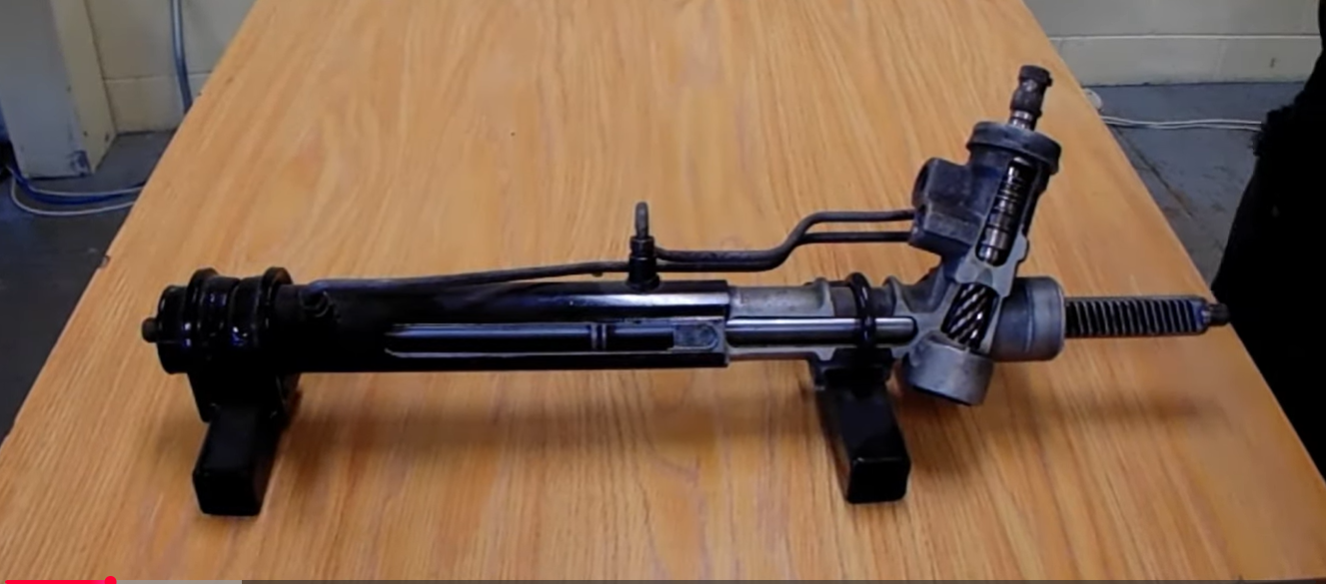
Power steering and rack & pinion are complementary technologies rather than substitutes. Modern cars employ power steering for convenience and rack and pinion for precise control.
For example:
- Sports cars use rack and pinion with tuned electric assist
- Trucks use heavier rack designs with hydraulic or electric assist
- Compact cars use lightweight electric rack systems
The combination provides both precision and comfort.
FAQs
Is rack and pinion the same as power steering?
No, rack and pinion is not the same as power steering. Rack and pinion is the steering mechanism, while power steering is an assist system that reduces steering effort. Most vehicles use both together.
Can you have a rack and pinion without power steering?
Yes, you can have rack and pinion without power steering. Manual rack and pinion systems exist, but they require more steering effort and are uncommon in modern vehicles.
What fails more often, rack or power steering?
Power steering components such as pumps, hoses, and fluid tend to fail more often than the rack itself because they experience more wear and contamination.
Does power steering affect rack lifespan?
Yes, poor power steering maintenance can shorten rack lifespan. For example, contaminated fluid can damage internal seals and increase wear inside the rack assembly.